
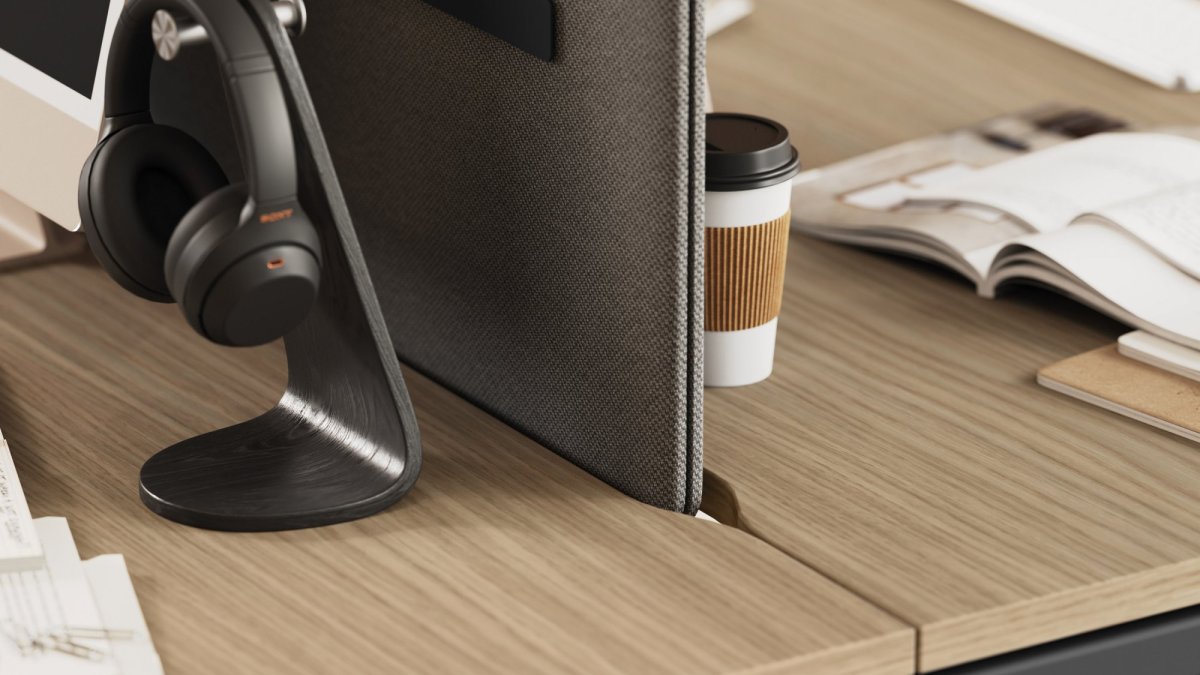
No market on earth knows the half-price quote better than India — and no market has learned faster what it actually buys. Office fit-outs here happen at campus scale: hundreds of workstations, phased hiring, layouts that change with every growth round. So let's take the question we hear from Indian project teams — why pay more per desk? — and answer it the way it deserves: question by question, with the arithmetic on the table.
Why is price per desk the wrong number?
Because nobody in India buys desks once. Hiring comes in waves, and the bench line bought this year must extend next year — same series, same finish, same connectors. That is the fleet logic: what matters is whether the programme still exists when wave two lands. Serious Italian operative programmes live in catalogues for years and reorder identically; stock lots run out by design. Divide desk-plus-assembly by years of real service instead of comparing invoices, and the ranking flips: cost per desk per year is the honest metric, and engineered systems win it.
What happens at the first re-stack?
Indian offices reconfigure constantly — new teams, new floors, densification, the periodic great reshuffle. That is precisely where cheap benching dies: not from use but from moves. Contract-grade systems are engineered for repeated disassembly — fixings that torque many times, joints that hold, factory documentation the installation crew can follow. Budget hardware survives one build and quits by the third. On a campus that re-stacks every year or two, assembly engineering is not a specification detail; it is the entire economics of the purchase.
Who wires the row?
An Indian operative floor is power-hungry: monitors, docks, chargers, UPS-backed circuits. Engineered bench systems carry electrification as part of the product — cable spines, inspectable trays, top-access units — drawn at project stage together with the MEP consultant, aligned with floor boxes before anything ships. Stock boxes leave wiring to site improvisation, and the floor wears the result for a decade: strips on carpet, cables in walkways, an audit finding waiting to happen. Ask every bidder one question: show me the electrification drawing. The answers will sort the quotes faster than any price comparison.
Where do design and Italian quality come in?
At the exact point Indian companies now compete hardest: talent. The operative floor is where candidates take the tour, where teams spend their hours, where clients appear on video. Italian design brings what low-cost manufacturing cannot copy — proportions that make two hundred desks feel composed rather than warehoused, finishes that age with dignity, acoustic screens that are architecture and quiet at once, colour composed by people who understand it. And Italian quality is concrete, not romantic: edges that do not peel in year three, tops that tolerate industrial cleaning, programmes that still look intentional a decade in. On a campus, that is employer branding delivered daily, at desk level.
What should the quotation actually contain?
Five things, in writing. The programme's age and its reorderability — can this line be extended in the same finish in three years? The manufacturer's assembly documentation. The electrification design, aligned with your floor boxes. Spare parts availability and who answers in month thirty. And the delivery scope: to port, to floor, or installed — three different projects in this country of service lifts and loading windows. At La Mercanti we attach the manufacturers' declared documents to every quotation, because a fleet is bought on paper before it is bought on price. Both countries are metric; the drawings translate without a single conversion.
Quick answers
What is the honest metric for workstation purchases? Cost per desk per year: desk plus assembly divided by years of real service. On that arithmetic, reorderable engineered programmes beat stock lots almost every time — the invoice comparison is the illusion.
Why does re-stack endurance matter so much in India? Because Indian offices reconfigure constantly, and moves — not use — are what kill cheap benching. Contract-grade fixings rebuild repeatedly; budget hardware quits by the third assembly.
Is design worth paying for on an operative floor? It is talent strategy: the floor is the campus tour, the daily workplace and the video background. Composed design and durable Italian quality work for recruiting every day the office opens.
What single request sorts workstation bidders fastest? Show me the electrification drawing and the manufacturer's assembly documentation. Engineered programmes produce both immediately; stock lots produce silence.