
E5000
₹ 120
Higher-education furniture in India is bought to survive the hardest use any seating takes: hundreds of students a day, six days a week, back-to-back sessions from an eight o’clock lecture to an evening tutorial, and a maintenance budget that is real but stretched. Lecture hall and university furniture earns its specification not in the brochure but in year six, when the tablet arms are still solid and the frames have not begun to rack. That is the test an institutional buyer should hold it to.
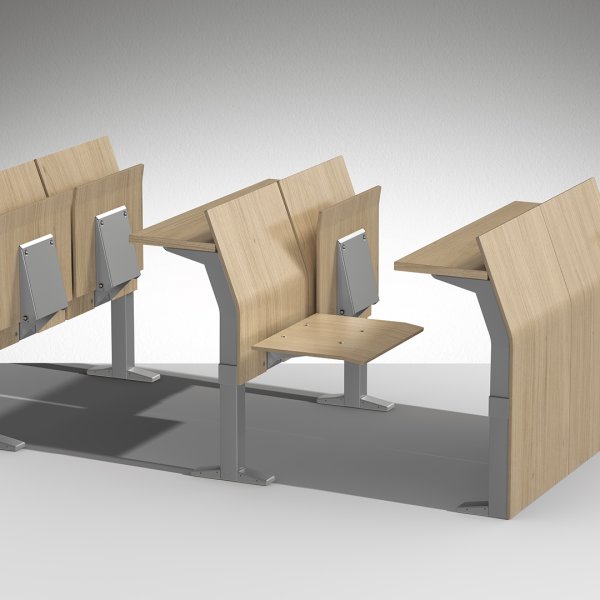
This selection brings Italian lecture-hall and campus furniture built for institutional duty: tablet-arm chairs with writing surfaces sized for laptops and exam scripts, tiered auditorium seating that gangs into true rows, and flexible seminar seating for the group teaching Indian curricula increasingly include. The engineering shows where students find it — edges and joints that take daily knocks, replaceable components rather than throwaway shells, finishes that clean under institutional housekeeping. European manufacturing credentials such as FSC-certified timber and low-emission material standards travel with the pieces, exactly the assurance a serious campus procurement expects to see.
Institutional furniture is a life-cycle purchase, not a one-time fit-out. La Mercanti supports universities and colleges from specification and sample evaluation through delivery and installation, with the documentation an institutional tender requires.

Decide by how the room will be taught, not by the drama of a raked auditorium. A large lecture theatre delivering formal lectures to two hundred students is served best by fixed, tiered seating that gangs into clean rows, gives every seat a sightline to the board, and needs no resetting between sessions. But Indian higher education has been shifting toward group work, case discussion and flipped-classroom formats, and a room locked into fixed rows cannot hold a twelve-group breakout. For those spaces, loose tablet-arm chairs that stack and regroup earn their keep by letting one room teach in several modes.
Match the seating to the dominant teaching mode of each room — fixed tiers where large-format lecturing rules, flexible seating where the pedagogy has actually moved to discussion — and be honest about which a given hall will host. A flexible room fitted with fixed rows quietly limits what the faculty can teach in it for the life of the furniture, which on a campus is a long time to regret a specification.
The writing surface and the hand it serves, both of which cheap chairs treat as afterthoughts. A tablet arm sized for a notebook is now too small: students work on laptops and sit three-hour exams, so the surface needs the depth and width to hold a laptop and an answer booklet side by side, without balancing either on a corner. Handedness matters more than buyers expect. A hall fitted entirely with right-hand tablets leaves left-handed students, a real share of every cohort, twisting sideways through the length of every paper; a proportion of left-hand or ambidextrous units is a small line in the specification that students feel in every exam.
Specify the tablet surface for a laptop rather than a notepad, include left-hand units in the mix, and confirm the arm’s fixing is a serviceable, replaceable component. The tablet arm is the first part to take abuse on a campus, and a chair whose arm cannot be replaced becomes a chair discarded whole the day a hinge fails. Serviceability at that one joint decides much of the furniture’s real lifespan.
Specify for replaceable parts and a cleaning routine your housekeeping staff already run, because at campus volumes nothing survives on build quality alone. The furniture that lasts on an Indian campus is the furniture whose wear points — seat shells, tablet arms, glides, fasteners — can be replaced in the field by the institution’s own maintenance team from a stock of spares, rather than furniture that must be discarded when a single component fails. Ask at specification stage which parts are serviceable, whether spares will be available years later, and how the surfaces clean under ordinary institutional products.
Buy the furniture as a ten-year asset with a spares plan and a written care routine handed to the maintenance staff on installation day, and standardise on as few models as the rooms allow so every spare is interchangeable across halls. A campus specified this way is repaired part by part on the facilities budget instead of re-furnished on capital every few years, which is the arithmetic that actually protects an institution’s limited money over a decade.
Evaluate it on documented performance and a physical sample the committee can test, because an institutional tender lives or dies on evidence rather than adjectives. Bring the decision down to things a purchase committee can verify: a sample chair put through a fortnight of real student use, the manufacturer’s technical data on materials and construction, and recognised European manufacturing credentials — FSC-certified timber, low-emission material certification, the maker’s own contract-seating test evidence — which speak to durability and to the indoor-air and sustainability criteria campuses increasingly weigh. A glossy claim with nothing behind it helps no one.
Ask for a sample against which the delivered lot can be measured, attach the manufacturer’s documentation to the tender file so any substitution becomes visible, and treat the credentials as verifiable facts rather than marketing. The documentation that protects the specification at award is the same documentation that protects the campus from a lookalike at delivery, and on an institutional purchase that paper trail is worth as much as the furniture itself.
University furniture is too often bought on lowest quoted price and regretted by the third academic year, when tablet arms loosen, shells crack and no spares exist. The institutions that get a decade out of a fit-out treat it as a life-cycle procurement: they specify by teaching use, verify with a sample, build the maintenance plan into the purchase, and document everything so the tender buys what it intended. This is that protocol, in the order an Indian institutional purchase actually moves, from the room audit to the signed acceptance standard.
Resist the temptation to pick one chair for the whole campus, because a lecture theatre, a seminar room and a flexible classroom are three different briefs. Walk the rooms and classify them by how they are taught: large-format lecture halls where formal delivery dominates, seminar rooms built around discussion, and flexible spaces that must switch between the two. Fixed tiered seating suits the first, gang into true rows for sightlines and quick turnover; loose tablet-arm chairs that stack and regroup suit the rooms where teaching mode changes within a single session.
For every room, record the real capacity, the writing-surface requirement — laptop-sized tablet arms now, not notepad ones — and the proportion of left-hand units the cohort needs. Note the rooms that double as exam halls, where surface size and spacing matter more. This room-by-room schedule becomes the backbone of the tender, and it prevents the classic institutional mistake of buying one economical chair that serves the big lecture hall passably and every other room badly for the next ten years. Record the schedule as the backbone of the tender, so every bidder prices against the same room-by-room requirement rather than against a single ambiguous line.
No institutional order should rest on a catalogue and a quoted price. Require a physical sample of each shortlisted chair and put it into a real hall for a fortnight of ordinary student use — lectures, note-taking, laptops, the daily knocks and drags a campus imposes — rather than a five-minute sit in a meeting room. A student cohort will find the weaknesses a specification sheet hides: a tablet arm that flexes, a shell that creaks, an edge that catches a bag, a glide that skates on the hall floor.
Collect the evidence in a form the committee can defend. Structured feedback from students on comfort through a full session and on the tablet surface under a laptop; a physical inspection by the maintenance team for joint tightness, shell integrity and how the surface cleaned; and a check of the sample against the manufacturer’s own data. Keep the approved sample sealed and logged, because it becomes the standard the delivered lot is measured against. A sample tested this way costs a fortnight and a few chairs; skipping it costs a hall full of lessons learned at once. Rotate the sample through more than one room where the campus varies, since a chair that survives a quiet seminar can still fail in a packed first-year lecture theatre.
At campus volumes the purchase is only the first cost, so settle serviceability while you still hold the leverage of an unsigned order. Confirm which parts are field-replaceable — tablet arms, seat shells, glides, fasteners — and negotiate a stock of spares to ship with the furniture, priced now rather than chased later when the project account has closed. Standardise on as few models as the room schedule allows, so a spare arm or glide fits chairs across every hall and the storeroom does not fill with incompatible parts.
Then plan the routine that keeps the fleet running. Ask for a written care protocol and hand it to the housekeeping and maintenance staff on installation day, specifying what to clean with and what never to use, since most damage on an Indian campus is done with the wrong product and good intentions in the first year. Put the spares and the annual check on the facilities budget as a named line. Furniture bought as a serviceable ten-year asset is repaired quietly for a decade; furniture bought as a one-time delivery is scrapped the first time a common part fails. Name the spares, the annual check and the responsible department in the purchase itself, because a maintenance plan that lives only in conversation is the one that quietly lapses.
An institutional tender is won or lost on paper, so assemble the file that binds the award to the furniture you actually evaluated. Attach the manufacturer’s technical data sheets, the finish and material specifications, and the recognised European manufacturing credentials — FSC-certified timber, low-emission material certification, the maker’s contract-seating test evidence — which answer the durability and sustainability criteria campuses increasingly score. Reference the sealed sample as the acceptance benchmark, so what arrives is measured against what was approved rather than against memory.
This documentation does two jobs at once. It lets the purchase committee defend the specification against a cheaper lookalike, because a substitution that cannot match the data sheet becomes visible and objectionable on grounds of fact rather than taste. And it sets a clear standard at delivery, when the lot is checked against the file and the sample before acceptance. Plan the delivery, installation and an acclimatisation period into the schedule as well, and confirm the same documentation is handed over for the institution’s asset records. The tender that closes on this file buys the furniture it chose, not the one that quoted lowest.