Ares Line
An institution buys auditorium chairs perhaps twice in fifty years, which is why the decision deserves more care than the brochure suggests. Each chair is bolted down, the whole hall depends on its fold-up mechanism, and a single jammed seat in the middle of a row is noticed by everyone. Well-chosen auditorium chairs are judged on how the seat returns after thousands of cycles, how easily a worn part is replaced and how the rows sit on the real slope of the hall.
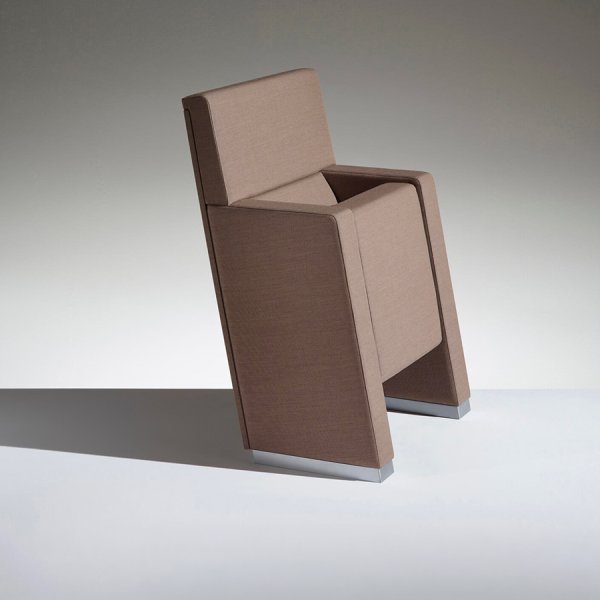
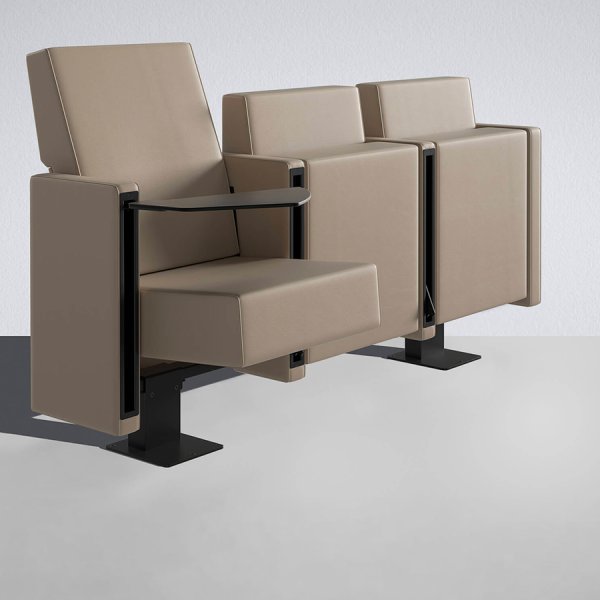
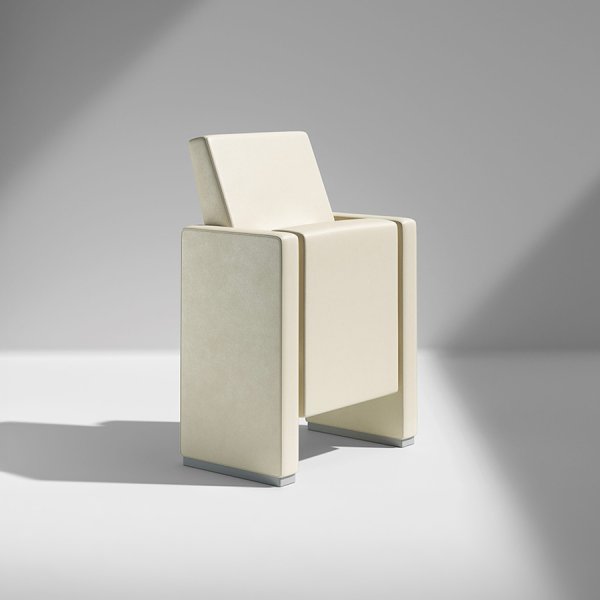
This range brings together fixed seating for college and university halls, convocation venues, corporate training halls and institutional town halls, with or without writing pads. They are not meeting room chairs, which are moved every day, and they differ from classroom furniture, where students write for hours.
Share the hall drawings and the number of seats you need. We check the layout with your architect and plan delivery and installation from Italy to site.
As long as the hall itself, provided it can be serviced. Ask us how many opening and closing cycles the seat has been tested to, whether the return is by spring or by counterweight, and whether it closes silently. Then ask the question that matters most in practice: can a single mechanism be replaced on site, without removing the chair from the row? A seat that cannot be repaired is a seat taken out of use for good.
Because the slope decides almost everything. The angle of the floor or the height of each step sets the type of fixing, the distance between rows and whether every row can see the stage over the heads in front. Two halls with the same plan and different sections can hold very different numbers of seats. Send a section through the hall, marked in centimetres, with the positions of exits and the stage, and the layout can be drawn on real figures.
A hall used daily needs covers that resist abrasion, clean easily and cope with heat and humidity during the monsoon months. Ask for the abrasion rating of the fabric or leatherette, check whether the cover can be removed for cleaning and whether replacement covers will be available years later. In halls without air conditioning, breathable fabrics are usually more comfortable than synthetic leather over a long programme.
Usually yes, within what the manufacturer offers. Covers can follow the institution's colours, armrests and backs can come in different finishes, and row and seat numbers can be fixed on the side or the back. An embroidered or printed logo is often possible on the backrest, and VIP rows can receive wider seats or a different cover. Agree these details before the order is confirmed, because custom finishes can extend production time and should be approved on a physical sample.
Four steps from the hall drawings to the final finishes, so that every quote you receive is based on the same information.
Begin with drawings of the hall: a plan with dimensions in centimetres, a section through the slope or the steps, the positions of doors, exits and the stage. If the building is still under construction, ask the architect for the final levels of the floor, because they decide how the chairs will be fixed.
State how many seats you need and test that number on the layout with your architect, keeping clear aisles towards every exit as required by the local fire authority. Mark the places reserved for wheelchair users and their companions, since they change the length of some rows.
Request the documents that answer your questions before choosing: tested cycles of the seat mechanism, fire behaviour of the upholstery as supplied, abrasion rating of the cover and the list of spare parts with the years they remain available. Quotes become comparable only when they answer the same points.
Leave covers, colours and the finish of arms and backs to the end, along with the numbering of each row and the institution's logo. If the hall hosts convocations, cultural programmes or concerts, ask how much sound an empty chair absorbs compared with an occupied one, so the room behaves the same at rehearsal and on the day.