
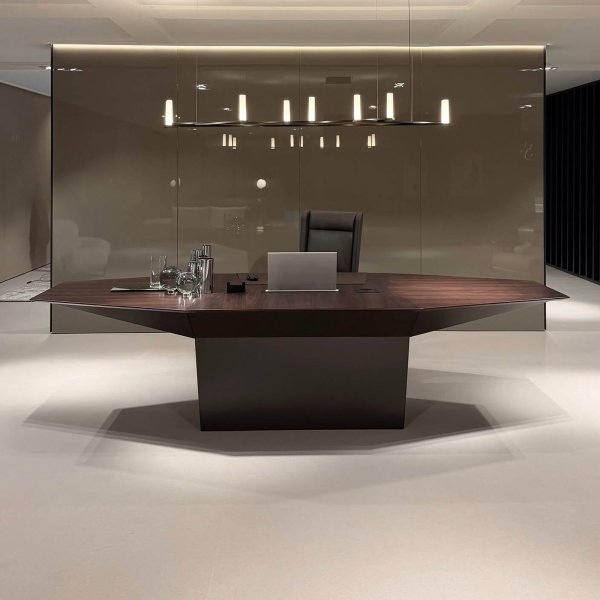
Eidos
₹ 2.996.040
A modern office table is defined by the working day it has to carry; the year of its design comes second. The managing directors we support across Gurgaon, Bengaluru and Mumbai run their cabins hard — two screens and a laptop from nine, video reviews with a plant in Pune and an investor in Singapore before lunch, four colleagues pulled in at short notice because the boardroom is taken. A modern executive table is the one engineered for exactly that day.
The Italian tables in this selection treat technology as structure rather than accessory. Cable channels run inside the frame to flush ports at the surface, so the desk stays clear with a full device load connected. Tops come in matte lacquers and fine open-pore veneers calibrated to behave on camera as well as under the hand. Meeting-end extensions and paired service units turn the MD table into a compact meeting suite without claiming a second room from the floor plate.
Modern here also means restrained: clean geometry, precise thicknesses, materials that signal seniority without gloss or carving. La Mercanti configures every modern executive table around the director’s actual working pattern — screens, meetings, cable load — before the order is released, so the cabin performs from its first Monday.
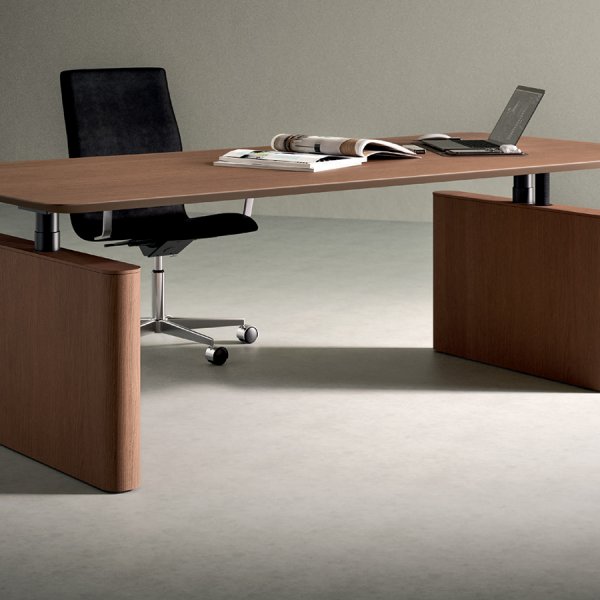
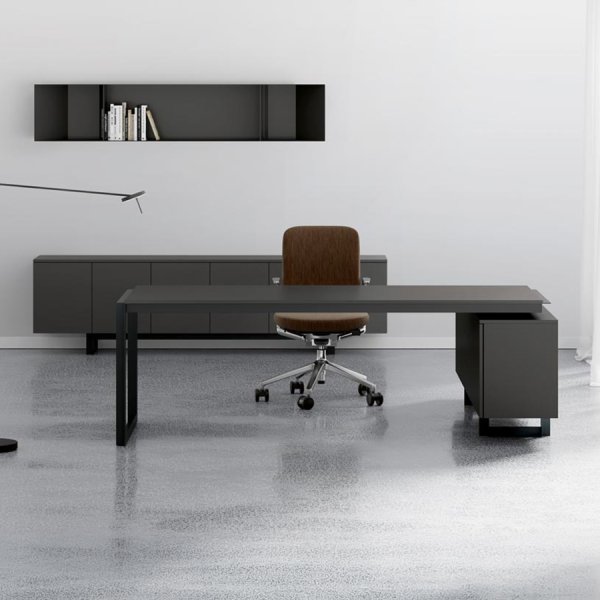
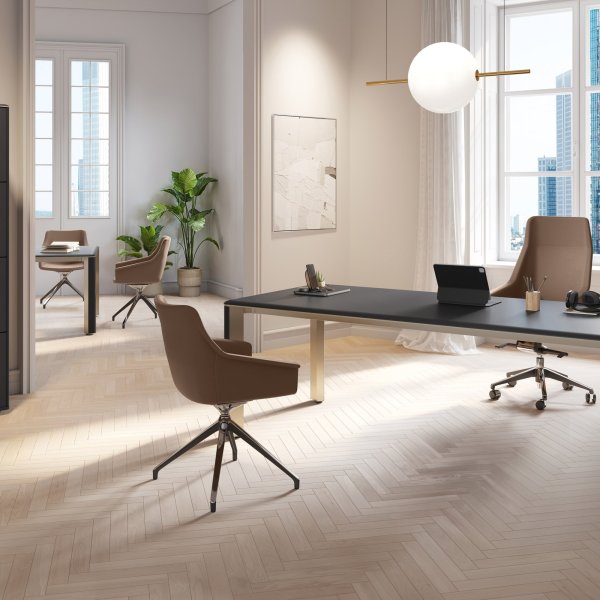
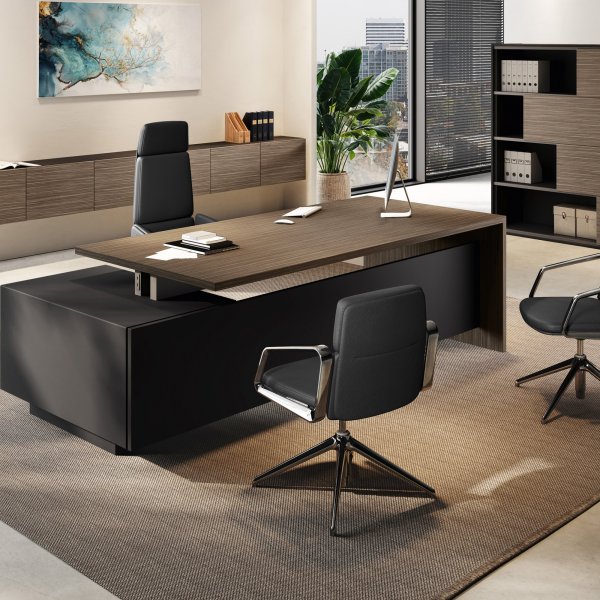
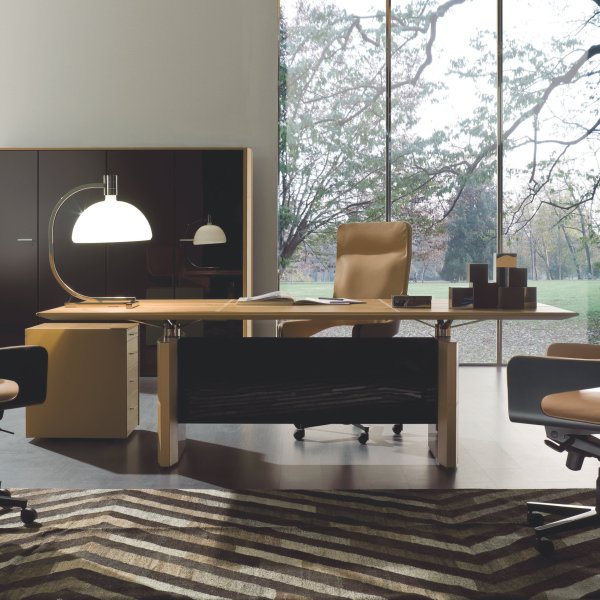
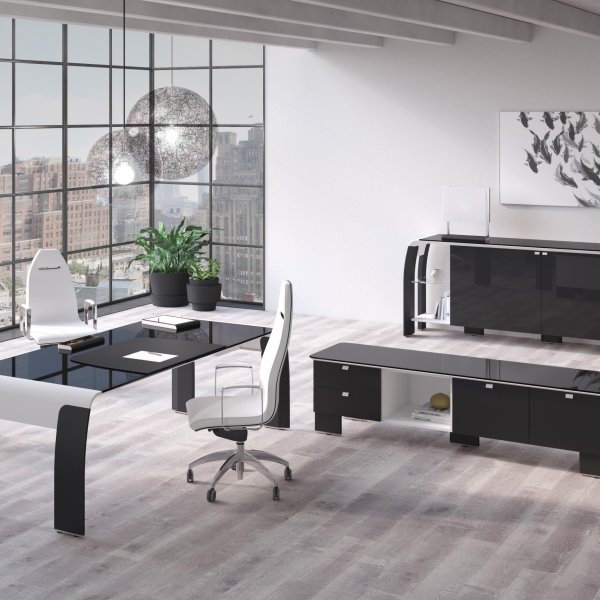
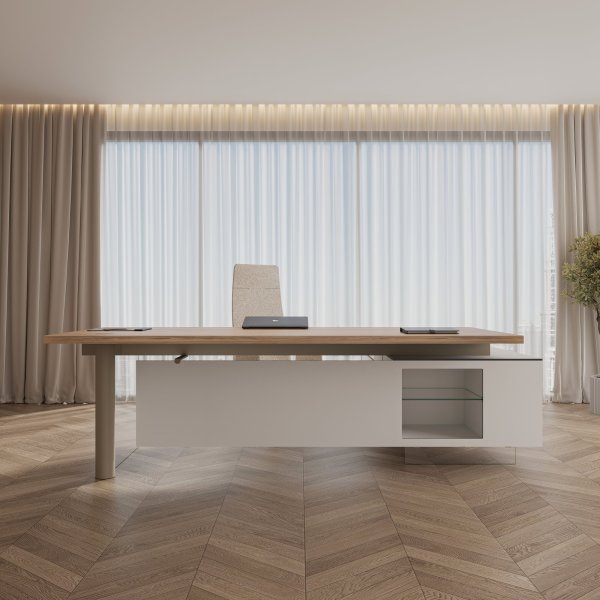
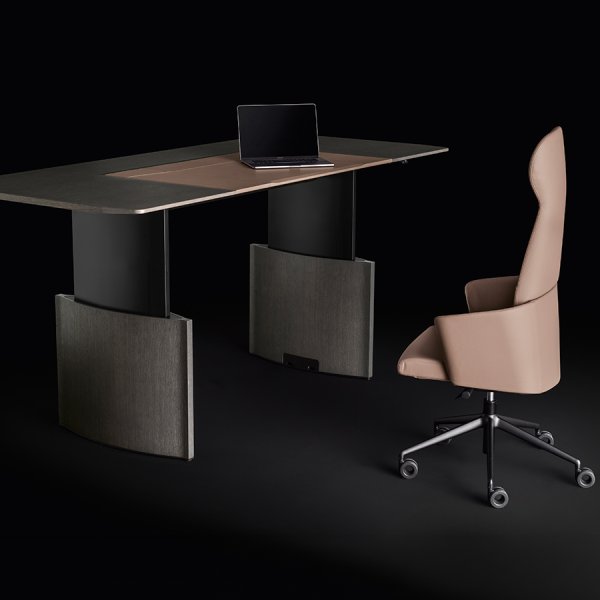
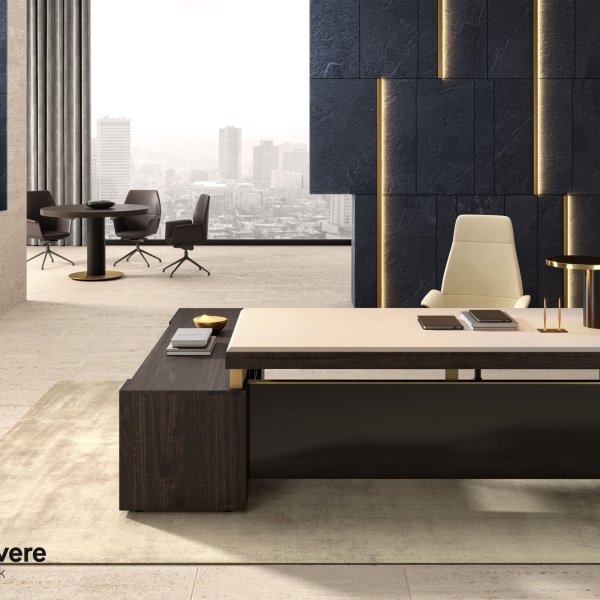
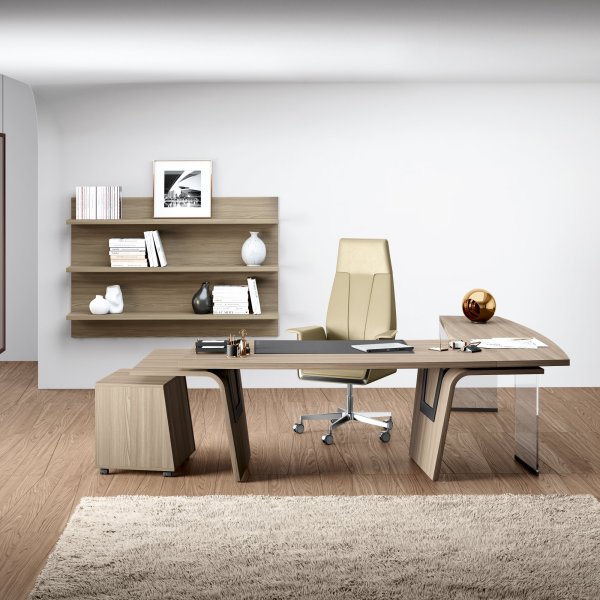
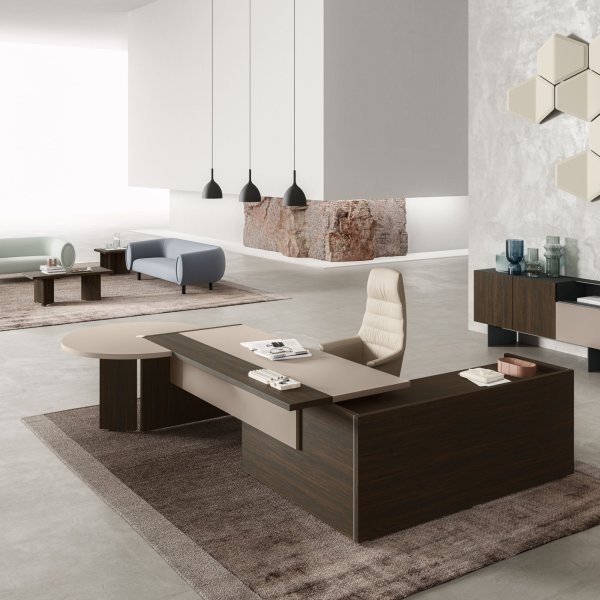
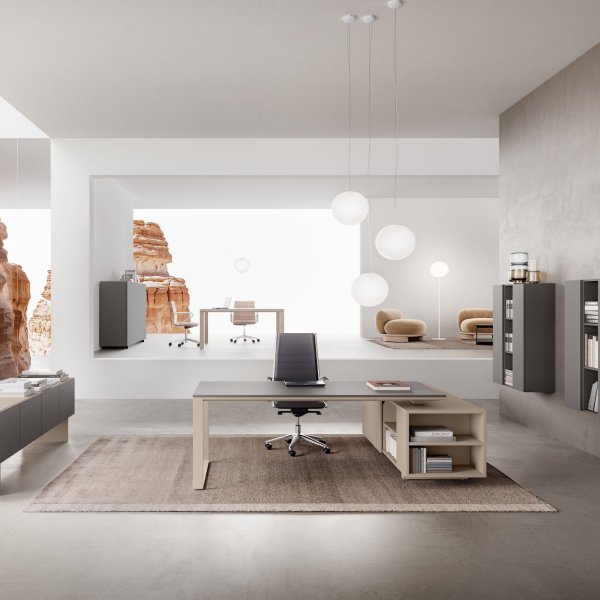
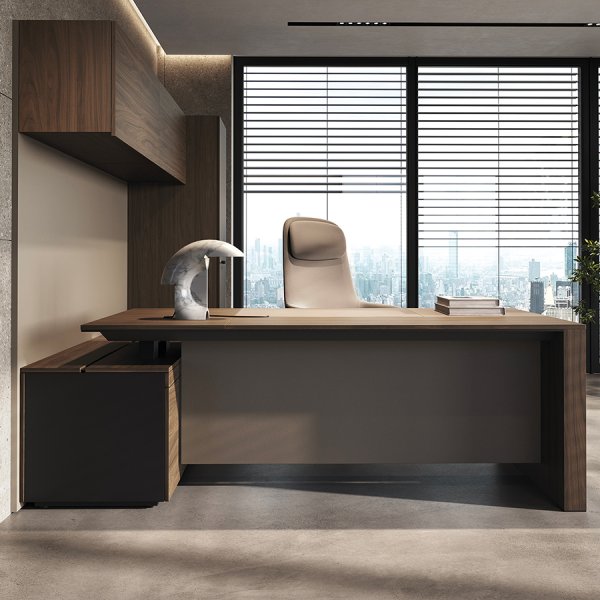
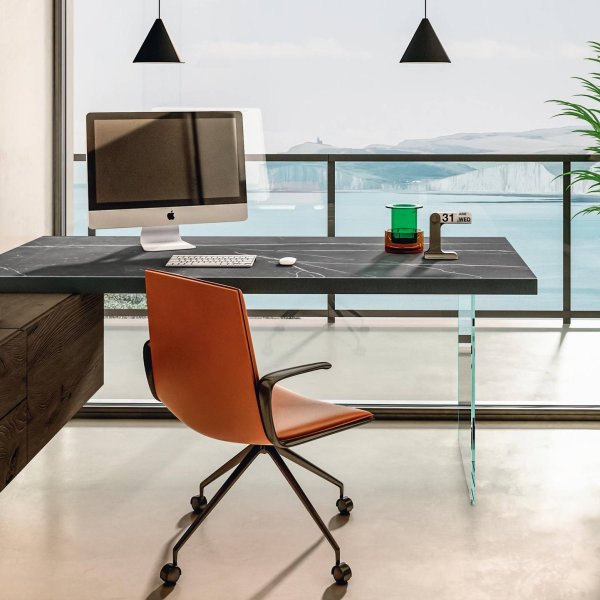
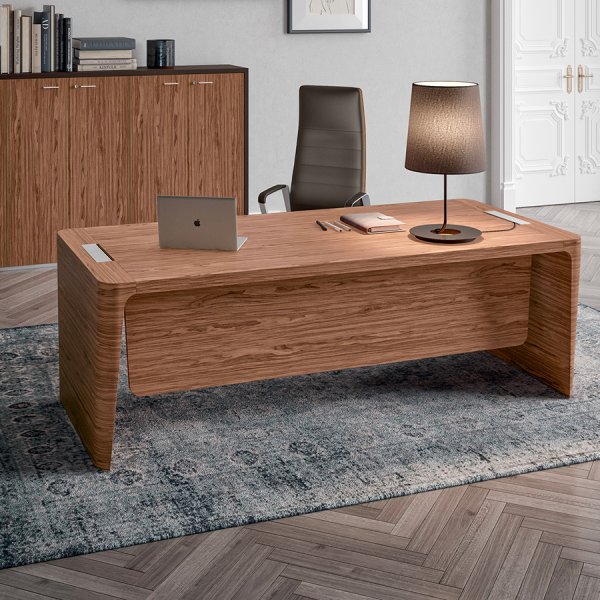
Camera-ready means the surface behaves under a lens: matte or satin finishes that return light softly, no mirror plane bouncing the window or the ceiling LEDs into the frame, and cable discipline that keeps the visible strip of desk clean on every call. Glossy tops fail the first requirement immediately — on video they read as a band of glare exactly where your hands and documents should be — and they fail off camera too, showing every fingerprint between the morning and evening housekeeping rounds. High gloss had its decade in Indian executive furniture; the premium segment has moved to matte lacquer, open-pore veneer and leather detail, and the video call is a large part of why.
Before finalising any modern office table for an MD cabin, ask for one piece of evidence: a screenshot from the director’s next video review, taken at the usual hour from the current seat. Every fault it shows — the glare band across the surface, the washed-out face, the cluttered strip of desk in frame — becomes a line in the new table’s specification, settled while it can still be engineered rather than apologised for.
Decide on headcount and duration, and the threshold is sharper than most layouts assume. Up to four people for under an hour, several times a day: the integrated extension wins, because the MD stays at the working position with screens and documents in reach, and the conversation keeps the tempo of a working session. Six or more people, or sittings that run long, need a separate table — guests at an extension end up facing each other at desk height and angles designed for two or three, and the meeting degrades physically before it degrades in content.
The geometry matters as much as the count. An extension needs roughly 80cm of clear depth per seated guest beyond the desk edge, which many Indian cabins can give and many cannot. Measure before choosing: a cabin of about 4m by 5m carries a desk with extension comfortably; anything tighter usually serves the MD better with a clean desk, two good visitor chairs, and the boardroom booked properly for the rest.
For a receiving cabin used a few hours a week, glass can hold its own. For a working MD cabin it is the wrong material, and we say so plainly. Glass shows fingerprints within an hour of cleaning, transmits the tap of every object into the room, sits cold under the forearms through air-conditioned days, and on video behaves worse than gloss lacquer — a moving reflection of everything above it. There is a quieter problem too: in the premium segment, a glass executive top now reads a decade behind, the way chrome-and-glass reception counters do. The material that replaced it is matte-finished wood, with leather or metal detail carrying the modern signal instead.
If transparency appeals for its lightness, the current answer is a thin-profile top on a sculptural base: the visual lightness of glass with none of its daily costs. Reserve actual glass for low-use spaces where it is admired more often than it is touched.
No, provided the sit-stand mechanism is dressed to executive grade, and today it can be. Authority in an Indian cabin lives in width, material and front presence: a two-metre top in walnut or matte lacquer with a full modesty panel reads senior at any height, while the bare-legged adjustable frames of the workstation floor read operational no matter what sits on them. Italian manufacturers now build executive sit-stand programmes precisely for this — lifting columns concealed in finished side panels, tops in the same veneers as the fixed range, cabling that travels inside the structure through the full stroke.
The health case does the rest. Directors keep longer desk days than anyone on their floor, and a discreet posture change between calls is a working tool rather than a fashion statement. What to avoid is the compromise piece: an ordinary office lifting frame under an executive top, which delivers the mechanism and loses the room. Specify the executive programme, or stay fixed.
Most executive tables are chosen from photographs and regretted in operation. The audit below reverses the order: one week of observation, then a specification. It is the method we apply on modern cabin projects across Gurgaon, Mumbai and Bengaluru, and it takes less time than a single showroom visit — six steps, each producing a fact the order form will use. Run it on the director's cabin as it works today, even if the new office is still on paper: the working pattern travels, and the furniture should follow it.
Before any catalogue is opened, have the executive assistant keep a simple log for five working days: meetings held at the desk with headcount, video calls and their hours, stretches of deep work, documents signed, guests received. No interpretation, just the record. The log replaces the two fictions that mis-size most Indian cabins — the director’s own description of the day, which understates meetings, and the architect’s assumption, which overstates ceremony.
Read the week for its pattern. A cabin with eleven short internal meetings needs the meeting extension and durable visitor seating. A cabin with four hours of video daily needs the camera zone engineered first. A cabin where the director mostly works alone between site visits needs storage and surface, and very little theatre. The table type falls out of the log almost mechanically, which is the point: the specification should be an observation. Keep the log in the project file — it will settle later debates about size and features without anyone’s seniority entering the argument, and it is the baseline you will check the finished cabin against after a month of use.
List everything that will draw power or data at the table on its heaviest day: monitors, laptop and dock, desk phone or softphone, video bar, task light, phone chargers, and whatever the director’s next device turns out to be. Indian executive cabins routinely run eight to ten connections at the desk, and the count only grows — so specify for the list plus headroom of two or three points.
Map the list to the table’s engineering rather than to the wall. The questions for the manufacturer’s data sheet: how many power and data points does the under-top raceway carry, where do the surface ports sit relative to the seating position, and which leg takes the spine down to the floor. Then place the floor point accordingly with the electrical contractor while services are still open. The order of operations is the whole trick. Power planned from the table drawing produces an invisible installation; power adapted after delivery produces the taped extension board that no cabin at this level should ever contain. Photograph the finished under-desk installation for the facilities file — the next reconfiguration will be grateful for it.
From the week’s log, take the modal meeting: the size and duration of the sitting that actually recurs, discounting the rare large one. Up to four people in short working sessions points to a desk with an integrated meeting extension; recurring sittings of six, or anything ceremonial, points to a clean desk plus a separate meeting table, and the extension money is better spent on that second piece. The frequent error is specifying for the largest meeting of the year, which produces an oversized desk that crowds the cabin on the other 250 working days.
Only after this decision does length get fixed. A desk-plus-extension in an Indian corporate cabin wants roughly three metres of combined run along its wall and about 80cm of clear depth per seated guest beyond the desk edge. A desk with a separate table wants the two zones kept distinct, with the meeting surface nearer the door so that guests never cross behind the director. Draw both options on the cabin plan at scale, with door swing and window line marked, and one of the two will usually eliminate itself before anyone has to argue for it.
The modern cabin’s surface has two clients: the person working at it ten hours a day, and the lens broadcasting it to people who will never visit. Serve both with the same choice — matte or satin finishes in mid tones. Matte lacquer and open-pore veneer return light softly on video, hide fingerprints between cleaning rounds, and stay pleasant under the forearms through air-conditioned days. Rule out high gloss and glass for the working position entirely, and be careful at the extremes of tone: a very dark top swallows light and displays dust proudly, while a white one can bloom into glare on camera at the wrong hour of the afternoon.
Then test rather than trust. Order physical finish samples and view them in the cabin itself, under its LED panels and its window, at the hours the director actually sits there. Finishes shift dramatically between a European catalogue photograph and Indian office lighting, and ten minutes with samples at three in the afternoon has corrected more specifications than any brochure ever will. The sample that looks quietly right in the real room is the answer, whatever looked better on paper.