
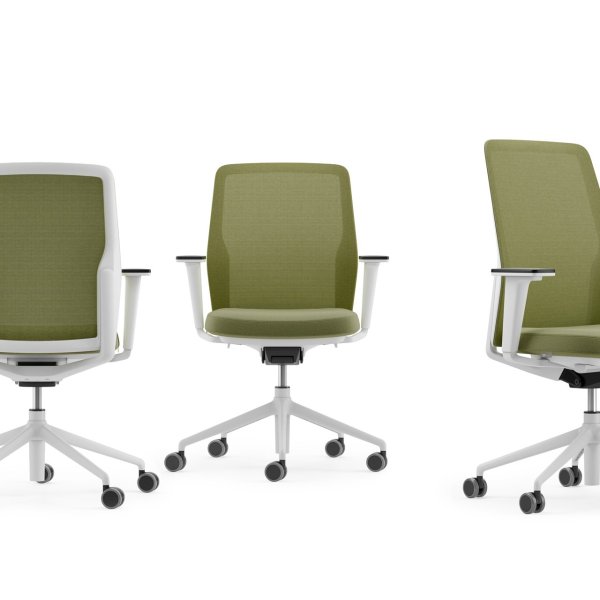
DuoChair
₹ 147.000
The workstation chair is the hardest-working asset on an Indian office floor. Nine and ten-hour days are the norm, six-day weeks are still common across much of corporate India, and in growing operations the same seat often serves two shifts. Choose an ergonomic office chair well and it disappears into the work; choose it badly and the error is multiplied across every workstation on the floor, one stiff lower back at a time. No other furniture decision compounds like this one.
This selection carries Italian task chairs and workstation seating engineered for exactly that duty cycle: breathable mesh backs and upholstered formats, synchronised mechanisms that follow the body without a manual of levers, and components tested to European contract-seating standards for continuous professional use. What you are paying for rarely photographs well — cycle-tested mechanisms, gas lifts rated for intensive service, castors matched to the floor they will actually run on, mesh tensioned to support rather than sag.
These are chairs specified for the floor as a system, not bought as a commodity. La Mercanti supports Indian fleet orders end to end, from pilot seats and specification review to finish documentation, so the chair that works for four people keeps working for four hundred.
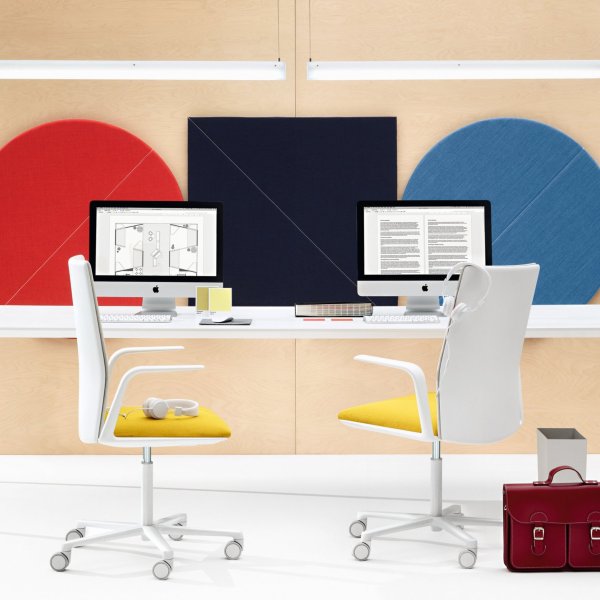
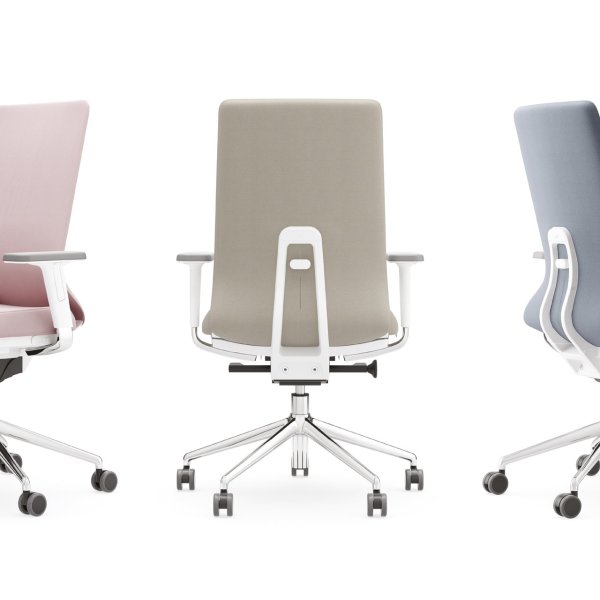
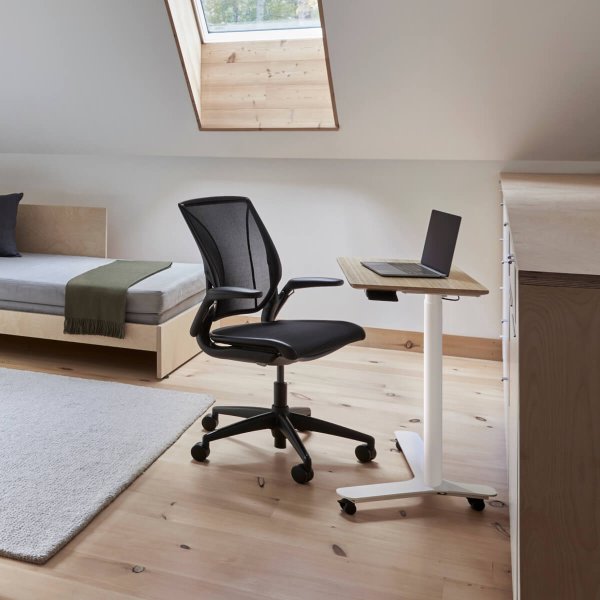
Decide on thermal load and maintenance regime, not on looks. A mesh back moves air through the long afternoon stretch when a dense floor runs warmer than the AC setpoint suggests, and for sitters who spend eight to ten hours against the backrest that airflow is the difference between comfort and a damp shirt. Upholstered backs give firmer, more even support and a quieter, more finished look, and they suit floors with generous cooling and lower density. The seat pan is a separate question: a fabric seat over proper foam outperforms full mesh for all-day sitting, which is why the strongest task chairs pair a mesh back with an upholstered seat.
Factor in your housekeeping reality as well. Mesh shows accumulated dust along the weave and needs vacuuming rather than wiping; upholstery needs periodic deep cleaning. Whichever way you decide, decide once for the whole floor — a mixed fleet doubles your spares and halves your bargaining position.
Everyone gets the same chair. Hierarchy in an Indian office lives in the cabins, and it belongs there; the workstation floor works best as a single, consistent field where the seating says nothing about grade. The moment team leads get a visibly better chair at the same bench, two things happen: the better chair migrates around the floor within a quarter, and every promotion generates a furniture request. Neither improves output.
Standardising on one well-specified task chair has quieter advantages that finance will appreciate: one spares stream for castors, lifts and armrest pads, one care routine for housekeeping, interchangeable seats when teams are reshuffled, and real leverage on the order. Distinguish team leads by desk position or cabin access, not by backrest. Reserve the seating upgrade for where it is culturally legible — the cabin line — and put the money saved into a better mechanism for all four hundred seats.
Because adjustment is a behaviour, not a feature, and most fleets are specified as if the feature alone were enough. Walk any workstation floor in Gurgaon at mid-morning and count: the majority of chairs are at delivery height, tilt locked, lumbar wherever the assembler left it. The sitter adapts to the chair instead of the reverse, and the ergonomic premium the company paid for is sitting unused in the levers.
Two corrections work. First, specify mechanisms that need less of the user: weight-activated synchronised tilt that calibrates resistance to the sitter automatically, and controls that can be understood by touch in ten seconds. Fewer, clearer adjustments beat a cockpit of options. Second, treat induction as part of the purchase — a fifteen-minute demonstration per team during handover, repeated for new joiners by the facilities team. A mid-range chair adjusted correctly serves the spine better than a flagship chair used as a stool.
At a 4ft (1200mm) pitch the constraint is width and swing, and both must be checked before anything else. Measure the chair across the outside of the armrests — around 26in (660mm) or less leaves working clearance between neighbours, while a broad-shouldered chair at 28in turns every entry and exit into a negotiation. Check the base diameter next: the five-star base and the sitter’s push-back arc define how far the chair travels into the aisle behind, and on tight floors a slightly smaller base with smooth-tracking castors keeps that arc civil.
Back height matters more than most buyers expect. On a dense floor, a forest of very tall backs blocks sightlines and daylight and makes the space read even tighter; a mid back with proper lumbar support keeps the floor open without costing the spine anything. The operational rule: take three measurements — width across arms, base diameter, back height — to the pitch drawing before you fall for any chair’s styling.
Most workstation seating in India is bought backwards: a catalogue arrives, a chair is liked, and the floor is then expected to fit around it. The professional sequence runs the other way. You write the brief first — hours, floor conditions, adjustment policy, acceptance test — and let the brief eliminate ninety percent of the market before a single sample is wheeled in. This is the four-part method we see disciplined Indian buyers use on fleet orders.
The first line of the brief is not how many chairs you need; it is how many hours each chair works. A 400-seat floor running a single shift, five days a week, is a fundamentally different duty cycle from a 400-seat operation running extended days, Saturdays included, with hot-desking pushing utilisation past one person per seat. The second floor consumes chairs at roughly double the rate, and a chair specified for the first will fail early on it.
Map the floor into duty bands before anything else. Standard band: one occupant, regular hours. Intensive band: long days, six-day weeks, shared seats, the operations and support functions that never quite log off. The intensive band justifies the higher mechanism class, the certified gas lift, the denser seat foam — and it is usually a minority of the floor, which is where the budget arithmetic becomes interesting.
Write the bands into the brief with seat counts against each. Every specification decision that follows — mechanism, foam, warranty expectations — now has a defensible basis instead of a general impression of how hard people work.
A task chair does not perform in the abstract; it performs on your flooring, in your air-conditioning profile, inside your workstation pitch. These are facts you already own, and they should be in the brief before any vendor conversation. Note the floor finish zone by zone — carpet tile behaves opposite to vitrified tile or polished stone, and the castor specification flips with it: hard-tread castors for carpet, soft-tread for hard floors, a detail that decides both the chair’s rolling behaviour and the floor’s appearance in three years.
Record the thermal reality honestly. What is the AC setpoint, when does it switch on and off relative to working hours, and which zones run warm? A floor that is comfortable at ten and heavy by four points you towards breathable backs. Then take the workstation pitch and aisle widths from the layout drawing, because they will set hard limits on chair width and back height.
One page covers all of it. That page saves you from the classic Indian fleet errors: castors that chew the floor, backs that block the light, and a chair that was tested in a cool showroom and lives on a warm floor.
Every mechanism decision hides a human question: who will actually adjust this chair, and how often? Answer it first. If the floor has high churn, shared seats and no appetite for training, specify self-calibrating movement — weight-activated synchronised tilt that sets its resistance to whoever sits down — and keep the manual controls to the two that matter, seat height and lumbar position. If seats are personally assigned and the company will invest in a proper induction, a fuller adjustment set earns its cost, because it will actually be used.
Be sceptical of the cockpit chair for Indian floor conditions. Eight levers on a shared seat is not ergonomics; it is a lottery of whoever sat there last. The pattern across dense floors is consistent: adoption of adjustments falls as their number rises.
Write the policy as a sentence in the brief — for example, shared seats, zero-training mechanism, two manual adjustments maximum — and let it filter the market. It will remove more unsuitable chairs than any budget line, and the ones that remain will be the ones your people can use without a manual.
No fleet order should be released on the strength of a showroom sit. Take the shortlist down to two models and run a working pilot: a small batch of each, placed with the heaviest-use team you have — operations, support, whoever lives at the desk — for several working weeks. Rotate the seats so multiple builds and postures pass through each chair, and tell the team they are evaluating, not receiving; candour improves immediately.
Collect two kinds of evidence. Structured feedback from the sitters at the end of the trial: comfort in the final two hours of the day, ease of adjustment, anything they stopped noticing (the highest compliment a task chair can earn). And a physical inspection by facilities: seat foam recovery, mesh tension at the edges, castor wear against your actual floor, any looseness in the arms. A few weeks of double-shift Indian use will surface what a specification sheet cannot.
Only then release the fleet order, written against the piloted specification with the wear parts and spares terms confirmed. The pilot costs a few chairs and a month; the alternative costs four hundred lessons learnt at once.