
Aston
₹ 378.480
In an Indian cabin, the chair announces rank before the table does. A visitor who steps past the partition reads the back height, the leather, the way the seat carries the person in it, and files the conclusion away before the first word is spoken. The boss chair is not an accessory to the MD cabin; it is the most legible object in it, and it deserves the same deliberation as the boss table it sits behind.
This selection brings together Italian high back boss chairs and executive revolving chairs from seating specialists such as Luxy and I4Mariani: full-grain hides, die-cast aluminium bases, synchronised mechanisms built for the long seated hours of a promoter who runs the business from his desk. The real specification is what a decade of Indian office life does to a chair: ten years of conditioned air and monsoon seasons, of the same person settling in at nine and staying past the last review. These hides mellow rather than crack under that regime, and the foam and the mechanism keep their composure long after the cabin around them has been repainted.
From the Chairman’s suite to the director cabins a floor below, the range steps down in deliberate, visible grades, so the hierarchy reads without a word being said. La Mercanti has specified executive seating worldwide since 1997 and supports every Indian order with configuration advice, finish samples and full documentation before anything is committed to production.
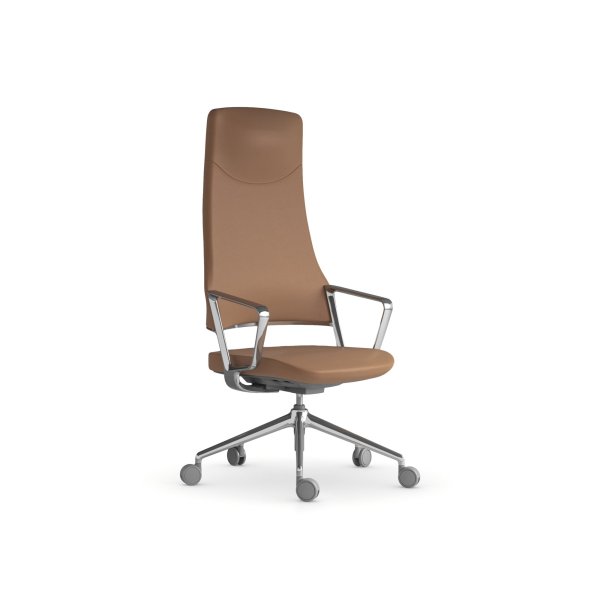
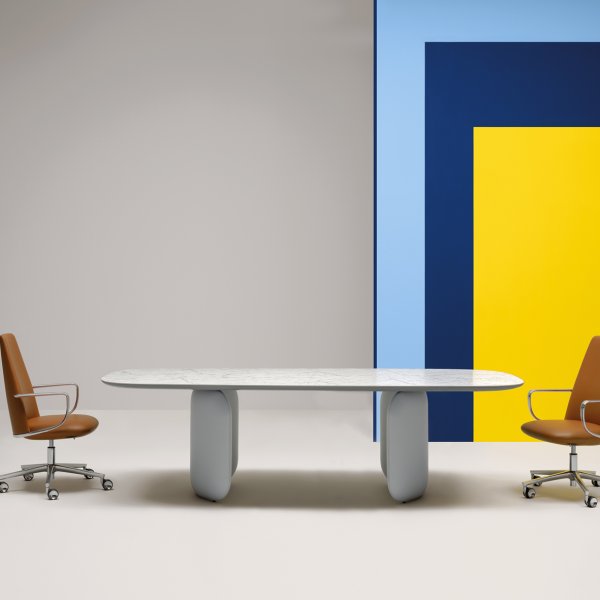
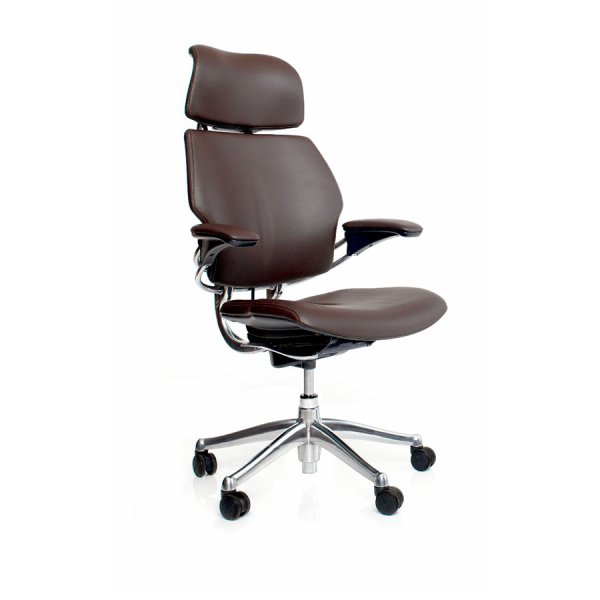
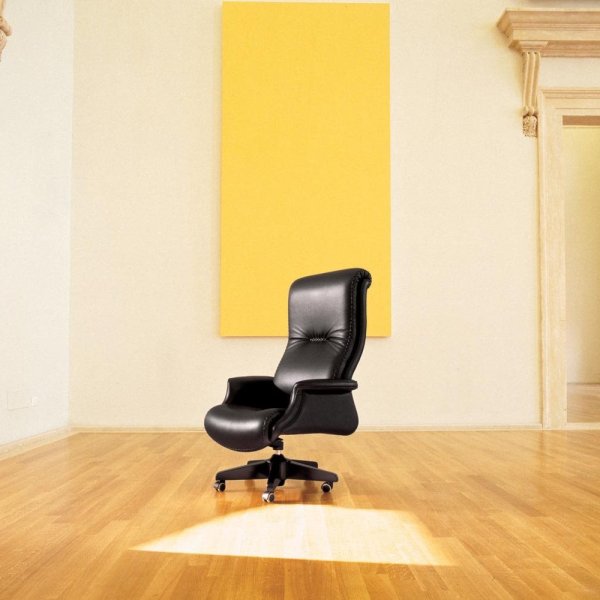
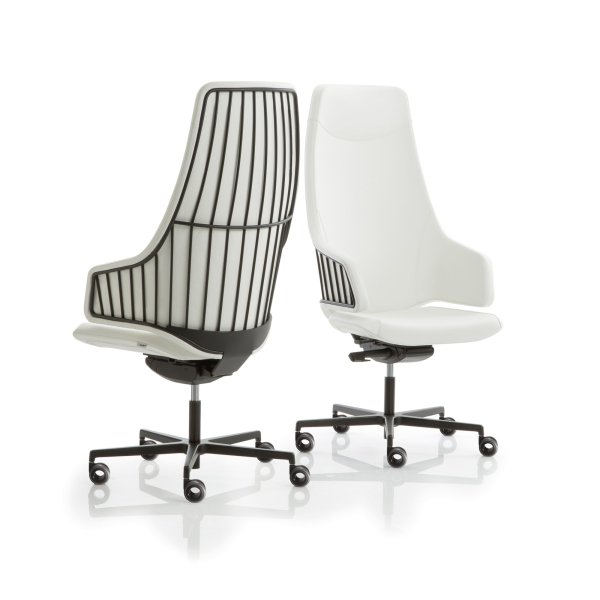
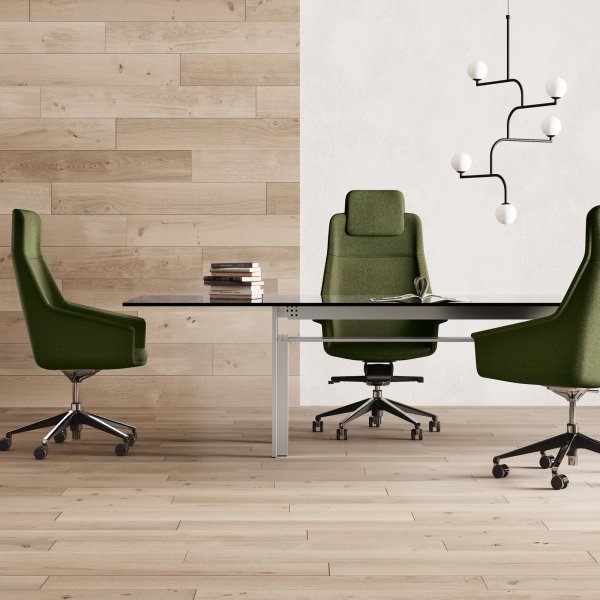
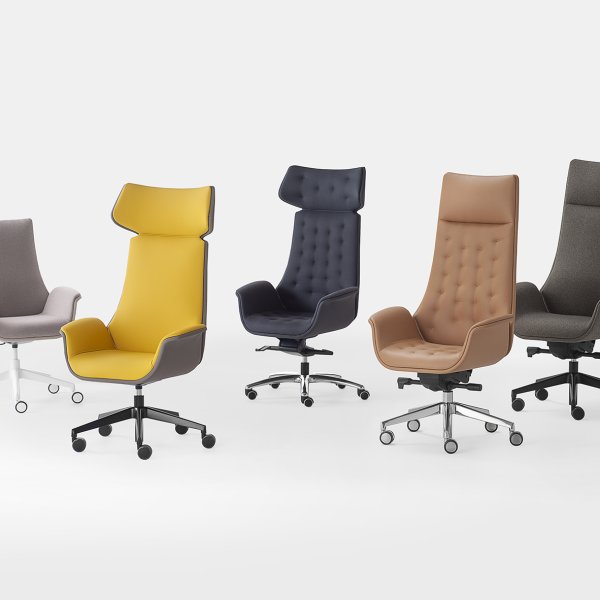
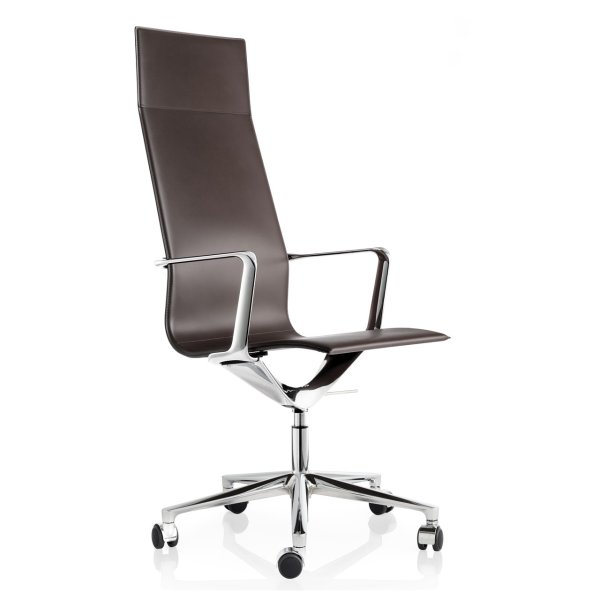
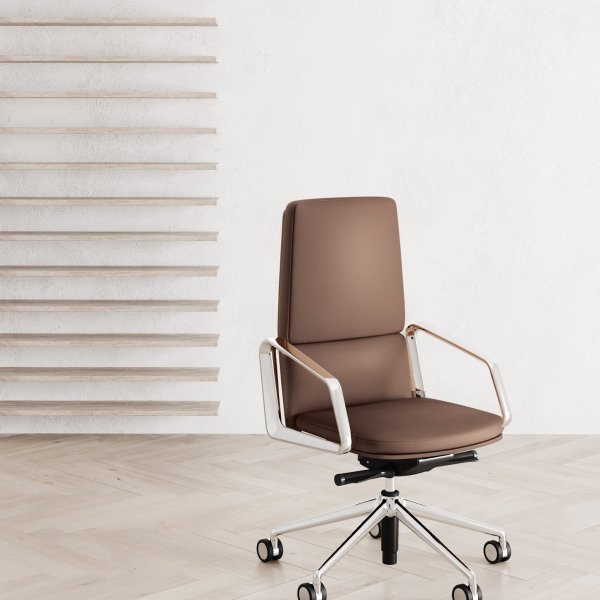
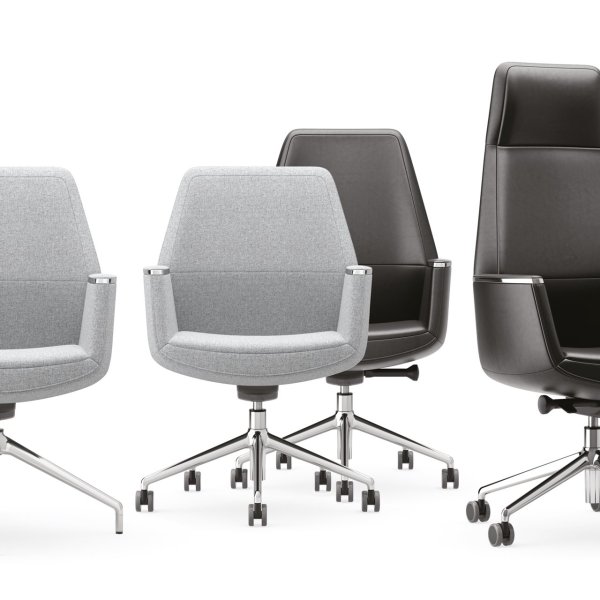
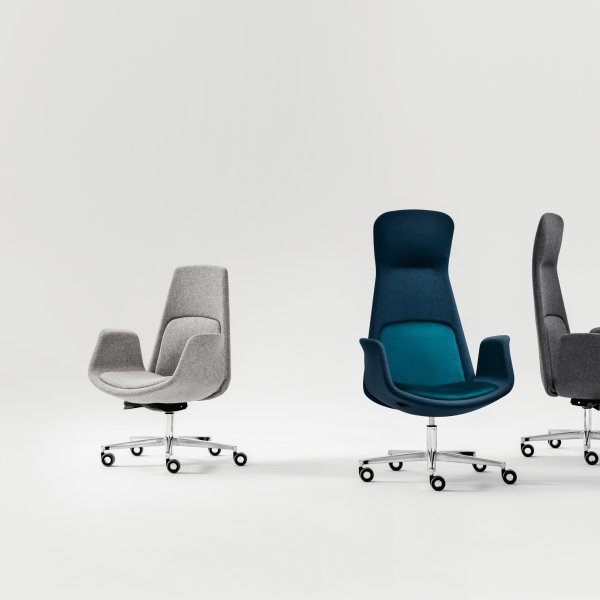
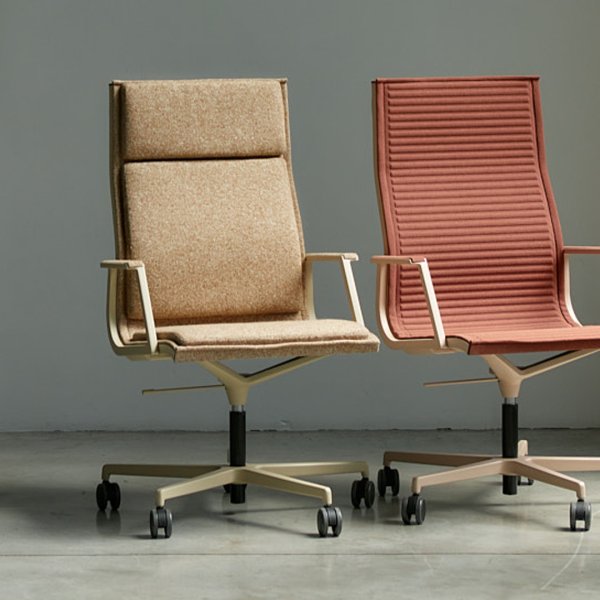
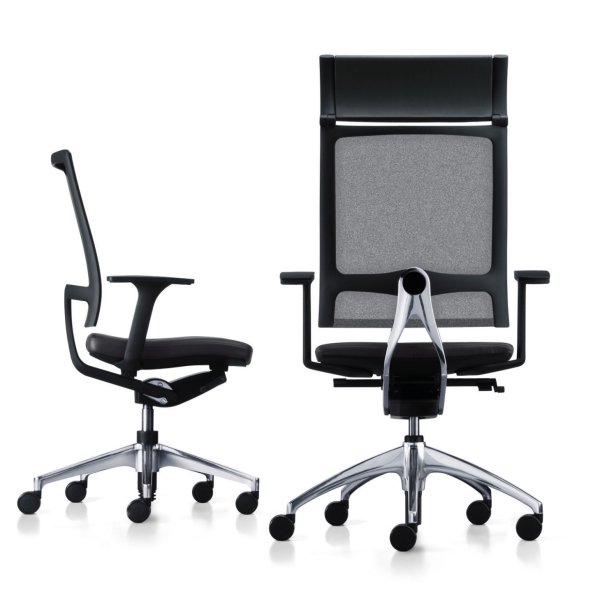
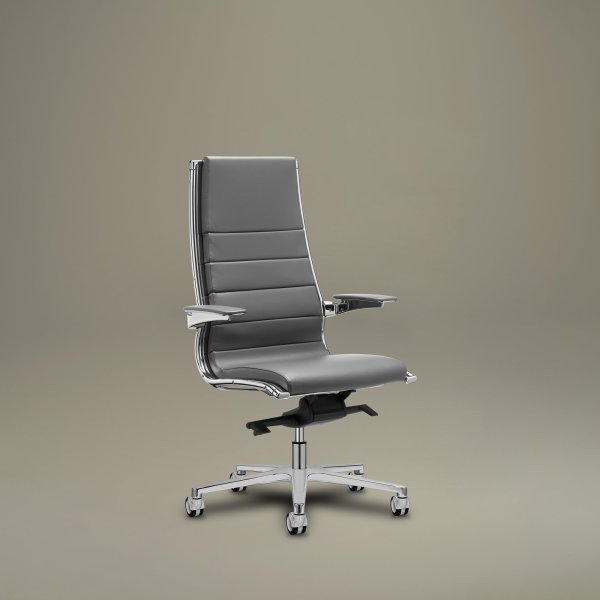
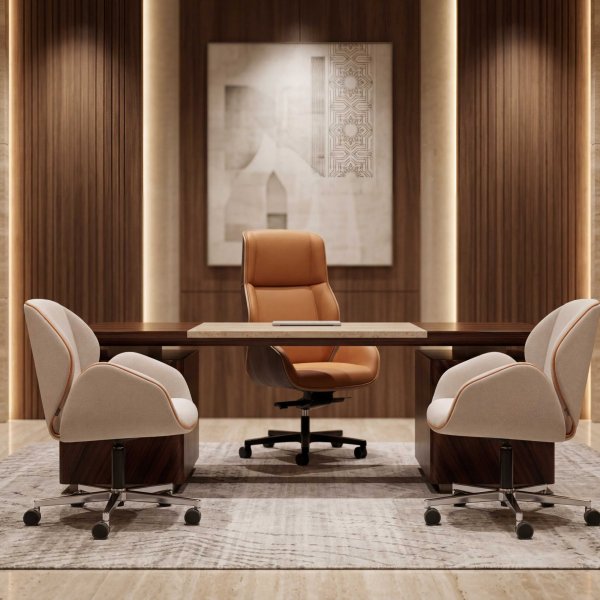
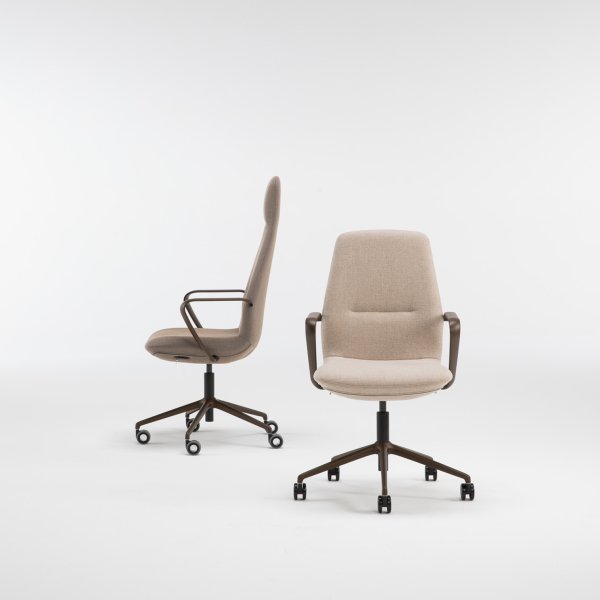
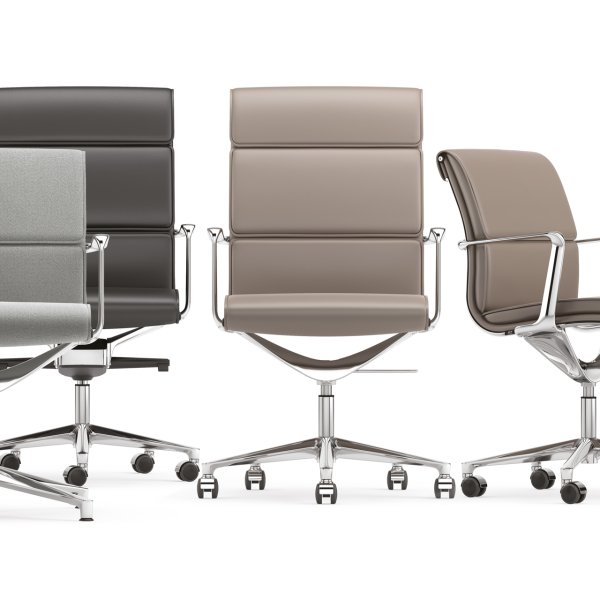
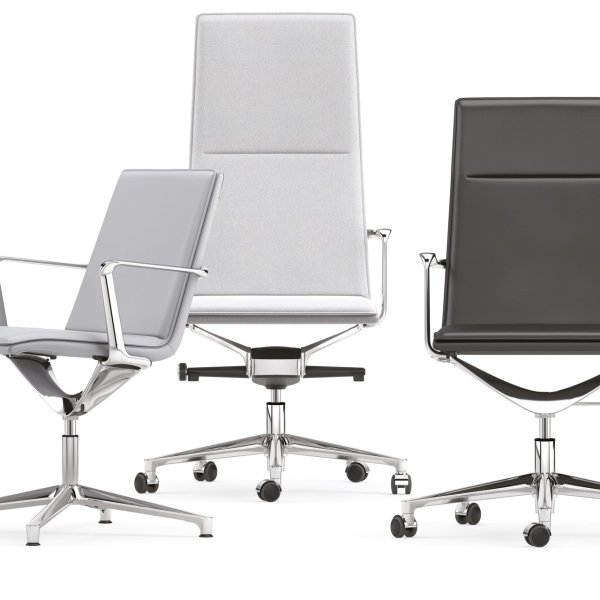
The high back earns its place, but only when it is proportioned to the person sitting in it. In Indian corporate culture the back height of a chair is read as precisely as the designation on a visiting card: the tall silhouette behind the boss table signals where authority sits, which is why the high back boss chair remains the default for MD and Chairman cabins. The mistake is treating height as the whole answer. A tall promoter with broad shoulders needs the full back for actual support of the head and upper spine during long receiving hours; a slighter build in the same chair looks swallowed by it, and the signal inverts.
The working rule: fit the back to the sitter first and the designation second, then let the grades step down visibly — Chairman, MD, directors — so the floor’s hierarchy stays legible. Ask for the chair’s back height measured from the seat pan, not overall, and compare it against the sitter’s seated shoulder and head line.
Behaviour over time, not appearance on day one. Leatherette and PU coverings photograph well and feel acceptable in the showroom, but under Indian office conditions — air-conditioning through the day, warm humid nights, the daily friction of long sitting — the coating dries, delaminates at the seat edge and cracks along the flex lines, usually starting where the trouser belt rubs. A full-grain hide behaves in the opposite direction: it breathes, takes on patina, and looks more established in year five than in year one, which is exactly the message an MD cabin is supposed to send.
There is also a quieter distinction: the panel map. Many chairs sold as leather use hide only on the contact faces and a synthetic match everywhere else. Before ordering, ask in writing for the leather type (aniline or pigmented), its origin, and a panel map showing where genuine hide is used — then flex the swatch hard and watch how the surface recovers.
Because comfort lives in the mechanism and the foam, and both are invisible in a showroom. Low-density foam takes a body impression within months of daily use; the seat then bottoms out against the pan and the sitter starts shifting weight every few minutes without knowing why. A basic centre-tilt mechanism pivots the whole chair from one point, so reclining lifts the knees and pitches the sitter backwards — tolerable for ten minutes, tiring across the receiving hours an Indian MD actually keeps. A synchronised mechanism moves back and seat at different rates and holds a working recline steady during conversation.
When you evaluate an executive revolving chair, read the specification sheet in this order: foam density, mechanism type, gas-lift class, base material. Colour and stitching come last. A chair that is right in those four lines will still feel right when the leather has long stopped being new.
Measure three relationships before you look at a single finish. First, clearance: the armrests must pass under the table’s apron or modesty structure, or the chair will forever sit half a foot away from the working edge — take the apron height and the armrest height in writing. Second, scale: a 2.4m director table with a full credenza dwarfs a mid back chair, while a modest cabin table disappears behind a throne; the back of the chair should rise clearly above the table line without dominating the wall behind it. Third, the material dialogue: the leather tone against the wood grain, the base metal against the cabin’s hardware and door furniture.
The practical implication is simple: never select the boss chair in isolation. Carry the table’s dimensions, finish codes and a photograph of the cabin to the selection, and judge every candidate inside that context rather than against the showroom floor.
A failed boss chair rarely fails in the showroom. It fails weeks earlier, in a sequence of small decisions that each looked reasonable at the time. Across two decades of supporting cabin projects in India — from BKC towers to family businesses in Ahmedabad — the same four mistakes appear in the same order. Here they are, each with the correction that prevents it, so the chair that arrives is the one the cabin was actually waiting for.
In most Indian fit-outs the boss chair is the last purchase — the table is delivered, the panelling is done, the lighting is commissioned, and only then does someone open a seating catalogue. By that point every dimension that matters has already been decided without the chair: the height of the table top, the depth of the working zone, the distance to the credenza behind, the sightline from the cabin door. The chair becomes a compromise fitted into leftover space.
The correction costs nothing: decide the table and chair as a pair at the design stage, even if they are ordered months apart. Stand at the cabin door on the drawings and ask what a visitor will see first — in almost every layout it is the back of the chair, not the table. That back is the cabin’s opening statement, so give it a wall, a width and a height on the plan.
If the cabin is already built, reverse the survey: measure the table’s height and footprint, the free depth behind it and the wall behind the sitter before shortlisting anything. Ten minutes with a tape saves the most common cabin regret in the country.
Height reads as seniority, so the instinct is to order the tallest chair on the page for the most senior man in the building. It works only when the sitter and the room can carry it. A very tall back on a slight frame makes the person look smaller, not larger; the eye measures the gap between the top of the head and the top of the chair, and a large gap reads as a borrowed seat. The same chair under a low false ceiling crowds the cabin and throws the proportions of everything around it.
Fit the back to the body first. Seated in the chair, the head restraint or back crown should sit at or just above the sitter’s head line — enough to frame, never to tower. Then fit the chair to the room: generous ceiling heights and a 2.4m table can carry the full presidential silhouette, while a compact director cabin is better served by a high back of more restrained crown height.
Reserve the tallest grade for the Chairman or MD alone, and let the director cabins step down a visible degree. When every cabin on the floor has the same towering chair, none of them says anything — and the one man who was meant to stand apart no longer does.
The showroom is designed to sell upholstery. The buyer strokes the hide, approves the colour and signs — and has learnt nothing about the four components that decide whether the chair still works in year three. Under every boss chair sit a mechanism, a gas lift, a base and a block of foam, and the price differences between chairs that look identical are almost entirely there.
Make the specification sheet do the work. Ask what mechanism the chair uses and how it locks; a synchronised movement that holds a working recline is worth more than any grade of hide. Ask for the foam density figure rather than the word premium. Ask what class the gas lift is certified to and what the base is cast from — die-cast aluminium behaves very differently from painted nylon after years of a heavier build sitting down hard at eight every morning.
Then sit, properly. Twenty minutes in the chair, in your own working posture, with the recline unlocked and a document in hand, the way a real cabin hour actually passes. A chair that needs explaining in the showroom will need forgiving in the cabin.
The MD’s chair gets chosen with care; the director cabins get whatever the vendor has in stock the following quarter. Two years later the executive floor is a museum of unrelated chairs — different backs, different bases, different leathers — and the visual hierarchy that Indian offices depend on has dissolved into accident. A guest walking the corridor can no longer tell seniority from seating, which defeats the entire point of investing in it.
Specify the hierarchy as a family in one decision, even if the purchase orders are released in phases. Italian seating ranges are built for exactly this: the same design language stepped across grades, with the crown height, the base finish and the upholstery specification descending in deliberate increments from Chairman to MD to director. One range, three grades, one leather card.
Put the family on paper with finish codes and grade assignments, and hold every future cabin purchase to it. The floor then grows more coherent with each order instead of less — and the chairs keep saying, quietly and in unison, what they were bought to say.