
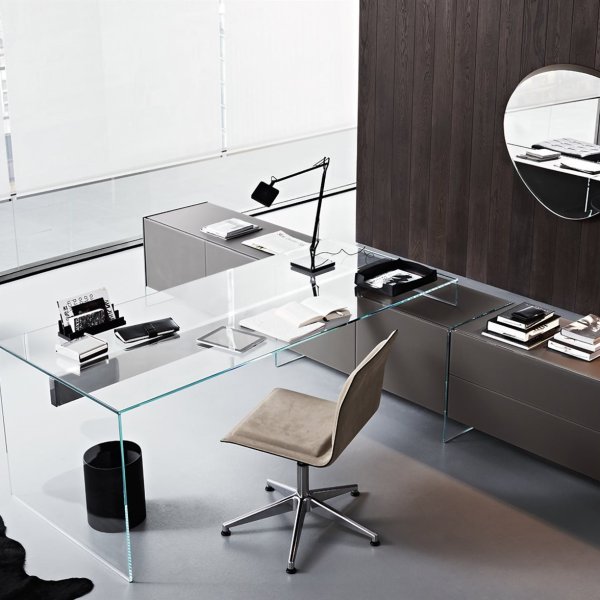
Air Desk
₹ 698.760
A designer office table earns its place in an executive cabin the way a good consultant earns a retainer: through authorship you can trace. In the projects we support across Mumbai, Gurgaon and Bengaluru, the promoters and MDs who choose these tables share one habit — they travel, their clients travel, and both sides recognise a designed piece the moment they sit across from one. That recognition is the point of this page.
The selection brings together executive tables from Italy’s contract design tradition: pieces developed by named designers and studios for manufacturers such as Las Mobili, I4Mariani and Frezza, where the drawing decides the table’s proportions long before marketing decides anything. Expect surfaces in fine-line veneers and calibrated lacquers, structural bases that resolve real weight into thin visual profiles, and detailing — edge chamfers, shadow gaps, flush cable ports — that survives close inspection from a visitor with time to look around your cabin while the chai is served.
These are tables for the director who wants the room to speak internationally without a word of explanation. La Mercanti selects each piece from Italian manufacturers it has worked with for years, and follows every India-bound order from technical drawing to installed cabin — so the signature arrives exactly as the designer drew it.
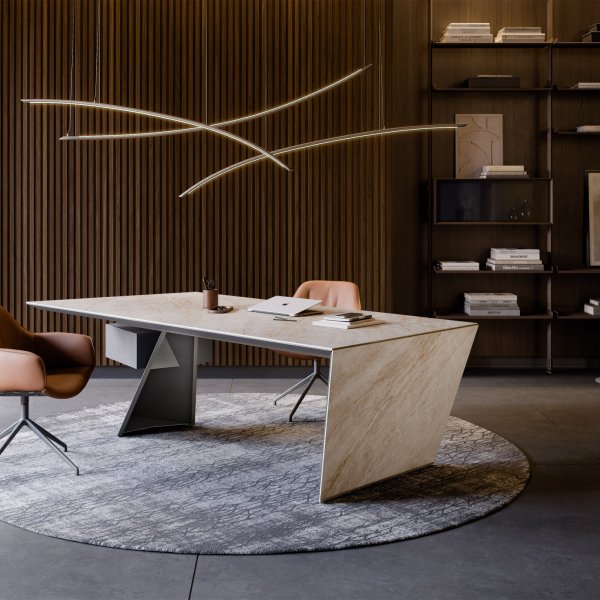
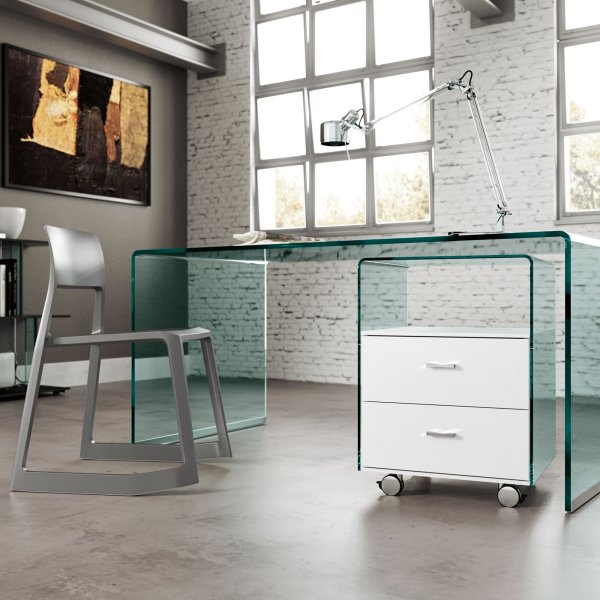
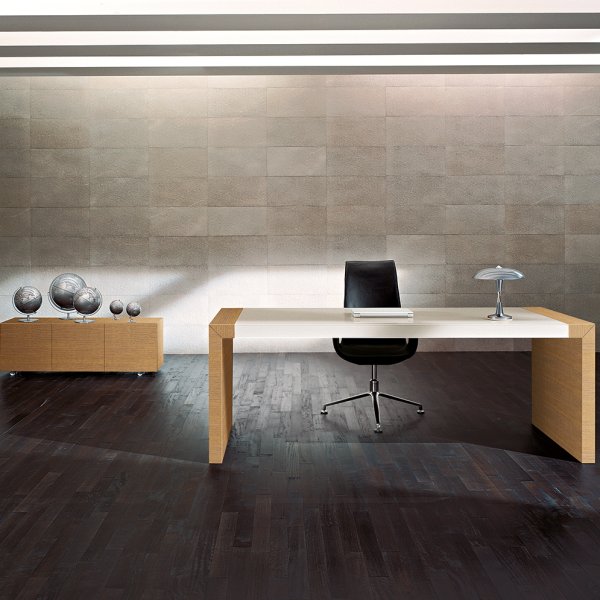
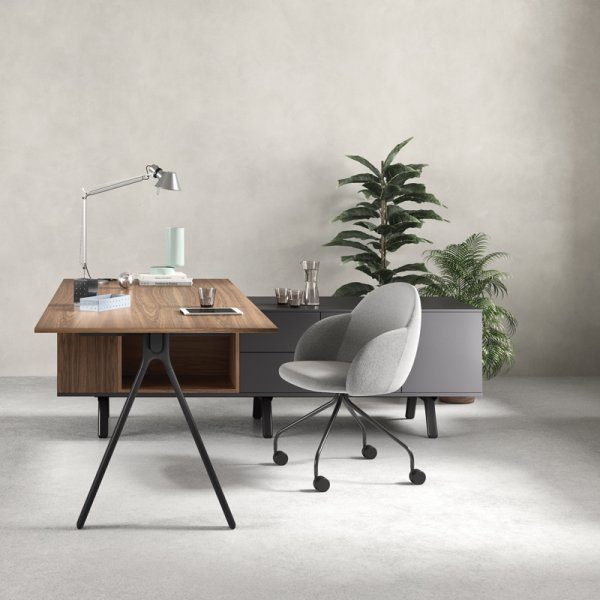
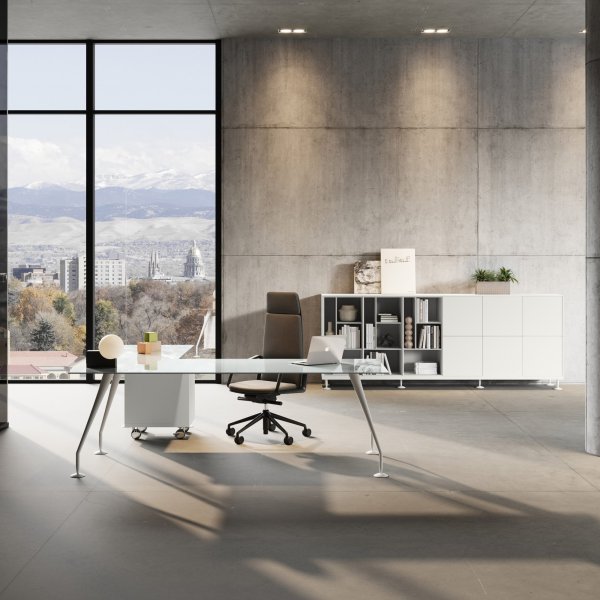
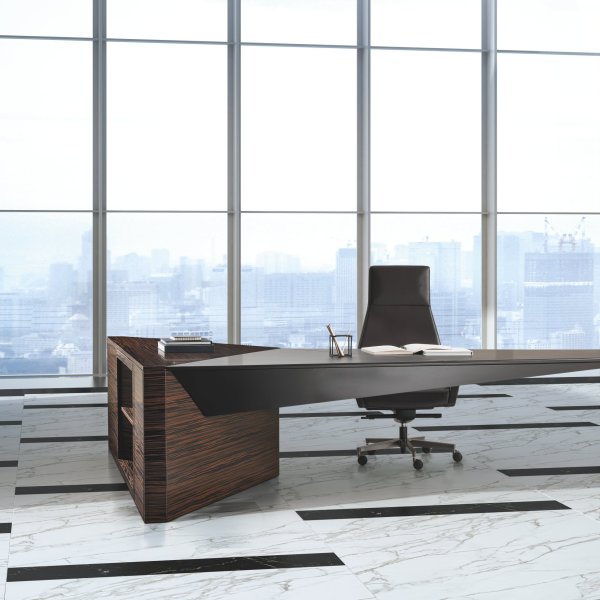
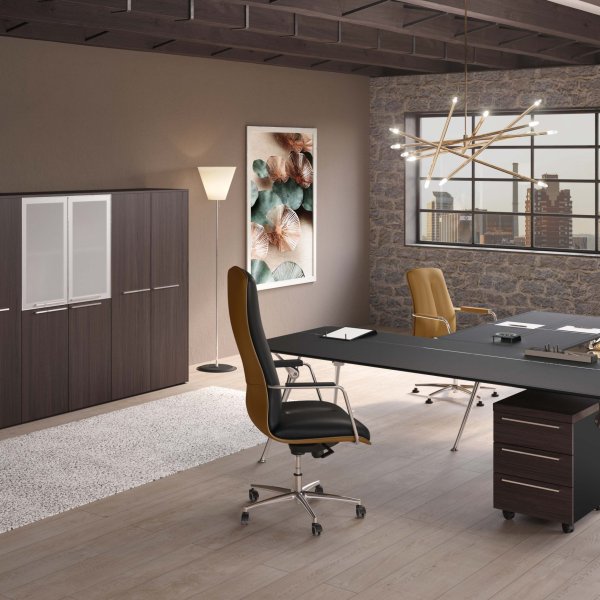
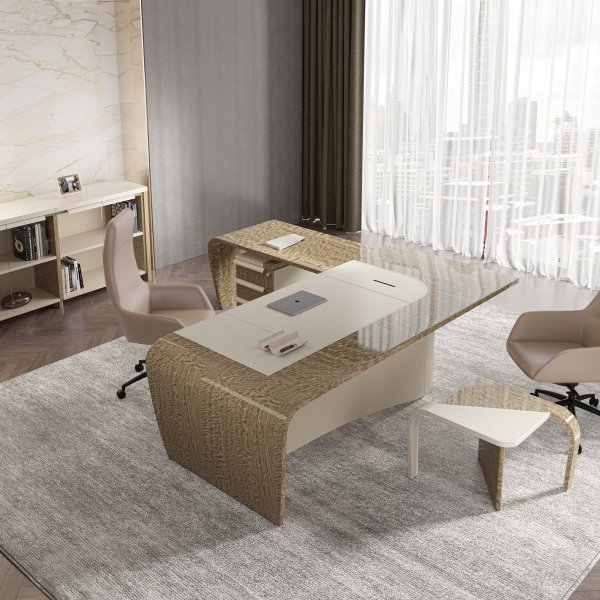
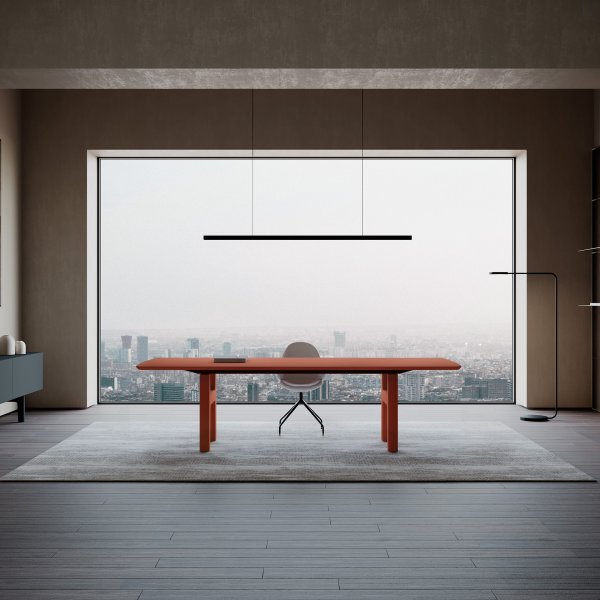
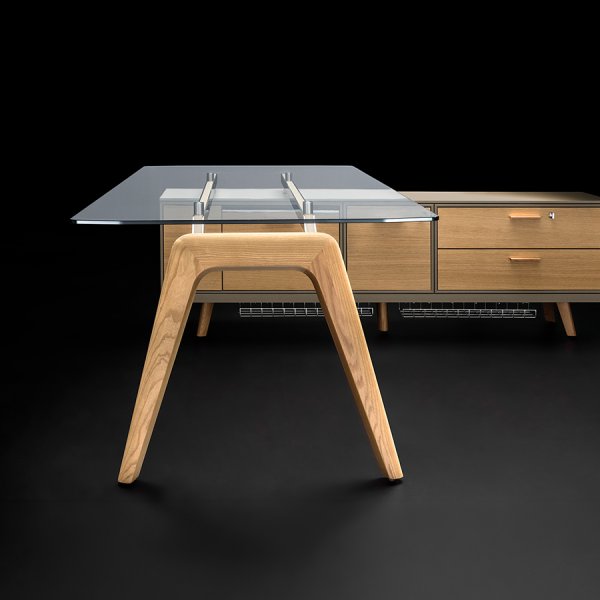
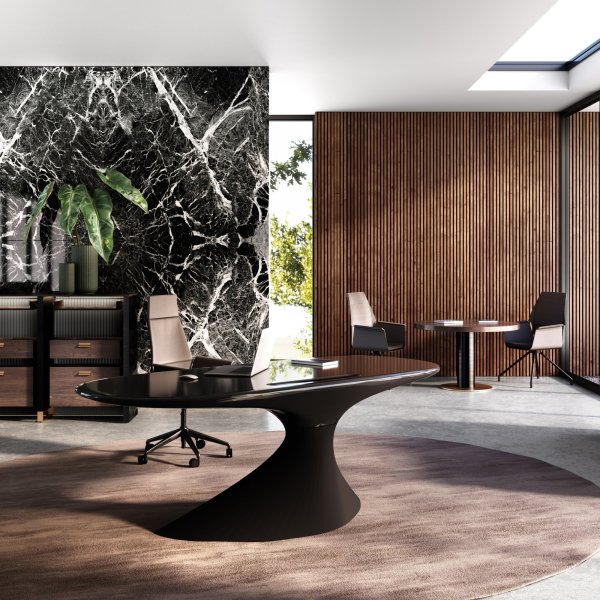
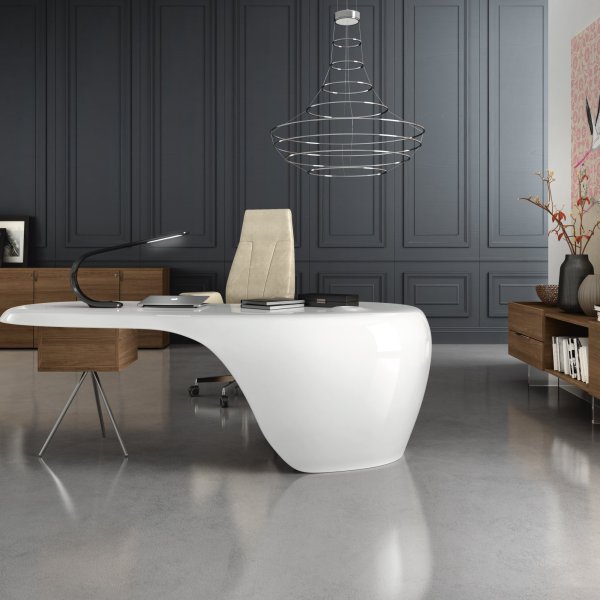
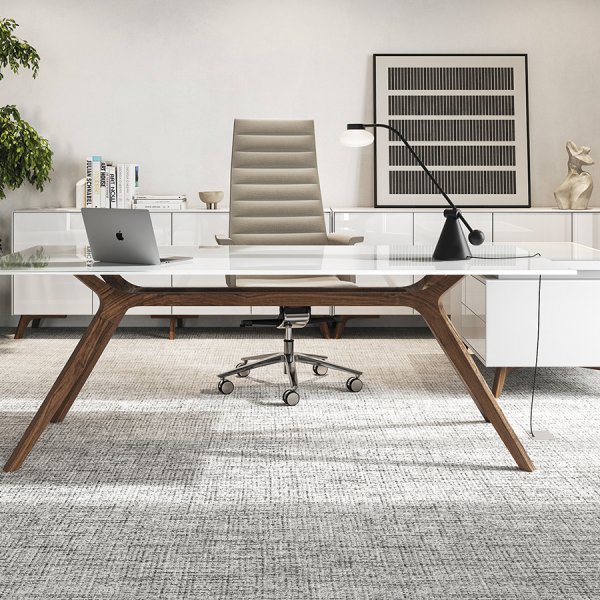
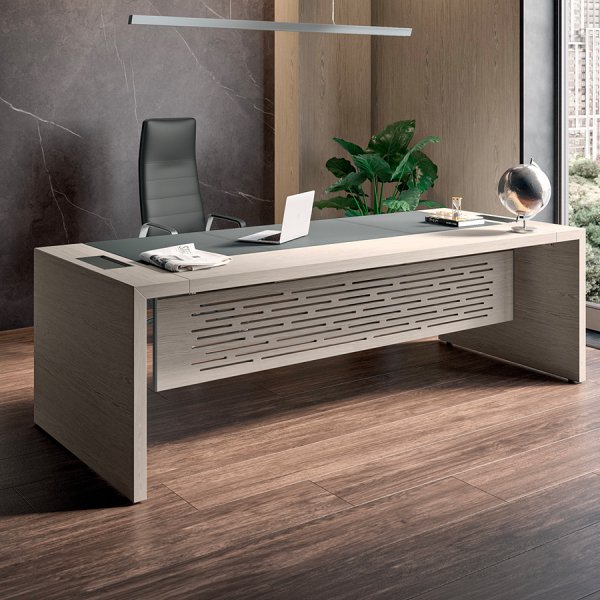
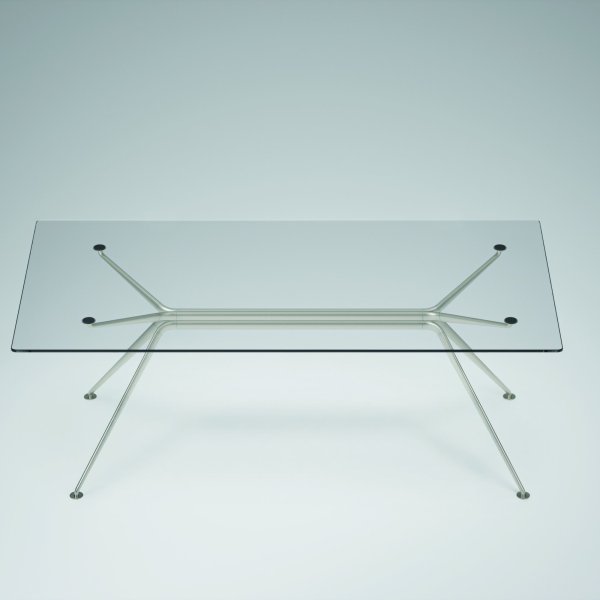
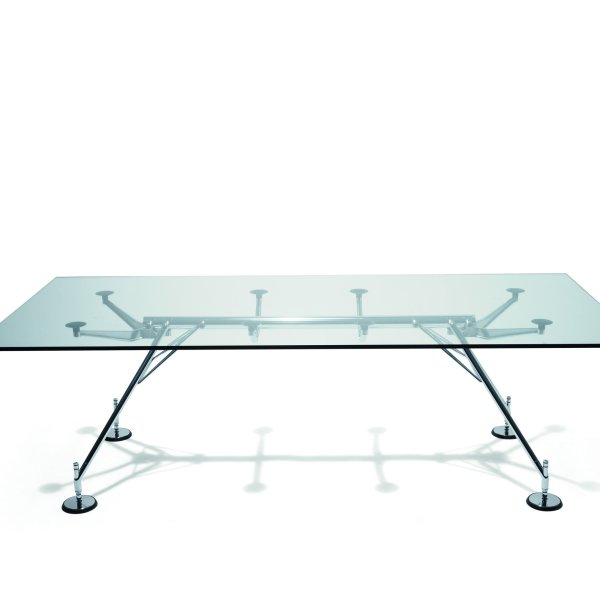
It changes the process that produced it, and the process is visible in the object. An authored table begins as a drawing in which proportions, base geometry and edge detail are resolved together by one mind; a catalogue table begins as a costing sheet, with styling applied at the end. The difference shows up where nobody is officially looking: the junction between leg and surface, the thickness of the top read against its length, the way a cable port sits flush instead of interrupting the line. Authorship also gives the piece a record — a designer, a collection, a year of introduction — which matters when an architect must defend the specification or when the table becomes part of a documented interior.
Before you shortlist any designer office table for an executive cabin, ask who designed it and when it entered production. If the seller cannot answer both questions cleanly, you are buying a style, and styles are copied within a season.
The visitors who influence your outcomes do. Senior people spend their careers sitting across executive furniture, and they calibrate without trying: proportion, edge quality, the sound a surface makes when a portfolio is set down on it. Few will name the designer. Almost all will register whether the table was designed or merely bought, the way a travelled guest reads a hotel lobby within three steps of the door, needing no architect’s name to know what kind of house they are in. In the projects we support across BKC and Cyber City, the cabin does its work in the quiet minutes — the wait before the meeting, the pause while documents are signed — when the visitor has nothing to do but look.
One rule settles the specification: furnish the cabin for the most travelled visitor you receive in a year, never for the average one. The average visitor notices nothing and costs you nothing. The exceptional one notices everything, and is usually the reason the meeting exists in the first place.
With documentation that makes substitution visible. The standard failure pattern on Indian corporate projects is the 'or equivalent' clause: the designer table is specified, procurement invites bids, and a lookalike arrives at sixty per cent of the price with none of the construction behind the appearance. The defence is to specify the piece as a documented design work: designer and collection named, manufacturer stated, and the data sheet — exact dimensions, finish codes, construction details — attached to the BOQ rather than filed away. A lookalike can copy a photograph; it cannot copy a data sheet, and the gap becomes objective ground to reject the substitution instead of a matter of taste that procurement will win.
Request the full technical file at specification stage, well before the order stage. An architect holding the documentation controls the conversation with procurement; one holding a photograph does not, and every experienced A&D team in Mumbai or Gurgaon has learnt this on a project they would rather forget.
Usually the opposite. What dates an executive cabin is decoration — the trend finish, the fashionable curve, the ornament that pins the piece to the year it was bought. Authored tables from the Italian contract tradition tend to survive precisely because the designer’s interest lies in proportion and material rather than effect: several pieces in this selection descend from designs that have stayed in production for one or two decades, refreshed in finish while untouched in geometry. An anonymous table has no such discipline protecting it; it was drawn to look current, and looking current is a fast-depreciating asset in any market where clients travel.
The practical test when you evaluate a designer office table: strip the finish in your mind and ask whether the form alone would still hold the cabin. If the answer is yes, the piece will outlast the interior around it, and probably the lease as well.
A designer table is a claim, and claims can be checked. The assessment below is the one we run before any authored piece is proposed for an executive cabin in India — six verifications that separate a designed table from a decorated one. None of them requires visiting a factory in Italy. All of them can be completed from Mumbai, Gurgaon or Bengaluru with the right documents in hand, in the sequence in which they protect you.
Ask three questions of any table presented as a designer piece: who designed it, for which manufacturer, and in which year it entered production. A genuine authored piece has clean answers to all three, usually with a collection name attached, because Italian manufacturers treat authorship as part of the product itself. Evasive answers — 'our in-house design team', 'Italian design' without a name — are the signature of a lookalike, and they should end the conversation.
Record the answers in the project file. On corporate projects the authorship record is what allows an architect or a purchase head to defend the choice a year later, when someone asks why this table cost what it cost. A named design is an answer; a styled one is an opinion.
Then spend ten minutes on the designer’s other work. A studio that has drawn seating for one manufacturer and executive desks for another shows a traceable language across pieces: the proportions repeat, the detailing philosophy repeats. That coherence is nearly impossible to counterfeit, and it tells you more than any brochure adjective ever will.
Designer tables are photographed in empty lofts with four metres of clear space on every side. Your cabin has a door swing, a window line, a credenza and a visitor zone. Take the piece’s exact dimensions and plot them on the cabin drawing at scale before the photograph seduces anyone: the table’s length against the wall run, its depth against the circulation behind the chair, its visual weight against the volume of the room.
The rule that survives every project: the table should command the cabin without constraining it. If plotting shows a walkway pinched below three feet or a visitor chair pushed against the wall, choose the next length down in the same collection rather than a different, smaller-looking design. Length is negotiable within a designer’s dimensional programme; the design itself is not.
Visual weight deserves its own check. A thin top on a sculptural base carries a large cabin differently from a monolithic slab of the same length — the first opens the room, the second fills it. Match the piece’s mass to the room’s volume, and remember that Indian corporate cabins often carry more fixed joinery than the European rooms these tables were photographed in.
Copies reproduce silhouettes; they cannot afford to reproduce junctions. Before ordering, examine three points on a physical sample or on high-resolution factory photography. First, the edge: an authored piece resolves the top’s edge as a designed profile, a chamfer or a shadow gap or a precise radius, while a copy leaves a generic rounded band. Second, the leg-to-top junction: in a designed table the connection is a resolved detail, often deliberately expressed, never hidden behind a plastic cap. Third, the underside — the old joinery rule says the surfaces nobody sees reveal the maker, and it still holds: a finished, tidy underside with engineered fixings is the mark of contract-grade construction.
If a supplier cannot provide sample material or factory detail photography, treat that as the answer to your question. Manufacturers who build these details are proud of them and will photograph them without being asked twice. The ones who change the subject are telling you, politely, what sits under the veneer.
'Walnut' is a word; the finish system is the product. Ask what sits under the surface: the veneer grade and matching method, the lacquer type and number of coats, the edge sealing. Two tables can both be called walnut and behave completely differently after eighteen months of daily use — one developing micro-marks around the writing zone and pale rings where cups have stood, the other showing nothing at all. The difference is the system, and the system appears on the technical data sheet, never in the sales conversation.
For Indian executive cabins, ask specifically how the finish behaves under intensive housekeeping. Offices here are cleaned daily, often more than once, and a lacquer specified for gentle European maintenance schedules will dull under that regime within a year. The manufacturers behind this selection can state their surface ratings plainly; insist on seeing them stated in writing, and write the manufacturer’s cleaning specification into the housekeeping vendor’s scope the same week the order is placed. A fine finish fails faster from the wrong products than from use.