Allure
₹ 120
In premium workplaces, the washroom and pantry are not “support spaces”. They are brand touchpoints. The first thing people feel isn’t the marble or the lighting—it’s the hardware: the weight, the grip, the finish under light, and the way it behaves after months of real use.
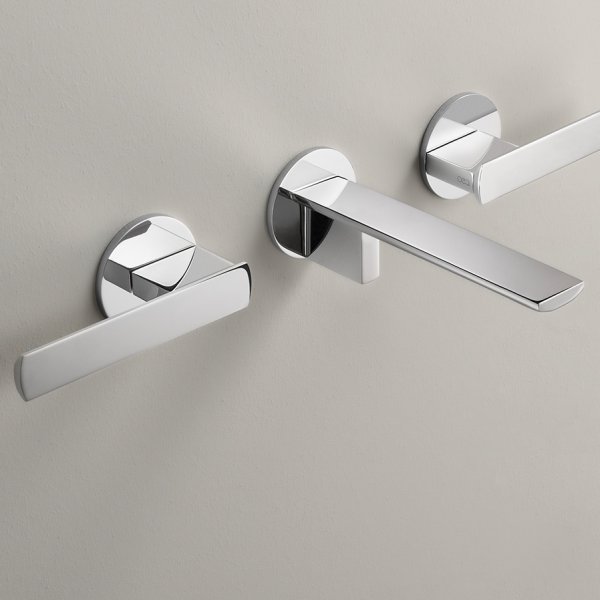
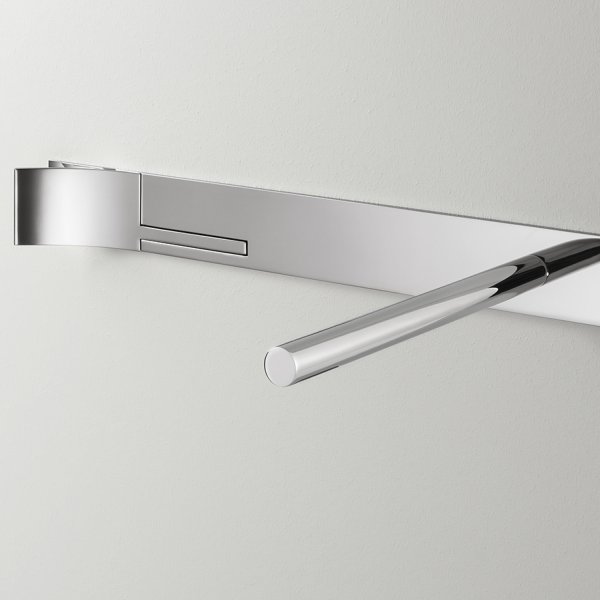
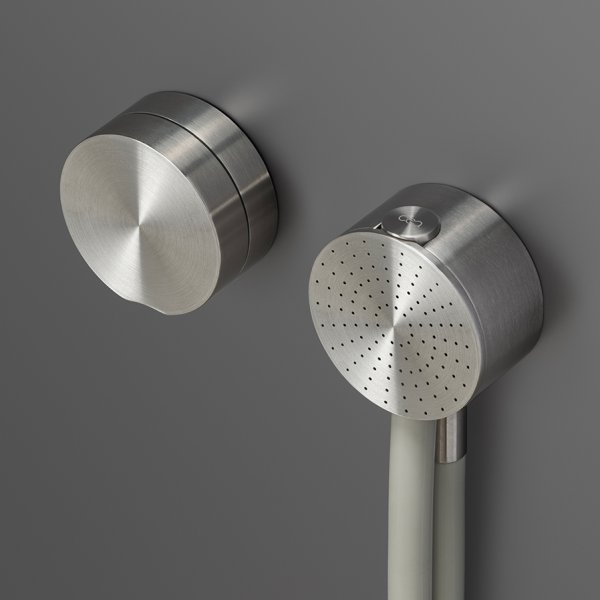
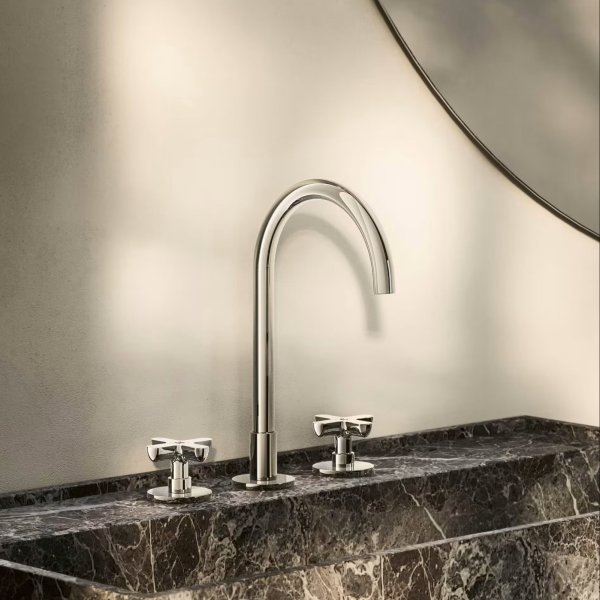
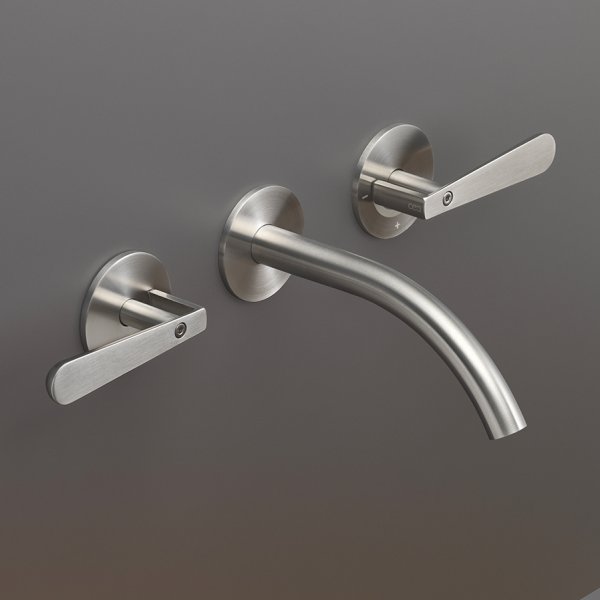
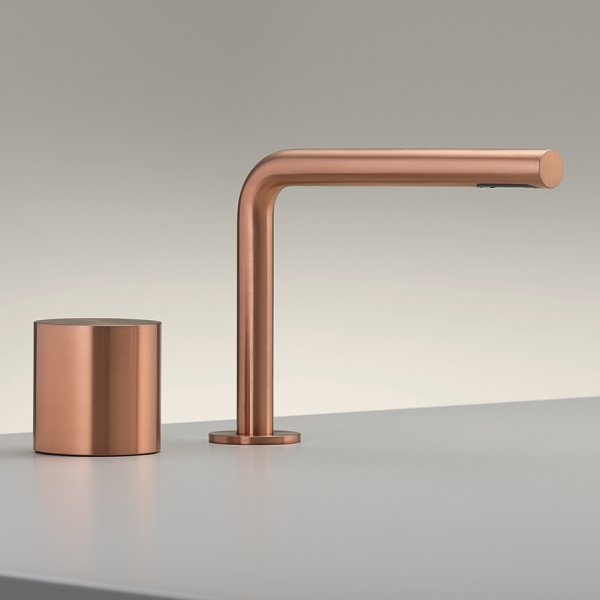
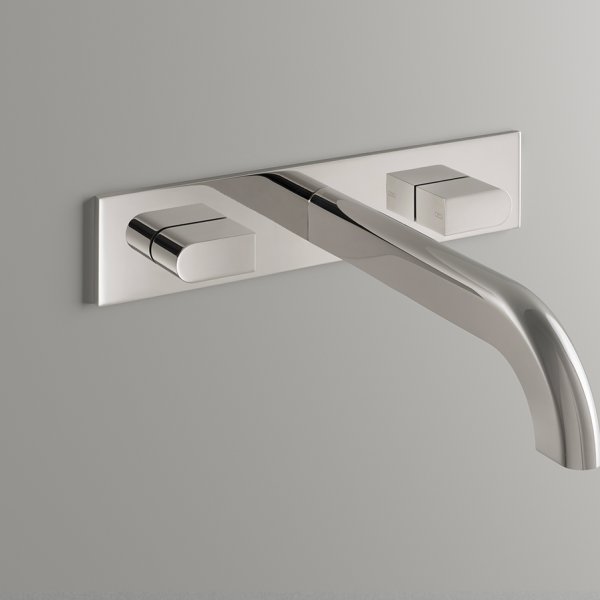
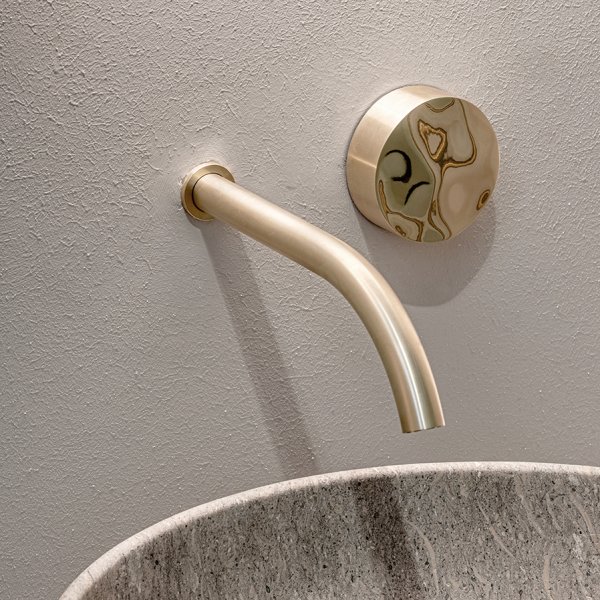
La Mercanti curates architectural bath fittings that deliver on both fronts: design integrity and contract-grade performance. Collections range from sculptural statements to near-invisible minimalism—clean geometry, calibrated proportions, and finishes engineered for frequent cleaning and high traffic. Depending on the line, materials include high-grade brass as well as AISI 316L stainless steel, with advanced surface treatments such as PVD to improve hardness and finish stability.
This selection is built primarily for office washrooms, yet it is equally powerful in pantry/kitchenette and break areas—creating a coherent “metal language” across the workplace. For A&D teams and procurement, we support fast specification with finish guidance, cut sheets, and quote-ready configurations.
The relevance depends entirely on who uses the space and what they conclude from it. In India's senior corporate culture — law partnerships in Connaught Place, financial institutions in BKC, technology leadership in Bengaluru — the standard of a corporate washroom is read, correctly, as a signal of organisational standards. It is not a vanity decision. A client who visits for a board meeting or a due diligence review will use that washroom. The impressions formed in those three minutes are as real as any impression formed in the boardroom. Italian design is not about decoration. It is about specifying a fitting that performs at the level the rest of the project promises — and in India, where Made in Italy carries the weight of genuine international design authority, the signal is understood precisely.
Three reasons specific to the Indian context. Hard water: India's municipal supply in most major cities carries high mineral content — TDS levels of 300–900 ppm are common in Delhi, Mumbai, and Bengaluru. Over time, mineral deposits attack chrome plating at its surface boundary, accelerating degradation that would take twice as long in softer European water. Temperature cycling: India's climate subjects bathroom fittings to cycles that European installations rarely experience — cold mornings, hot afternoons, and in many buildings, water supply interruptions that create repeated pressure variations. AISI 316L stainless steel is indifferent to all three: no surface coating to attack, no structural response to thermal cycling, no corrosion pathway for mineral-rich water to exploit. The specification that holds in European conditions for 12 years holds for 20+ years under Indian conditions. That is the material argument, and it is specific to this market.
The assumption is reasonable but the conclusion reverses under scrutiny. Lower labour rates reduce the replacement cost per incident — but in India's hard water environment, the replacement cycle for standard chrome fittings is shorter, not longer: 6–8 years in high-traffic corporate settings rather than the 8–12 years typical in Europe. Three replacement cycles over 20 years at Indian labour rates still represents a meaningful cost — product (×3), skilled plumber time, water supply disruption, and the indirect cost of operational interruption in a functioning corporate building. More importantly, the visible degradation of a fitting between replacements — the dulling, the mineral staining, the finish lifting at joints — has a compounding effect on perception that no Indian labour rate compensates for. A fitting that looks correct at year two and year eighteen costs nothing in that interval. The cost of looking wrong is not in the replacement invoice.
Because it is the only element in the space that every person physically interacts with — daily, privately, without the context of the room to distract them. In a boardroom, the furniture makes the impression. In the executive washroom, the fitting confirms it. A fitting that contradicts the quality of the surrounding space is noticed immediately and remembered long after the meeting has ended. Clients and senior visitors make judgements in that moment. The fitting either holds the level of the project or quietly undermines it.
India's most significant corporate interior projects are rarely single buildings. Technology parks in Bengaluru, commercial developments in Gurugram, mixed-use campuses in Navi Mumbai — these are multi-building commissions where the interior architect must maintain design coherence across hundreds of washrooms, across towers with different completion schedules, and across budget tiers that the developer or occupier has allocated by use. The challenge is not selecting a fitting. It is selecting a fitting family that can be applied consistently across every tier of the project — from the executive washroom on the C-suite floor to the pantry sink on the open-plan operations level — without the specification fragmenting into a collection of unrelated decisions. Here is how to approach it.
Italian brassware collections are not assembled; they are designed. A well-conceived range includes four or five models that share the same proportion logic, the same spout arc, the same lever geometry — at price points that span from statement to specification grade. This is not an accident. It reflects the way Italian manufacturers think about projects: as spatial languages, not product catalogues. Begin by selecting the family that fits the overall design register of the campus. Every subsequent tier decision is then a question of which model from that family, not which category from which supplier.
Corporate campuses have a clear hierarchy of spaces by who uses them and how often. Executive floors receive clients, investors, and board members — the standard of finish communicates the standard of the organisation. Meeting room corridors receive regular internal and external traffic. Operations floors are used continuously by large teams with high frequency. Each tier requires a different model from the same family — not a different specification logic. The result is a campus where the design language is consistent even when the individual fitting changes.
In any large campus project across India, the facilities management team will face the same recurring cost: replacing fittings whose chrome plating has been attacked by mineral-rich municipal water. Specifying AISI 316L stainless steel or PVD-finished fittings at each tier eliminates this recurring cost for the life of the building. For a 500,000 sq ft campus with 200 washroom positions, the difference in lifecycle cost between standard plated and Italian-grade materials is substantial — and the specification can be defended to the developer's procurement team on purely financial grounds, not design preference.
The most effective way to protect a brassware specification through value engineering review is to document it as part of the design language of the project. "The Ritmonio Haptic collection is specified throughout the campus to maintain formal coherence between the executive floor, meeting zones, and operational areas. Substitution with fittings from outside this family would break the spatial language established in the approved design concept." That sentence, in the specification document, shifts the conversation from cost comparison to design integrity — a ground on which any experienced procurement team will hesitate to proceed without explicit client approval.