
Conference room & boardroom: where India Inc. decides
In an Indian corporate office, the boardroom is where the organisation is most visible to the people who judge it: the board, the investors, the auditors, the partners who fly in for a single meeting. It is also, increasingly, a broadcast studio — half the participants join from Singapore, London or New York, and the room is read through a camera as often as through the door. And the boardroom has a duty that the ordinary conference room does not: the governed meeting, with independent directors, the company secretary and matters whose confidentiality is a legal obligation rather than a preference.
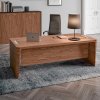
A boardroom is specified around its longest agenda, not its photograph. A table proportioned to the room and wired from within; chairs that hold attention through the fourth hour; acoustics that keep the discussion in the room; sightlines that work for the chairman at the head and the director on the screen. La Mercanti plans conference and board environments with Italian tables and executive seating specified as one system — for the eight-seat room and the twenty-seat board floor alike. Bring us the room dimensions and the way your board actually meets; we will return a specification that presides.
Below the boardroom sits the rest of the estate, and in almost every Indian office it is upside down: too few small rooms, mid-sized rooms occupied by meetings of three, and the interview or the appraisal held wherever a door can be closed. The fix is measured, not guessed — a month of booking data or an observation walk at fixed hours — and it nearly always produces a ladder of several small rooms, fewer medium ones and one room sized for the board or the town hall, each furnished for its real occupants and its real agenda length.










FAQ
What does the boardroom of a listed Indian company need that an ordinary conference room does not?
Obligations. A listed company's boardroom hosts a governed meeting: independent directors who must be able to speak and be heard as equals, auditors and company secretaries who attend with papers and laptops, minutes and recordings that impose discipline on acoustics and AV, and matters whose confidentiality is a legal duty rather than a preference. The furniture consequences are specific: a table that seats the full board without demoting anyone to a side chair, a second row of seating along the wall for advisors and presenters, acoustic separation that keeps a results discussion inside the room, and cable and microphone infrastructure living within the table rather than taped across it. An ordinary conference room serves the meetings a company chooses to have. A boardroom must also serve the meetings it is required to have — and be read, by every director who enters, as a room that takes that duty seriously.
How should a conference room be designed for meetings split across India, Europe and the US?
Design for the camera as carefully as for the chair. When half the participants join from other time zones, the room is experienced twice — physically by those present, and through a lens by those who are not — and most Indian conference rooms fail the second audience. The specification points: every seat within the camera's field, which argues for tapered or boat-shaped tables over long rectangles; microphone coverage matched to the table's size and surface, because a hard top and a hollow room turn one voice into an echo; light on faces rather than on the table, tested in the evening, when India's calls with the US actually happen; and acoustic absorption sufficient that the remote director hears a person, not a hall. A second small screen for the remote faces beside the main display gives the colleague in London the same presence as the person at the head of the table. A room that passes a live cross-border call at seven in the evening has passed the only test that matters.
Does the shape and size of the boardroom table still carry meaning in Indian corporate culture?
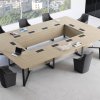
It does, and pretending otherwise produces rooms that feel wrong without anyone saying why. The head of the table remains an institution in Indian business — where the chairman sits, where the senior guest is placed, who faces whom across a negotiation: these are read fluently by everyone in the room. The design task is to honour that grammar without letting it bully the space. A table so large that chairs scrape the wall reads as ambition unchecked by judgement; a table proportioned to leave a proper passage behind every seated chair reads as authority at ease. Shape follows the meeting: a rectangle for the governed board, a boat form when the camera matters, a round table in the smaller room where the intent is to dissolve hierarchy rather than display it. Leave ninety centimetres behind every chair and the room breathes; take it away for two more seats and the room is remembered for the scraping. The table is the most legible sentence in the room; compose it deliberately.
Why do Indian offices always run short of small meeting rooms — and how do you correct the mix?
Almost every Indian office has the same imbalance: too few small rooms, and mid-sized rooms occupied by meetings of three. Before specifying, measure a month of reality — booking data if it exists, an observation walk at three fixed hours daily if it does not — and count the size of meetings, not the number of rooms. The pattern is remarkably consistent: the two-to-four-person conversation dominates, the interview and appraisal need privacy more than area, and the genuine large meeting is rarer than the floor plan assumes. The resulting mix is a ladder — several small rooms, fewer mid-sized, one room sized for the board or the town hall — with each rung furnished for its actual occupants. Rooms sized to flatter the fit-out drawing produce the daily spectacle of two people in a room for twelve, while six people queue for the one room built for four. Convert before you build: a twelve-seater becomes two rooms of four with a glazed partition, in weeks.
Indian company law allows directors to join a board meeting by video. What does that require from the room?
It turns the boardroom into a recording studio for a few hours a year, and the specification has to acknowledge it. Every director joining remotely must be seen and heard clearly enough to be identified, and the proceedings are recorded, so the room needs microphone coverage that reaches the far end of the table rather than one device near the display. Faces need front light at seated eye level, not a downlight that leaves the chairman in shadow. The wall behind the head of the table becomes the company's backdrop on record, so it should be solid, calm and free of a window that will blow out the exposure. Sound has to stay inside the room, which means the partition goes to the slab and the door seals. Plan the seating so no director's back faces the camera. Get these right and the compliance requirement is met by the design, not by a scramble on the day.
For an Indian conference room, what should be imported and what is better sourced locally?
Split the list by two tests: how long it has to last, and how easily it can be serviced. The pieces people touch for four hours — the seating and the conference table — reward imported quality, because the frame, the mechanism and the edge detail are what fail first and what nobody can rebuild locally. The pieces fixed to the building are better made close by: the credenza carcass, the panelling, the ceiling and the cable containment, where a local joiner works to your drawing, adjusts on site and returns if something moves. Technology follows availability of service, not price. Before any imported item is confirmed, ask two questions in writing: how long spare parts remain available, and who attends a service call in your city. A beautiful chair that cannot be repaired in Pune becomes a chair that is replaced in Pune, and the saving disappears at the first repair.
How to specify a boardroom for an Indian corporate office
Five steps from governance brief to a commissioning call with the directors abroad — for company secretaries, facility heads and architects who have to deliver a room that presides over a governed meeting, reads well through a camera at seven in the evening and still works for the eight-person review on an ordinary Tuesday.
Write the governance brief before the design brief
Establish who the room must serve before deciding how it should look: the size of the full board, the advisors who attend alongside it, the proportion of members joining remotely, the confidentiality obligations the meetings carry, and how often the room will be used for anything else. Ten minutes with the company secretary produces a more accurate room than any moodboard — and answers the questions that decide the furniture: how many at the table, how many along the wall, whether recordings are made, whether the room must be lockable and swept before results day. Write the answers on one page and give them to the design team before the first drawing; a boardroom designed from the fit-out template and adjusted later to the board's needs costs twice and never quite fits.
Fix the sightline before the table, then let the camera share it
The chairman and the camera have to see the same thing, and in most rooms they cannot. Start by choosing the wall that will appear behind the head of the table: solid, no window, calm enough to carry the company's name without shouting it. Place the display on the wall the camera can see across, so no participant sits with their back to the lens and nobody turns a shoulder to read the screen. Then check the door: one that opens into the display sightline turns every late arrival into an interruption of a recorded meeting. Only after these three decisions does the table get drawn, because its length, shape and position follow from them. Reversing the order is what produces the familiar Indian boardroom where the finishes are excellent and half the participants are invisible on the call.
Proportion the table to the room, then wire it from within
Leave a full passage behind every seated chair before falling in love with a length — ninety centimetres is the figure that keeps directors from being asked to move. Then insist that power, data and microphones live inside the table's spine — surfaced through fitted ports, not draped across the veneer — with the equipment in a closed, ventilated credenza and the routes to the display wall hidden in the floor or the ceiling. Choose a top that survives laptops, cups and elbows, and one that the acoustics can live with; glass looks decisive and sounds like a hall. Confirm the delivery route — lift dimensions, door widths, the turn at the lobby — before ordering a single-piece top, because a table that cannot reach the twelfth floor is the most expensive object in the building. A boardroom's authority survives many things; trailing cables and a table cut on site are not among them.
Choose the chairs for the fourth hour of the agenda
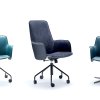
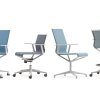
Board and results meetings in India routinely outlast their scheduled slot. Select executive seating that holds posture and attention deep into a long agenda — adjustable height, lumbar support, armrests, fabric upholstery for the acoustics, a range of adjustment that fits the smallest and the largest director — and prove it the honest way: seat the selection committee in the candidate chairs for a full afternoon session before signing anything. Ask the manufacturer for its intensive-use test declarations and its spare-parts list, and keep two spare chairs in the same finish, because a boardroom chair that breaks in year four and cannot be matched is how mismatched rooms begin. The chair is the one item in the room every director touches for four hours; it is not where the budget should be found.
Commission the room with a live cross-border call
Before the first board meeting, run a real call at the hour your board actually meets — with directors dialling in from the time zones they will use, laptops and papers on the table, the lights as they will be in the evening. Their report on sound, faces and lag is the snag list that matters: fix the echo, the shadow under the chairman's eyes and the seat outside the frame before the room's reputation is set by its opening performance. Then run an ordinary eight-person review in the same room the following week and ask whether the meeting started in under a minute. Put a one-page guide to the AV in the credenza, decide who resets the chairs and the table after each meeting, and put the room in the booking system with rules for its non-board use. A boardroom that works at seven in the evening for London and at ten in the morning for the review is finished.