
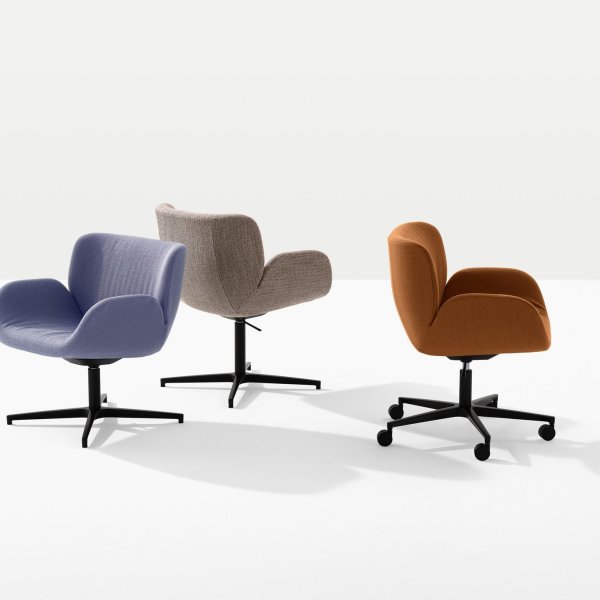
Cari
₹ 210.960
A meeting in India is rarely over when the calendar says it should be. The eleven o’clock review runs past lunch; the quarterly board meeting stretches into its third hour while the numbers are argued line by line. The conference room chair therefore answers to two examiners — the client who reads the boardroom in ten seconds the way he reads a balance sheet, and the agenda that outlives its slot, when comfort either holds or quietly collapses along with everyone’s attention.
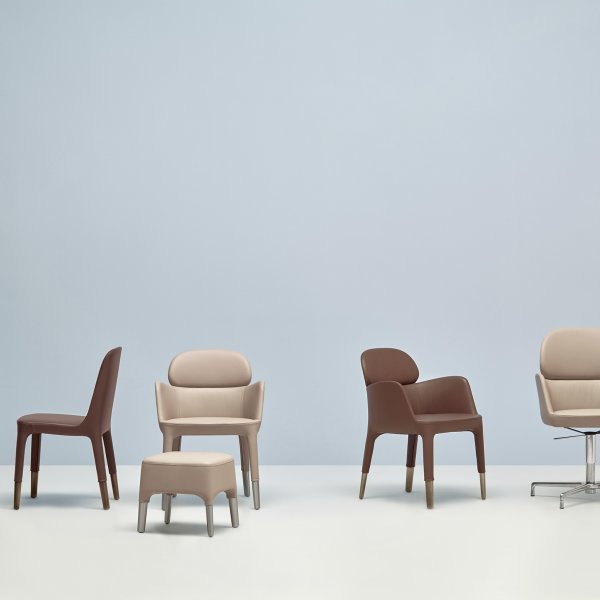
This selection brings Italian conference and meeting room chairs to Indian boardrooms that take both judgements seriously: matched sets in cantilever and swivel formats, seat geometry and foam engineered to stay comfortable without a single lever being touched, and the disciplined uniformity that makes fourteen chairs read as one deliberate decision. The refinement is in what a long meeting reveals — a waterfall seat edge that spares the legs, a back angle that keeps posture open through hour three, castors that move without announcing themselves on a stone floor.
These are rooms where reputations are negotiated, and the seating should be specified accordingly. La Mercanti supports Indian boardroom projects from seat count and layout through finishes and documentation, before any set is committed to order.
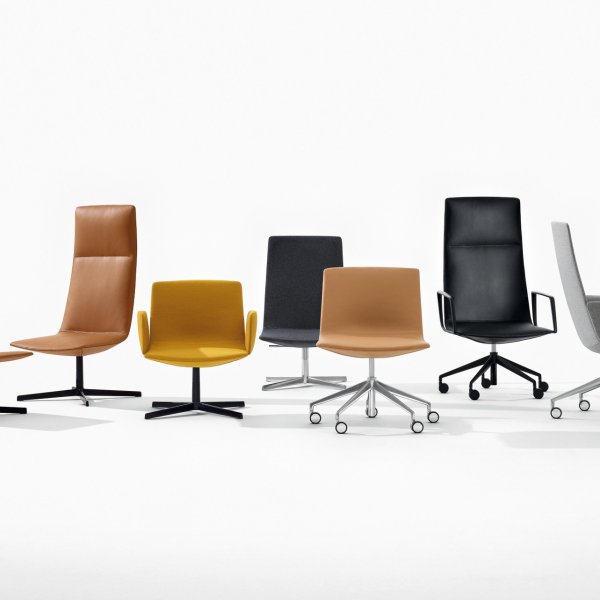
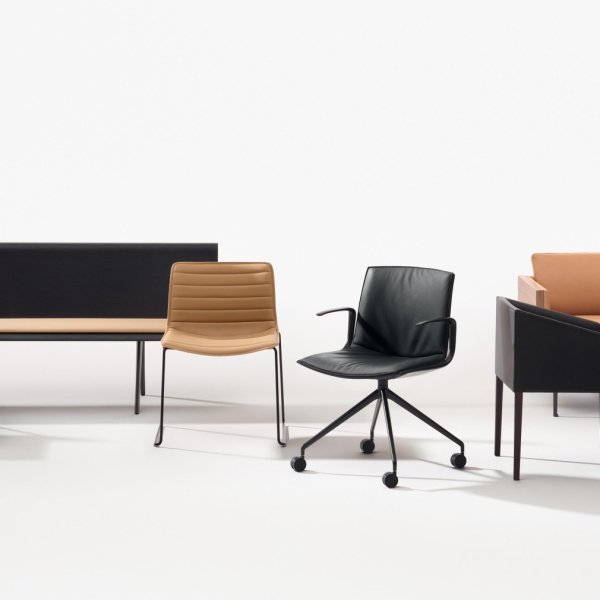
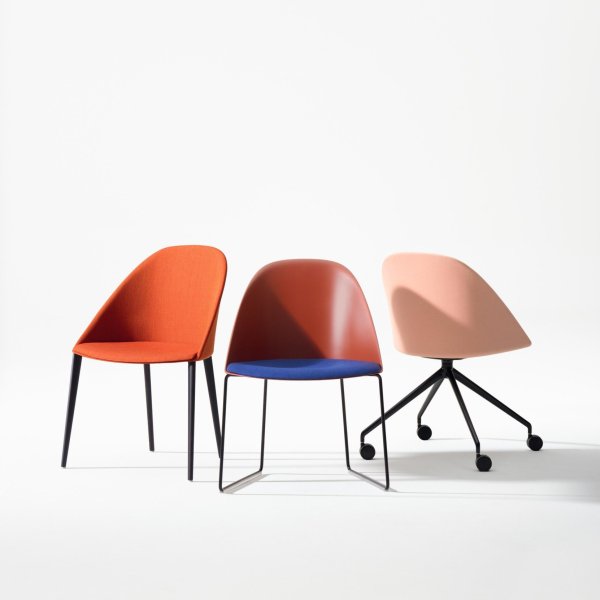
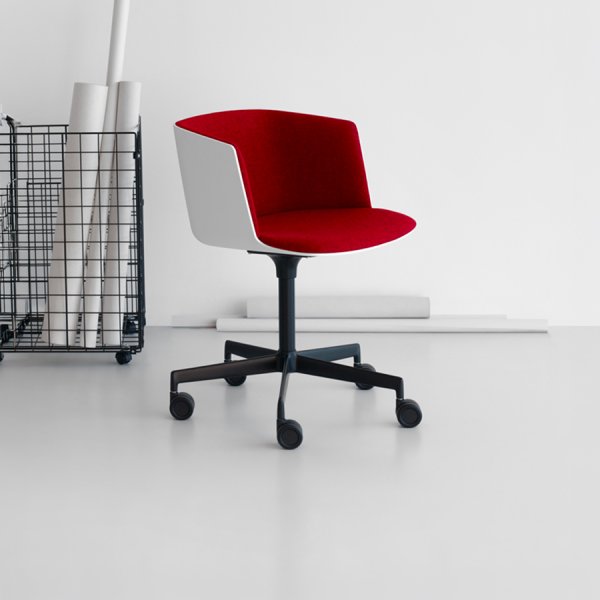
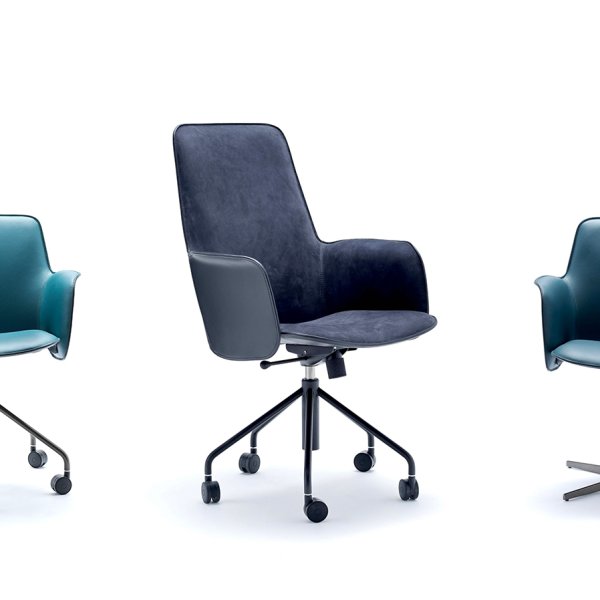
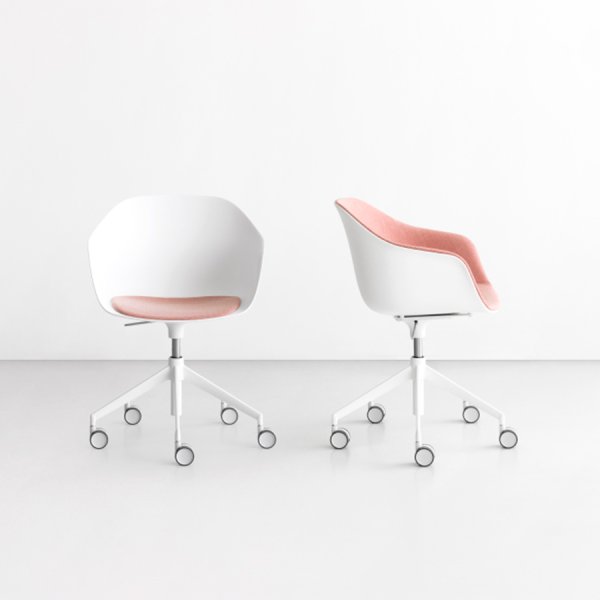
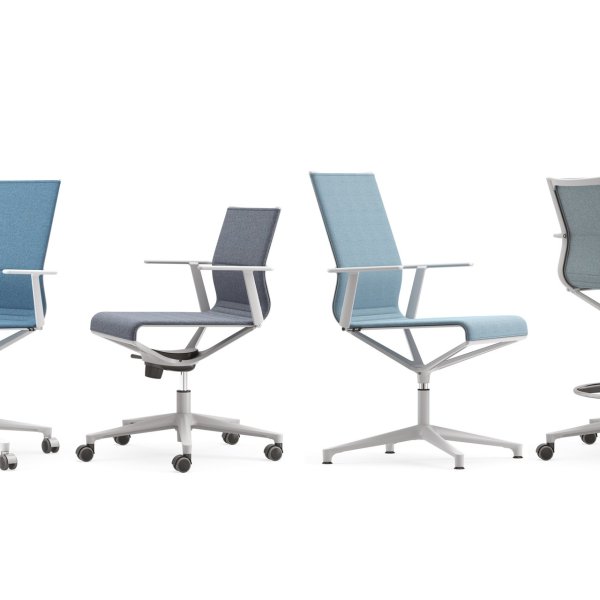
Geometry and foam, doing silently what levers do noisily. A conference chair works on the opposite principle to a task chair: it must fit the eighth person to sit in it as well as the first, with nothing touched in between. That means an open seat-to-back angle of roughly 100 to 105 degrees, which keeps the chest open and the sitter engaged rather than reclined; a waterfall front edge that takes pressure off the thighs when a meeting crosses the two-hour mark; a seat pan sized for varied builds; and medium-firm, high-resilience foam that supports a heavier director and a slighter one with the same composure. If a swivel format is chosen, the tilt should be weight-responsive and restrained — a boardroom full of people pumping recline levers is not a serious room.
The test is simple and worth insisting on: sit in the candidate chair for a full agenda item without adjusting anything. If you thought about the chair at any point, it failed.
Start from one chair, repeated with discipline: a boardroom reads as serious precisely because fourteen seats speak in one voice, and the head of the table is already marked by position, sightline and the seat everyone leaves empty until the Chairman arrives. That said, Indian boardrooms are not Scandinavian ones. In promoter-led companies a slightly taller back at the head is a legitimate, universally understood signal, and pretending otherwise ignores how the room will actually be used.
The rule that keeps both truths intact: if the head chair differs, it differs by one degree only — the same range, the same upholstery, the same base, with a higher back crown or headrest as the single distinction. Never a different chair, never a different leather, never a throne parked among task seats. And decide it deliberately at specification stage, because retrofitting a head chair later almost guarantees a mismatch in finish batch and design language that everyone will notice and nobody will mention.
On polished granite or any hard stone, the default answer is soft-tread castors or no castors at all. Standard hard castors on stone skate under a sitter’s push, wander during the meeting and produce exactly the rolling clatter a boardroom cannot afford; soft-tread castors grip, roll quietly and spare the polish. If the room follows a fixed protocol — assigned seats, chairs squared to the table between meetings — glides or a cantilever frame are the more disciplined choice. A cantilever set never drifts out of alignment, gives a gentle flex that reads as comfort, and keeps the room photograph-ready without the facilities team resetting it twice a day.
Acoustics decide the details. Long Indian meetings punctuated by chai service and people stepping out to take calls generate constant small movements, and every one of them is audible on stone. Test the shortlisted chair on a granite sample: push back, swivel, and listen. The right chair moves without joining the conversation.
Yes, in ways that only show up on screen. In hybrid boardrooms across Mumbai and Bengaluru the camera has become a permanent participant, and it judges chairs by different rules. Back height is the first: a very tall back or a prominent headrest looms behind the sitter’s head in the frame and crowds the gallery view, so camera-first rooms generally sit better with medium-high backs that finish at or just above shoulder line. Uniformity matters more than ever — a row of identical silhouettes reads as order on screen, while mixed chairs read as improvisation. Movement is the third: unweighted recline invites rocking, and rocking on camera is the modern equivalent of drumming the table, so specify a firm, damped tilt or a cantilever set.
Upholstery plays to the lens as well: mid-tone, matte finishes flatter the frame, where glossy black bounces the downlights. Before ordering, put the shortlisted chair in front of the room’s actual camera and judge it there. The screen is now a boardroom wall.
Boardroom chairs are almost always chosen in a five-minute showroom sit, and boardroom meetings almost never last five minutes. The mismatch explains most of India's uncomfortable conference rooms. Before committing to a set of twelve or fourteen, run the trial your meetings will actually impose on the chair — the geometry check, the long sit, the room in motion, and the set verification. One structured afternoon prevents a decade of restless reviews.
Before any chair is sat in, the room itself should eliminate most of the market. Take four measurements to the shortlist. The table’s understructure first: mark where its legs, panels and cable risers fall against the seating positions, because a chair centred on a spot that straddles a leg or a floor box never sits square to the table, and its occupant spends every meeting angled off the discussion. Seat pitch second: divide the usable table run per side by the intended seat count and confirm roughly 30 inches (750mm) per person; squeezing fourteen into a twelve-seat table is decided here, not on delivery day.
Floor and camera complete the audit. Note the floor finish, because it dictates castor tread or argues for cantilever, and in a hybrid room mark the camera positions and the screen wall, because together they constrain the back height, the headrest question and even the sheen of the upholstery.
Any chair that fails these dimensional facts is out, regardless of how it looks in the catalogue or who makes it. What survives is a short list that already fits the room — and the room, not the showroom, is the only place the chair will ever be judged from now on.
Static comfort cannot be assessed quickly, so do not try. Bring each finalist chair in for a working trial and give it a real agenda: a genuine ninety-minute review, not a simulated one, with laptops, documents and disagreement. Seat three deliberately different builds through the trial — a heavier director, an average frame, a slighter one — because a conference chair must serve the whole board without adjustment, and foam that flatters one build can punish another.
Impose one rule: no levers. The chair meets everyone exactly as it will meet a guest. Ask each sitter to note, at the half-hour, the hour and the ninety-minute mark, three things — pressure under the thighs, lower-back support, and whether they have started shifting weight to get comfortable. Restlessness is data; it appears an hour before anyone would call a chair uncomfortable aloud.
A chair that all three builds stopped noticing by the second half of the meeting is a candidate. A chair anyone was still negotiating with at minute sixty has already failed a shorter meeting than your board actually holds.
A boardroom is never as still as its photographs. People arrive late and pull chairs out, step away for calls, lean back to think, turn to the screen; chai service passes behind every seat at least once. The third stage of the trial is watching the candidate chair inside all that movement. Listen first: castors on the actual floor, the mechanism under a sitter leaning back hard, armrests knocking the table edge. A chair you can hear across the table will be heard in every meeting for ten years.
Then check the clearances in use. With all trial chairs occupied, walk the service route behind the seats as the office boy will with a loaded tray; confirm a comfortable passage remains when a chair is pushed back mid-conversation. Watch how far each chair travels from the table when its occupant stands, and whether it returns to position or wanders.
Finally, view the occupied room from the door and from the camera. Fourteen chairs in motion should still read as one composed set. If the room looks orderly while it is being used hard, the chair has passed a test most specifications never think to set.
A conference set succeeds or fails on its consistency, so the final verification is about the batch, not the chair. Confirm in writing that the full set — twelve, fourteen, plus the spares you should order with it — will be produced in one run, with upholstery cut from the same dye lot and metal finished in the same batch. Leather and fabric vary subtly between lots, and a mismatched pair at one end of a boardroom table is the kind of flaw that, once seen, cannot be unseen by anyone who sits there.
Order attic stock at the same time: one or two additional chairs, or at minimum reserved upholstery from the same lot, so a future repair restores the set instead of breaking it. Confirm which parts are field-replaceable — castors, glides, arm pads — and that documentation will accompany the delivery.
Close by putting the entire specification on paper: model, mechanism, back height, upholstery code, dye lot, base finish, castor type, seat count. The set that arrives against that document is the one the trial approved — and the boardroom it furnishes will hold its composure for as long as the meetings run.