Ar.tu
₹ 680.760
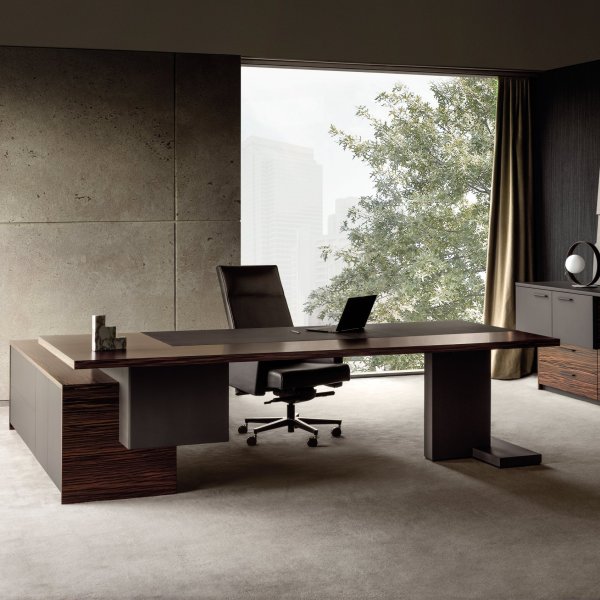
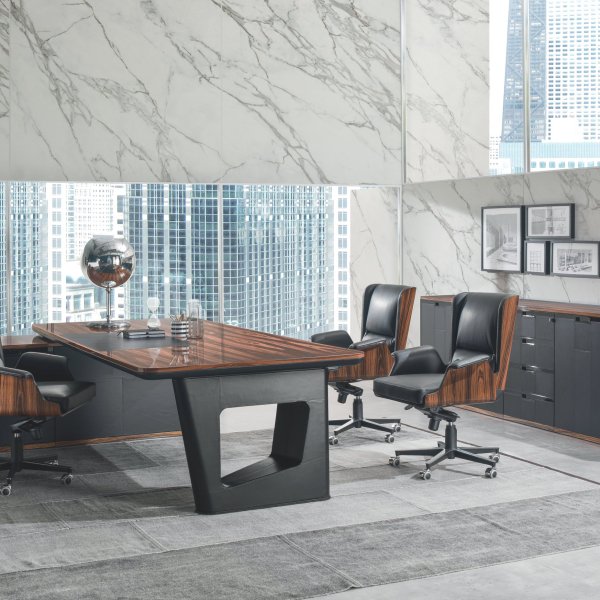
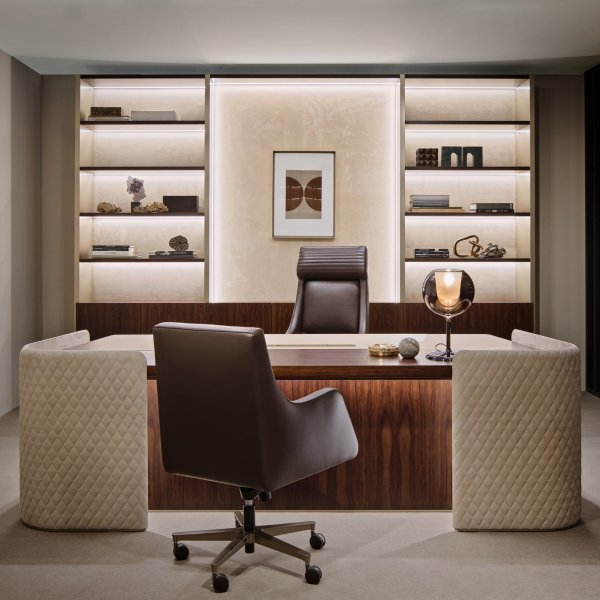
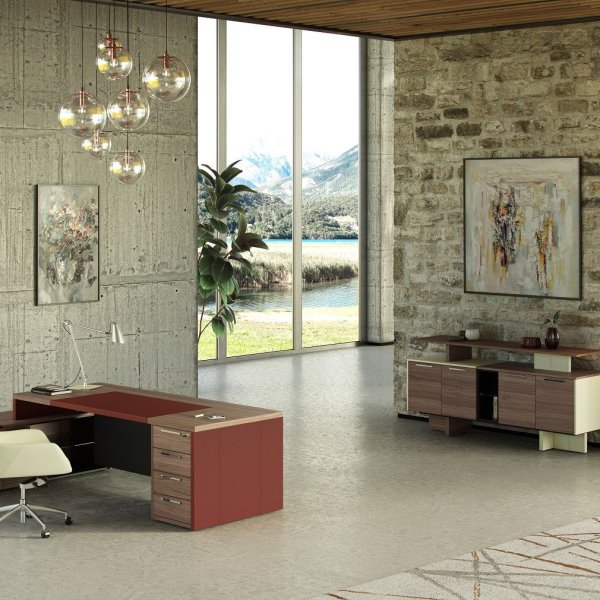
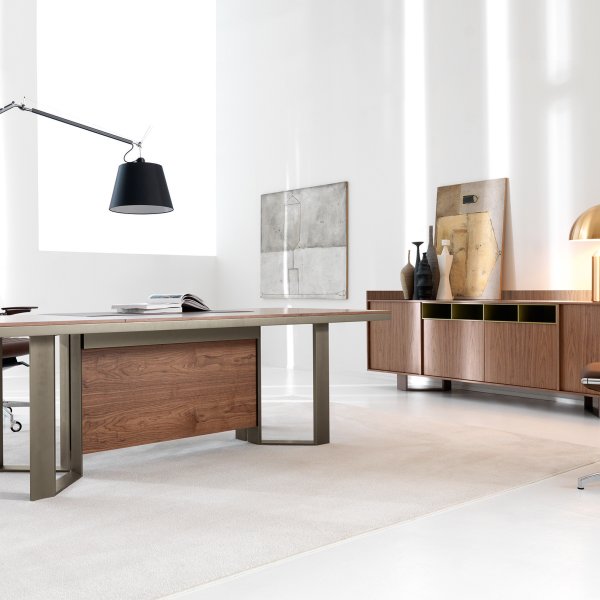
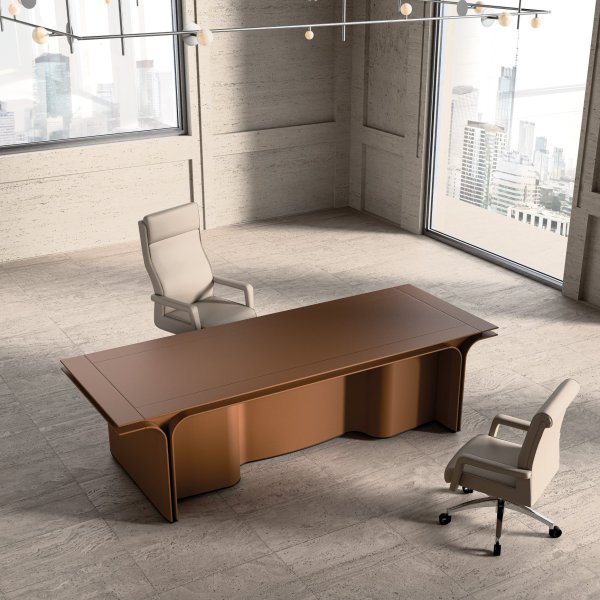
Luxury executive tables are the point in office furniture where the differentiator stops being size and becomes workmanship. In the chairman’s cabin or the promoter’s office, everyone expects two and a half metres of imposing surface; what separates the exceptional room is what the hands did — walnut veneers book-matched so the grain mirrors down the centreline, leather inlays stitched and edged like fine luggage, metal details machined and polished to tolerances furniture rarely receives. This is the executive table as a made object, and it is a different purchase from a large desk.
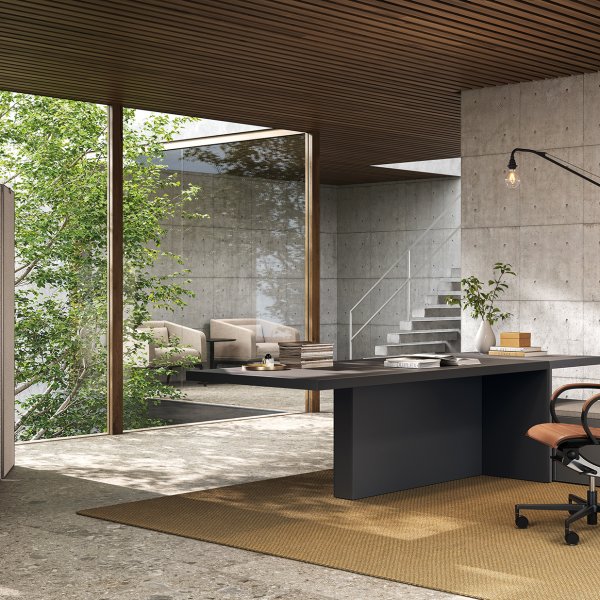
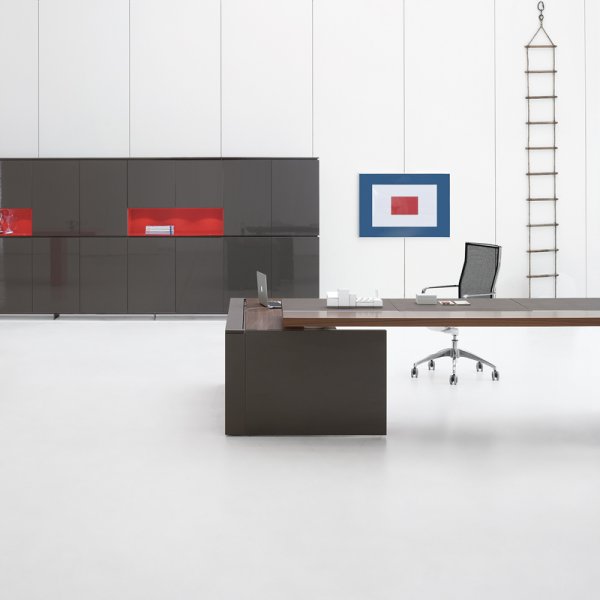
The selection sits at the top of the Italian contract tradition: pieces from ateliers such as I4Mariani, whose executive collections have travelled far beyond Italy, in walnut, oak and eucalyptus, with leather, marble and bronze-toned metal carrying the detail. Configurations run from the monumental single surface to the full ensemble with credenza and conference return — the formats India’s senior cabins actually use, from a family group’s headquarters in Ahmedabad to a founder’s floor in BKC.
These are the tables companies buy once, for the building that marks an arrival. La Mercanti reserves this range for commissions it follows personally: finish samples in hand, drawings signed, coordination through to the final placement in the cabin.
Into hours and tolerances you can point at. Take a top described as walnut: at luxury grade the veneer leaves are cut from a single selected trunk and book-matched so the figure mirrors across the surface, a process that discards most of the material it starts with. The lacquer is built in multiple coats with hand-sanding between them. Edges are finished as designed profiles rather than banded. Underneath, the hardware is machined metal — drawer runners, levelling feet, locks — from the same suppliers serving high-end joinery, and the drawer action alone tells you where a piece sits. Add the leather work where present, stitched and edge-finished by hand, and the cost structure becomes visible: skilled hours, material selection, and rejection rates, none of which survive cost-engineering.
The practical consequence for a buyer in India: ask the seller to walk you through the build, element by element. On a genuine piece that conversation is a pleasure for them. On an inflated one, it ends quickly.
Yes — and Indian corporate culture reads the difference precisely, so it should be composed rather than left to chance. The mistake is expressing hierarchy through size alone: a chairman’s table half a metre longer than the MD’s says little except square footage. The mature grammar is material register. The executive floor might run in oak with lacquered detail, while the chairman’s cabin moves to book-matched walnut with leather inlay and a credenza in the same hand. Same design language, higher intensity of craft. Board members, senior visitors and the family itself register the shift instantly, and it reads as discernment rather than display.
In family-led groups this matters twice over, because the chairman’s cabin often carries the founder’s presence in the building. Specify it as the reference point of the interior — the room the rest of the floor quietly refers to — and let the MD cabins step down in material rather than in dignity. The floor then reads as one composition, which is what a headquarters should be.
No. In Indian conditions the question is settled by the weather before it reaches aesthetics. A chairman’s table lives through cycles no European drawing room ever sees: monsoon weeks that push the air toward saturation, and air-conditioning that pulls it dry again every working day. Solid timber at monumental scale answers those cycles by moving: a 2.4-metre solid top wants to cup and open at its joints as the humidity comes and goes. Fine veneer over an engineered core stands still through all of it — which is why the great ateliers build their most important surfaces this way by intention, not economy. The dividend comes free: the rare figures (burl, rippled walnut, certain eucalyptus cuts) exist only as veneer, because a trunk that produces them is far too precious to be sawn into planks.
Judge the top by its veneer grade, its matching and its core engineering, never by the word solid. The 'solid equals premium' instinct comes from the mid-market, where veneer does mean cost-cutting. In a BKC tower, with the air-conditioning cycling and the monsoon outside the glass, it means the surface still dead flat when the lease comes up for renewal.
They are specified for it. Contract-grade versions of luxury materials behave very differently from their residential cousins: the leather used in desk inlays is pigmented and surface-sealed, chosen to develop an even patina under forearms and paper rather than the scuffs bare aniline would show, and a wet glass leaves no ring if wiped in reasonable time. Marble elements arrive sealed against staining and sit, by design, away from the primary writing zone. Metal details carry finishes selected to keep their tone under daily handling. None of this makes the table invulnerable; it makes it forgiving, which is what a working chairman’s cabin actually needs.
The habit that protects the piece costs nothing: a leather desk pad or a tray in the service zone where cups and tiffin actually land — a practice most senior Indian offices with dedicated support staff already keep. Request the manufacturer’s care protocol with the order and hand it to the office attendant in writing. Ten minutes of briefing preserves a decade of surface.
The failures in luxury executive commissions are rarely dramatic. They are small, early and cumulative — a sequence of reasonable decisions that ends with a magnificent table in a room that undersells it. On chairman and promoter cabins across India, we see the same six mistakes recur, in roughly the same order. Each step below names one and gives the corrective, which costs nothing if applied in time.
The chairman’s table usually enters the programme last, as a line in the loose-furniture package after civil work, panelling and lighting have consumed the budget and the imagination. The result is an apex room specified from leftovers. The correction is sequencing: on the projects that end well, the table is selected during design development — material, tone and scale fixed early — and the cabin’s panelling, flooring and lighting are then composed around it, the way a gallery is built around what it will hang.
This costs nothing and changes everything downstream. The lighting designer can place sources to model the wood’s figure instead of flattening it. The palette can hold one material story instead of negotiating five. And the budget conversation happens while there is still budget, which is the honest reason this mistake deserves to be named first: the table priced in month two is bought as specified; the table priced in month nine is value-engineered. Fix the anchor first and let the room inherit its quality.
Seniority pressure inflates tables. The cabin is grand, the occupant is the chairman, so the instinct runs to the longest surface in the collection — and the room quietly fails: circulation pinched, visitor chairs pressed to the wall, and a piece that reads as effortful, which is the one thing a chairman’s table must never read as. Presence does not scale with length past the point the room can carry. Beyond it, every additional centimetre subtracts.
The corrective is to let the plan set the limit before taste enters. Plot the cabin with its door swing, window line, credenza and seating zones, and establish the maximum table run that leaves the room generous — then choose the finest piece at that size rather than the largest piece the wall admits. A 2.2m table in a room that breathes outranks a 2.6m table in a room that does not, and every experienced visitor senses which is which within seconds of entering. If the ambition is monumentality, spend it on material depth and on the credenza composition, where it enriches the room instead of crowding it.
Photographs sell surfaces, so buyers evaluate the top and take the rest on faith — and the rest is where luxury either exists or does not. The base carries the engineering and half the visual signature: its junctions, its finish, the way it meets the floor. The hardware is the daily experience of the piece; a drawer that glides shut on a damped runner tells the occupant every morning what grade of object this is, and a rattling one tells him the opposite. The underside, which nobody photographs, is where contract-grade construction shows itself in sealed surfaces and engineered fixings.
Assess the table as an object in the round before ordering. Ask for detail photography of the base junctions, the drawer internals and the underside. Open and close things on the sample if one exists. Put a hand where the visitor never will. At this level the manufacturer expects the scrutiny and documents these elements willingly — reluctance to show the unseen parts is itself a finding. The top gets the compliments; the rest of the table is what earns them.
The budget concentrates on the table, and then the chair, the credenza and the visitor seating are filled in from a general catalogue — and the composition collapses, because a room is read as an ensemble and its weakest element sets the register. A hand-matched walnut surface with an ordinary task chair behind it does not read as a fine table with a modest chair. It reads as a cabin that ran out of conviction. Visitors cannot always articulate this; they always feel it.
Specify the ensemble as one act: table, executive chair, credenza, visitor chairs and the small service pieces, held together by a shared material logic — the credenza in the table’s veneer, the chairs picking up its leather, nothing entering the room from outside its story. Italian ateliers design in exactly these families, so coherence is available off the drawing board and requires no invention. Where the budget cannot carry the full ensemble at once, phase it: buy the table and the chair at grade now and hold placeholders elsewhere, rather than lowering the grade of everything to buy it all today.