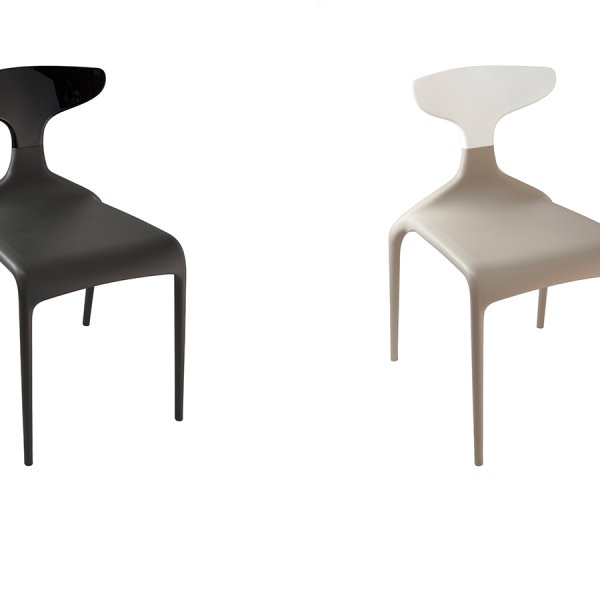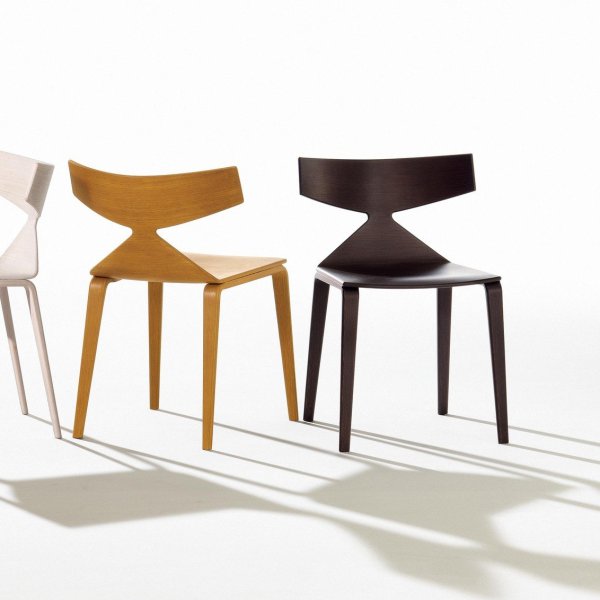

Brezza
₹ 114.000
A designer chair is bought for what it says when nobody is there to explain it. The buyer we work with across India has sat in these pieces before — in a Milan hotel lobby, a Singapore members' club, a partner’s office in London — and recognises the silhouette the way one recognises a well-cut jacket. Luxury designer chairs of that order do more than decorate; they are the shortest sentence a room can speak about its owner’s judgement.
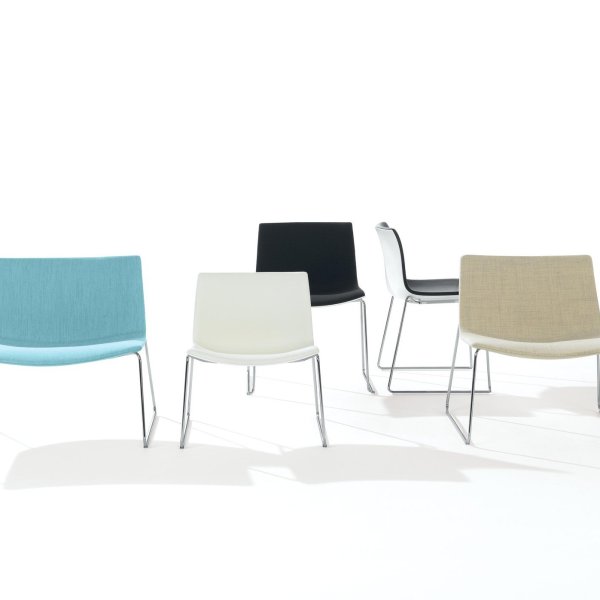
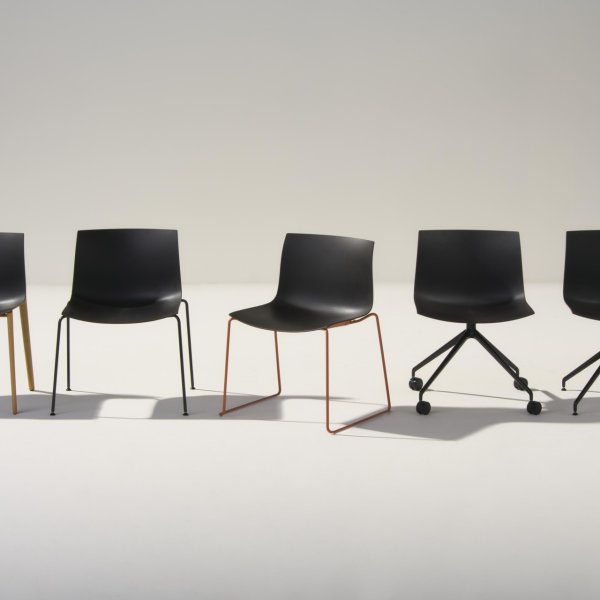
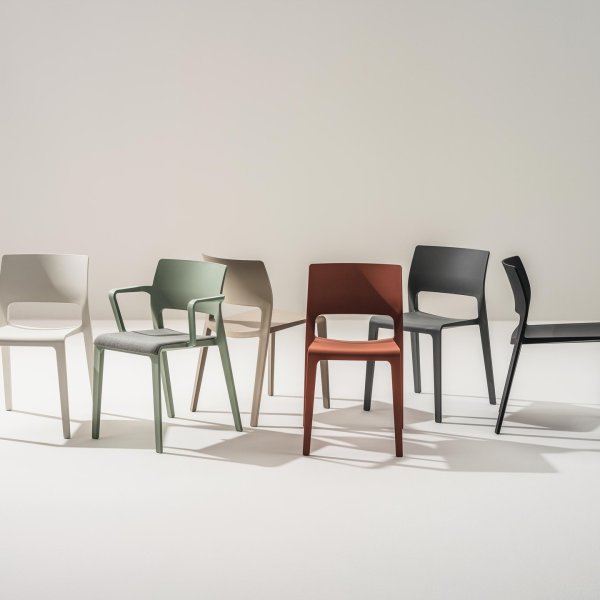
The selection spans authored lounge armchairs, sculptural accent pieces and statement seating from Italian houses such as Luxy, Arper and Lapalma — pieces conceived by named designers and built by the workshops that hold the original drawings. What separates them from the lookalikes filling Indian marketplaces is invisible at first glance: the density of the foam at year three, the tailoring of a seam that turns a curve, the weight of a base that was cast rather than copied. In an MD cabin, a collector’s residence in Alibaug, or the lobby of a boutique hotel in Jaipur, that difference is exactly what a discerning guest reads.
La Mercanti sources each piece directly from the Italian manufacturer, with full provenance documentation, and manages delivery to your site anywhere in India.
Ask for the paperwork before you look at the chair. An authentic piece arrives with the manufacturer’s certificate or numbered label, the designer’s attribution on the technical sheet, and an invoice trail that leads back to the Italian factory — documentation a copy cannot produce and a serious supplier volunteers without being pressed. The construction then confirms what the papers claim: the base weighs what cast metal weighs, welds are dressed and invisible, upholstery seams follow the curve in one continuous line, and the piece sits identically on all four points of a stone floor.
The lookalikes sold widely on Indian marketplaces fail slowly rather than immediately — foam that collapses within a couple of years, plating that clouds, geometry a few degrees off the original in ways a travelled eye registers without knowing why. The operational rule is simple: no provenance documents, no payment. A genuine designer chair holds value and credibility for decades; a copy costs less and says more than you want it to.
Placed at the room’s decision point, a single authored chair does the work: the corner of an MD cabin where longer conversations move, the entry axis of a residence where it is the first object a guest reads, the window end of a senior partner’s office. There it organises everything around it and gives the room a centre of gravity that no amount of matched furniture achieves. And it does a second job the catalogue never lists — the guest who has met the original abroad reads its placement as fluently as its silhouette, and understands that the owner knew exactly what the piece was and where it belonged.
Sets are a different instrument, for different rooms: a hotel lounge can repeat a piece in rhythm because the scale absorbs it, and a boardroom ante-room can pair two armchairs in conversation. Decide the placement before you decide the purchase — walk the room, find the point your eye keeps returning to, and put the chair there. If no such point exists, the room has a layout problem that no chair will solve.
Yes, provided you specify the contract version and name it in the purchase order. Most Italian designer chairs exist in more than one build: the residential edition, and a contract edition with reinforced frames, higher-density foams and upholstery graded for commercial duty. Visually they are near-identical; structurally they are different products. A boutique hotel in Goa or a members' lounge in Delhi will put a chair through more sittings in a season than a residence does in five years, and the residential edition was never engineered for that arithmetic.
The details to fix in writing are the upholstery grade with its rub count, the frame specification, and the manufacturer’s confirmation that the piece is supplied in its contract configuration. Italian manufacturers test these editions against recognised European standards for commercial seating, which is precisely the assurance your operator or fit-out contractor will ask you to evidence later. Ordering the right edition costs a conversation now; discovering the wrong one costs re-upholstery in eighteen months.
Let it argue a little. A designer chair does not need the rest of the room to match it, and the attempt usually produces showroom sterility. What it needs is one point of dialogue — a material it shares with the room, a tone that answers the rug or the veneer, a scale that respects the ceiling height. A sculptural armchair beside a conventional sofa lifts the sofa; set beside another strong piece, it needs material kinship, a shared timber or metal or tone, so the two read as a conversation between equals rather than strangers seated together.
The practical method: photograph the room, place the chair image in the frame at scale, and look at where the eye lands. If it lands on the chair and travels comfortably onward, the composition works. If it snags, change the position before you change the chair. In Indian interiors this matters doubly, because rooms often carry strong existing elements — stone flooring, carved wood, inherited pieces with family weight. A well-chosen designer chair sits beside that inheritance as a contemporary counterpart, which is the most convincing way new money and old taste have ever shared a room.
A designer chair is one of the few purchases where the object, the paperwork and the room all have to be right at once — and where a single skipped verification surfaces as regret within the year. Buyers across India lose money in predictable ways: unverified provenance, the wrong edition of the right chair, a piece that cannot physically enter the room it was bought for. This is the verification sequence we run before any order leaves for Italy, in the order that catches each mistake while it still costs nothing.
Begin with documents rather than photographs. Ask the supplier for the manufacturer’s technical sheet naming the designer, confirmation that the piece ships from the Italian factory rather than a regional warehouse of uncertain stock, and the form of authenticity marking the manufacturer uses — a numbered plate, a woven label, a certificate. Genuine channels produce these within a day because the material already exists; evasive answers at this stage are the cheapest warning you will ever receive.
Cross-check the piece itself against the manufacturer’s current catalogue. Authentic designer furniture is documented publicly and precisely: exact dimensions, available finishes, upholstery programmes. A listing whose measurements differ by an inch from the official sheet, or whose finish does not exist in the manufacturer’s programme, is telling you what it is. In a market where lookalikes are open and abundant, provenance is the product.
Keep every document with the invoice. The chair can be repaired if life happens to it; a purchase with no paper trail cannot be resold, insured or defended to the one visitor who knows the original well enough to ask.
The same chair name can describe several different products. Designer pieces are built in editions: leather grades that differ in price by multiples, fabric programmes from standard to premium, base finishes in polished, matt or lacquered metal, and in many cases a residential and a contract build of the same silhouette. A quotation that names the model but not the edition is not yet a quotation — it is an estimate wearing one.
Fix each variable in writing: the upholstery programme and colour reference as coded by the manufacturer, the base finish, the edition, and for any piece going into an office, lounge or hotel, the contract specification with its upholstery rub count. Ask for physical samples of the leather or fabric before confirming; screens flatter some materials and slander others, and the difference between two leather grades is something the hand understands in a second.
This step is also where the price becomes honest. Two quotations for the same model can differ widely and both be correct, because they describe different editions. Comparing suppliers without fixing the edition first is how buyers convince themselves an implausible price is a bargain.
A designer chair that overwhelms its room fails as surely as a copy does. Check the scale honestly: the piece’s height against your ceiling, its footprint against the floor area it commands, its visual weight against what already lives in the sightline. Sculptural pieces need breathing space — the rule that has served our projects well is that a statement chair should own roughly a six-foot circle of influence in which nothing competes with it.
Then check the light. Indian rooms are bright, and the window walls of Mumbai and Gurgaon towers deliver direct sun that European showrooms never anticipated. Ask where the piece will stand at three in the afternoon in May: full-grain leathers and saturated fabrics placed against west glazing will need either repositioning or window treatment, and it is far cheaper to know now.
Finally, walk the route in. Measure the narrowest point between the building entrance and the room — the service lift, the apartment door, the stair turn in a duplex. Sculptural one-piece chairs do not disassemble. Every season a beautiful object reaches an Indian address and cannot enter it, and the freight paperwork calls that nobody’s fault.
The order is the only moment you hold full leverage, so use it to buy the piece’s next decade. Ask for replacement cushion covers or a reserved batch of the upholstery — dye lots change, and matching a fabric three years later is rarely possible. Confirm who supports the piece in India: how a loose stitch, a scratched base or a foam question is handled, through whom, and in what timeframe the manufacturer commits to respond. A designer chair is a long relationship, and the supplier’s answer to this question tells you whether they intend to be part of it.
Put the care instructions into your household or facilities routine on delivery day. Most damage to fine furniture in India is done with good intentions and the wrong cleaning product, in the first year, by staff who were never told otherwise. One page, translated for the person who will actually do the work, protects the investment better than any warranty clause ever written.
When these four checks are complete, the purchase is no longer a leap of taste. It is a documented, correctly specified, correctly sited piece with a service path — which is what luxury actually means once the novelty has settled.