What did you have in mind?
Trade terms for professionals and design studios
What did you have in mind?
Trade terms for professionals and design studios
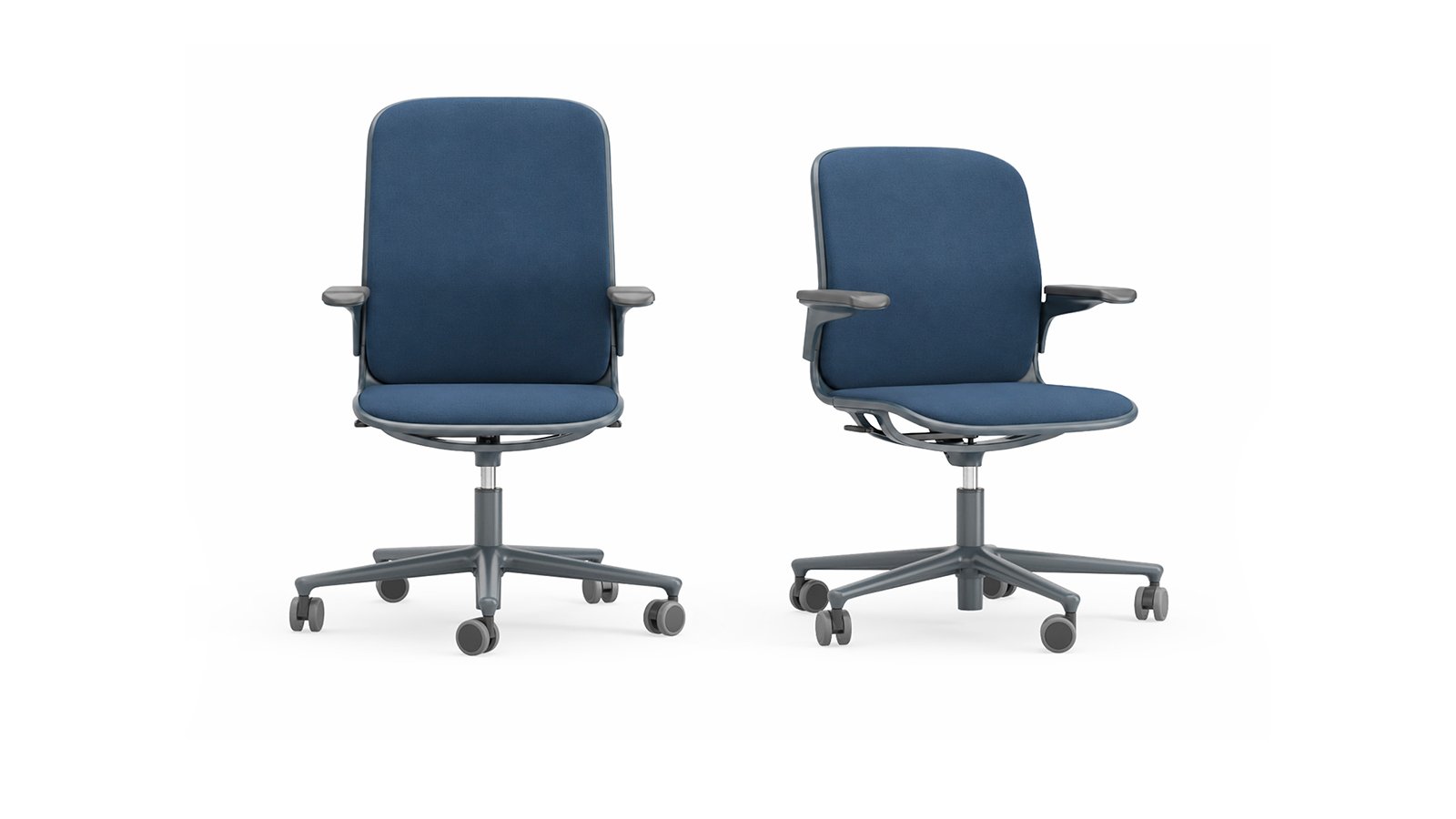
The back is where a sitter sweats; the seat is where the suit sits. ICF lets the Cloud Chair split the job: an upholstered seat under a mesh back, ordered as one line. BX puts a category B fabric on the seat and mesh behind it, CX and FX do the same with categories C and F, EX pairs leather E with the mesh. For a boss chair range that has to get through an Indian summer, it is the combination to look at first.
Both halves hang the same way. Inside an extruded-aluminium perimeter two membranes are suspended separately, seat and back: nylon mesh, an elastic two-tone mesh that ICF calls fully breathable, or a sandwich laminate in fabric or leather with a technical core. The membrane follows the body and spreads its weight evenly. Sottsass Associati designed it for ICF in 1998.
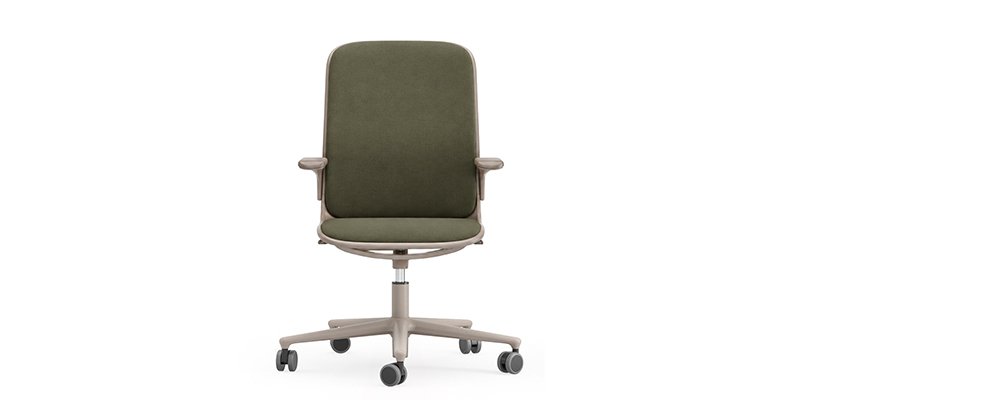
Three ways to cover it, then. All mesh, seat and back, which exists only with the elastic mesh; all upholstered, in one fabric or leather category; or the mixed pairing above. Each comes in three back heights, as Task with open padded arms for the working desk or as Meeting with closed aluminium arms, the version lined up among the chairs for the conference room, on glides with four arms or castors with five, and someone waiting can sit on it too. La Mercanti sends the two colour cards together, the mesh card and the fabric card, so the two halves are chosen as a pair and not one after the other.

Share the finishes you wish to evaluate
The code answers before the chair does. A Cloud ending in 17 stands on a five-star base with castors and its tilt can be locked upright or at four points along the way; a Cloud ending in 08 sits on four-star glides and its tilt swings free, with no lock. ICF ties the two together in every row of the catalogue, so a chair cannot be ordered on glides with a lock or on castors without one. For a cabin where the chair is pulled to the desk and back, 17; for a conference table where it should stay in place, 08.
Three references, each listed by ICF as an accessory. SLXN is the lumbar support in black polyurethane, height-adjustable, which can be fitted or taken off at any time; SAR5 is a set of five grey/black castors for the Cloud Chair; SAF5 is a set of five glides in black nylon. All three sit outside the chair code, which means a floor can be equipped first and corrected later, lumbar supports for the people who ask for them and a change of castor if the flooring changes, without reordering a single chair.
With the mildest kit in the office. ICF's care sheet asks for a soft cloth, water and neutral soap, and rules out solvents, thinners, alcohol, abrasives and polishing sprays on the aluminium. One line in the same sheet decides a ten-year appearance: chromed aluminium keeps its brightness, while polished aluminium goes through a natural oxidation over time. In a city where frames are wiped every day, that is the difference between 55 and 47 on the order, more than the look on day one.
ICF declares 15 to 16 kg and 0.45 cubic metres for the low and medium back, and 16 to 17 kg with 0.49 cubic metres for the high back. Three quarters of that weight is aluminium, by ICF's own material split. The volume is the figure that matters on a consolidated shipment: multiply it by the headcount of the floor and the container question answers itself, with the high back asking a little more space per chair than the other two.
Four collections, in two categories. Tonal, category B, is 99% post-consumer recycled polyester; Cura, category C, is 98% post-consumer recycled; Grain, category F, is 92% post-consumer recycled polyester with 8% polyester. On the mesh side, Tale is 99% post-consumer recycled polyester in fifteen melange colours. Tonal, Cura and Tale carry OEKO-TEX and EU Ecolabel as well, which is the line a sustainability clause in an Indian corporate tender will ask to see, next to the percentage.
A boss chair enters a tender as a set of references, not as a photograph. Five steps place every standard and figure ICF declares for the Cloud Chair on the line where a procurement officer expects it.
The first line of a Cloud Chair specification carries the standards the product sheet declares for the family: EN 1335-1-2-3:2014, UNI 9084:2002 and ANSI/BIFMA X5.1:2002, together with UNI 8591:1984 with FA 1:1995 and UNI 9083:1987, which ICF declares for the chair. Three references from two continents on one line cover both the European and the American clause a multinational tenant may bring.
The reaction-to-fire class is tied to a covering. ICF declares class 1 IM for the chair with the Rete N mesh, and only for that. The specification line therefore reads class 1 IM with Rete N, with the covering spelt out; writing class 1 IM against the chair alone would promise something the sheet does not say for the other coverings.
The user manual gives two declarations that belong in two places. Visitor and community seating conforms to UNI EN 15373 level 2 and EN 13761: that line goes against the Meeting version in conference rooms and waiting areas. Chairs for screen-based workstations conform to UNI EN 1335 type B: that line goes against the Task version at the desks.
Two parts of the chair are standardised separately and procurement officers look for them. The gas lift that sets seat height is to EN 16955:2017, with 14 cm of travel; the castors come with an automatic brake, EN 12529:2001. Both numbers sit on the component line, below the chair standards and above the covering.
ICF publishes the material split for the chair on code SAM.117: aluminium 75%, plastic 13%, metal 4%, other 8%, with 92% recyclable when the components are fully separated, and every component can be dismantled for repair, reuse or recycling. Quoting the code with the figures keeps the line honest, because the percentages change with model and finish.