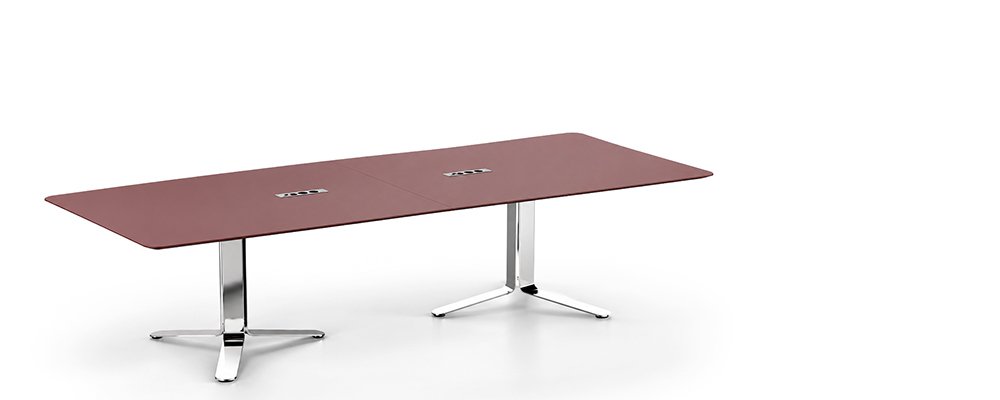
ICF Levita conference table in mauve, standing on bases polished like mirrors

One table, three rooms: Levita by ICF for operational, meeting and executive spaces

ICF Office
Conference table only
Levita Table An icon of Italian design Conference table only
₹ 9,60,000

Let's discuss your project

Trade terms for professionals and design studios

Operational, meeting, executive: ICF names three kinds of room for the Levita Table, in that order, and calls the result a versatile system. In an Indian head office, that puts the project floor, the boardroom and the MD's cabin in reach of one conference table design, where most companies would end up making three separate purchases and living with three separate looks.

The rooms ask for different things; what they share is the structure. Khodi Feiz builds it from an I-beam and curved steel legs, and it is meant to take large tops with few components, under a clear, understated line. That restraint is the useful part. A cabin has a personality of its own, a conference room and boardroom has to speak for the whole company, and a table that stays calm can sit in either without an argument.

Within the family, the Table itself runs from low versions and side tables to tables for working and dining. After that comes the Levita Desk for operational environments, and then the Levita Sofa for lounges and reception areas, where benches, poufs and tall-backed panels join the seating. La Mercanti asks which of the three rooms comes first, then checks the matching version with ICF.

Technical information based on data declared by the manufacturer.
  • Collection: Levita Table (Levita system)
  • Maker: ICF S.p.A., Vignate (Milan), Italy
  • Design: Khodi Feiz, 2026
  • First shown: Orgatec 2026, Cologne, 27-30 October
  • Structure: I-beam with curved steel legs; few components to hold large tops
  • Form: essential forms, softly shaped tops, light and recognisable bases
  • Versions: low, side tables, tables for working, dining or meeting
  • Stated destinations: operational, meeting and executive spaces; reception, hospitality, commercial and public spaces
  • Family: Levita Desk; Levita Sofa with lounge seating, benches, high-backed panels, armrests, integrated side tables, electrification and poufs
  • Construction: modular, with considered use of materials for a more sustainable approach, as declared by ICF
  • Origin: Made in Italy
La Mercanti Srl — trusted supplier for design and contract projects since 1997.
San Benedetto del Tronto (AP), Italy · +39 0735 753833 · info@lamercanti.com
Supply, quotations, specifications and project support across India and worldwide.

Share the finishes you wish to evaluate

₹ 30,000

Amount adjusted against your first order

FAQ

Where was this table first shown to the trade?

At Orgatec 2026 in Cologne, from 27 to 30 October, in Hall 10.2 on Stand Q040-P041. ICF brought it as one of four collections under the line «One Vision, Four Collections», and photographs from the stand show it ringed with chairs, with the Levita Sofa behind it. For a buyer in India the date matters in one practical way: this is new work from 2026, so versions and finishes are being settled now and should be confirmed for each enquiry.

Why does the long top in the pictures have a joint?

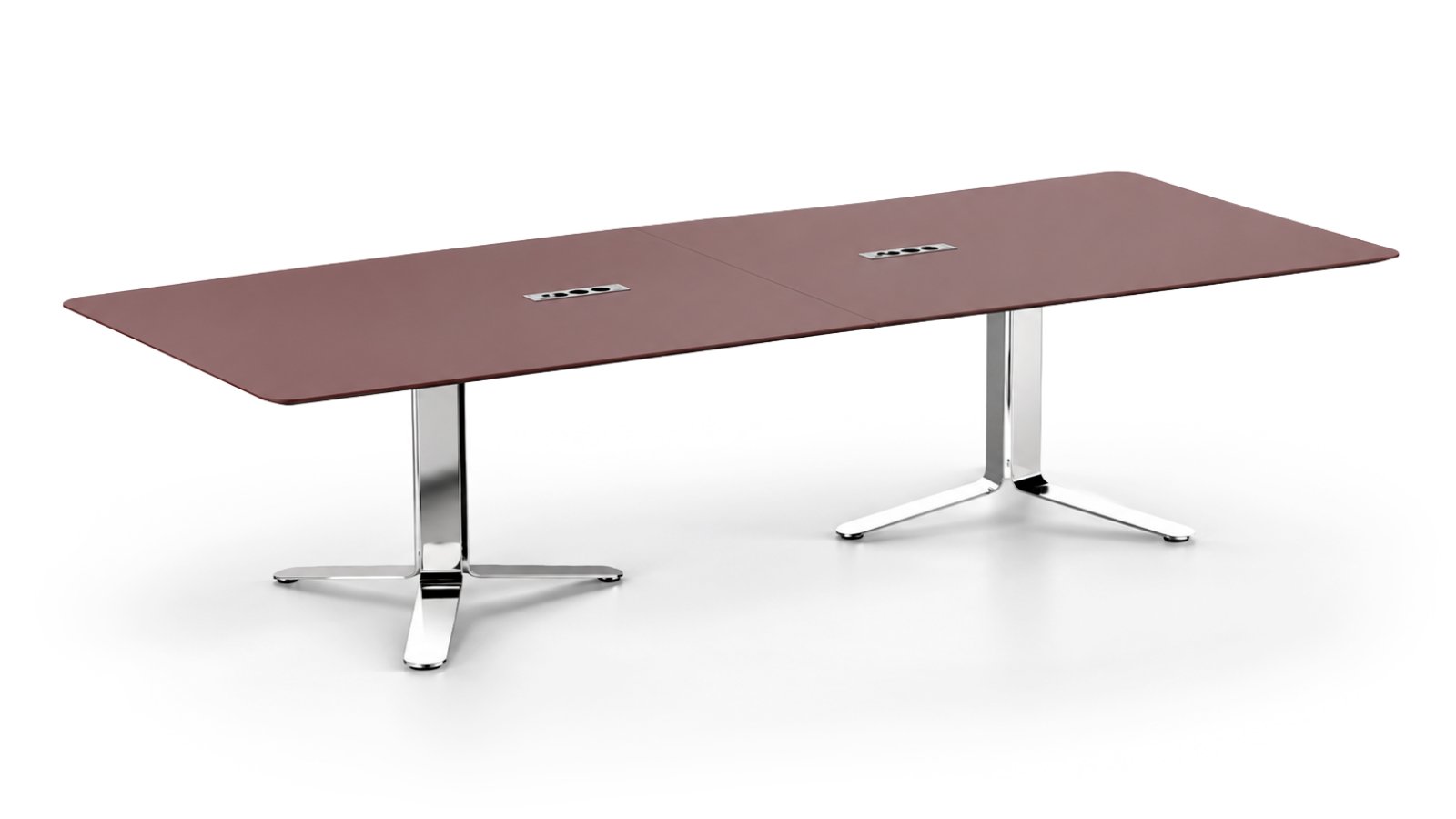
In the images published by ICF, the long top is in two sections with a visible joint between them, resting on two bases. It is worth asking about early, because two pieces reach a boardroom more easily than a single long one, particularly in a tower where the service lift sets the limit. Whether your own table comes this way depends on the version, and we confirm that for your enquiry before anything is finalised, along with the route to the room.

Can something so large still feel homely?

ICF thinks so. Writing about its own pictures, it notes a very human, domestic quality, even when they show very large configurations. That is an unusual thing to hear about boardroom furniture, and it has a real use: a room that also receives partners, family shareholders and long-standing clients does not have to look like a courtroom. The softly shaped tops do much of this work, since they take the hard edge off a table that might otherwise dominate.

Who makes it, and in which part of Italy?

The maker is ICF S.p.A., based in Vignate, in the Milan area, and the company presents itself as office furniture Made in Italy. The table is designed by Khodi Feiz for ICF, and it reaches India through La Mercanti. For a project file, that gives a clear line of origin to record: manufacturer, place and designer, each named. It also helps when a promoter or an auditor asks where a significant piece of boardroom furniture really comes from.

How does one order a table that has only just been presented?

The honest way is request by request. La Mercanti verifies with ICF which sizes, finishes and versions can be ordered at that moment, and the offer then carries only what has been confirmed. So the first step is simply to tell us the room, the use and the look you have in mind. No fixed schedule is promised at this stage; what you get in its place is an answer that holds, in place of a figure that may need correcting later.

Reading a Levita Table in person: five things worth looking at closely

Photographs flatter any table. Five things to check when you stand in front of a Levita Table, from the edge of the top down to the point where the base meets the floor, before you form an opinion of it.

Begin at the edge

Stand at the side of the Levita Table with your eyes level with the top and look along it. The edge tells you most of what you need to know about how the piece carries itself. Then step back a few paces. A thin line seen from a distance is what your visitors will remember, so judge it from the door as well as from the chair.

Trace the I-beam

ICF describes the structure as an I-beam, and it deserves a slow look. Bend down and follow it with your eye from one end to the other, noting how the section is shaped and where it joins the rest. This is the idea that the entire table is built on. Once you have seen it clearly, the design stops being a matter of taste and becomes a matter of construction.

Follow the curved legs

Move along the table and watch the steel legs change as your angle changes. A curve seen head-on and the same curve seen at three-quarters are almost different objects. Pay attention to how the light travels over them, especially under strong overhead lighting, because that is how they will look on most working days and in most photographs taken in the room.

Find where it touches down

Crouch at floor level and look at the point where the support actually meets the ground. In the images ICF has published, that means small feet at the end of each arm. Check how much clear floor is left around them, and picture where a person's feet and a chair's castors would go when somebody sits down and pushes back from the table.

Walk round it empty

Finish by walking all the way round with no chairs in place, which is how the room looks for much of the day. ICF speaks of a light presence, and an empty table is the fairest test of that phrase. Stop at each corner, look across the top and notice whether the piece gives the room some air or takes it away.