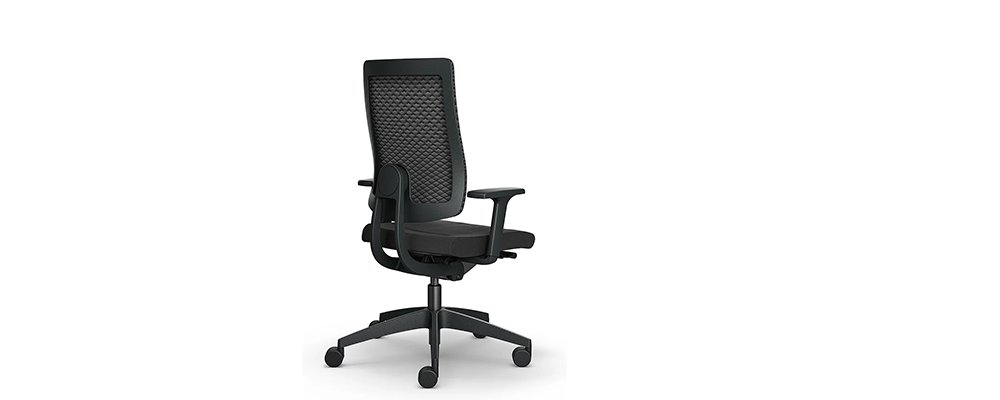
Ergonomic office chair black dot 24 by Sedus, seat wider and more thickly padded

For rooms that never close: black dot 24 by Sedus, the ergonomic office chair for control rooms, rated to 150 kg

Sedus
Task chair
blak dot air Available now Task chair
₹ 1,75,200

You've found the piece. Now the project.

Trade terms for professionals and design studios

Control rooms and other rooms staffed through the night are where black dot 24 belongs. Sedus builds this version for continuous use and allows a user weight of 150 kg, where black dot, net and air stop at 130 kg. Within ergonomic office seating it is the version Sedus declares for that load.

The specification follows from that use. The sliding seat is standard, 495 mm wide and 420-490 mm deep, with thicker padding; 4D armrests are standard too, and the Sedo-Lift III spring runs from 420 to 520 mm. The back is membrane or upholstered, 620 mm. For 24-hour duty the covers narrow to Phoenix, Pure, Umber and leather, and other collections count as normal use. The GS mark on this model names DIN 4573, ANSI/BIFMA X5.1-2002 and BS 5459-2:2000.

By hours of use, the family continues downwards. For the ordinary working day there is black dot with three back heights, net in membrane and air in AIR KNIT, all at 130 kg. Presented at Orgatec, black dot next is the new generation, with a renewed design, three backs and two mechanisms: automatic weight adjustment for shared desks, individual adjustment for fixed ones. Sedus shows it at single desks and home offices. For short stays in the conference room, four-leg and cantilever visitor chairs are rated 110 kg, or 150 kg for occasional use. La Mercanti confirms which fabric holds up for 24-hour shifts before the chair goes on the order.

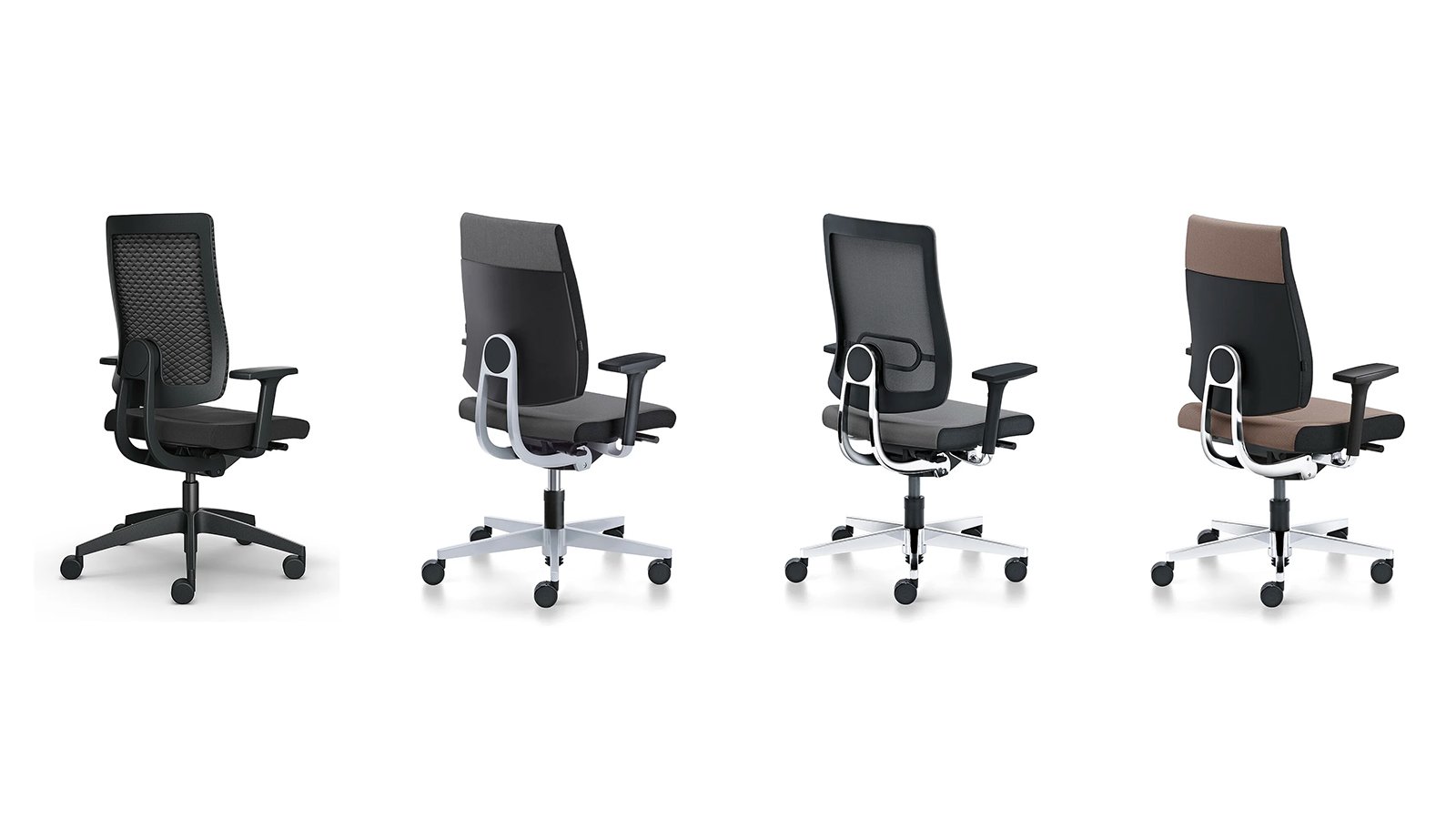
Technical information based on data declared by the manufacturer.
  • Family: black dot 24 for continuous use; swivel chairs black dot, net, air, next; counter version of black dot and net; four-leg and cantilever visitor chairs
  • New generation: black dot next, renewed design, modular structure; back in membrane (6 colours), 3D fabric (6 colours) or upholstered; dorsokinetics built into the back; seat-depth adjustment with patent pending, range 7 and 10 cm; Similar with automatic weight adjustment for desk sharing (seat tilt up to 5°, opening 0, 8, 16, 26°) or individual adjustment for fixed desks (lockable in 3 positions, 26°); armrests 1D to 4D or none; counter variant. Load-rating and certification data on this page do not refer to next
  • Design: Michael Kläsener, Sedus Design Team (24, black dot); Markus Dörner (net); Carlo Shayeb, Sedus Design Team (air); Stephan A. Preisig (visitor chairs)
  • Manufacturer: Sedus Stoll AG, founded 1871, Dogern, Germany
  • Backrest: 24 membrane or upholstered; black dot upholstered 50 mm; net breathable membrane with memory effect, 620 g/m², 5 colours; air AIR KNIT 3D knit, 1490 g/m², 5 colours
  • Backrest heights: 620 mm on 24, net and air; 520, 590, 620 mm on black dot
  • Dorsokinetics: patented, single flexible joint on an aluminium carrier, +15° backwards, +8° for each sideways movement
  • Mechanism: Similar, seat to back 1:2.7, back to about 32°, lockable in 11 positions, quick resistance adjustment 450-1500 N
  • Seat lift: Sedo-Lift III 420-520 mm on 24; 420-530 mm on black dot and net, option on air; gas cartridge 400-530 mm, standard on air
  • Seat: on 24 sliding as standard, 495 mm wide, 420-490 mm deep, thicker padding; on the others 470 mm wide, 400 mm deep (black dot) or 420 mm (net, air), optional sliding seat with 70 mm travel, 415-485 mm; optional tilt 0°, 2°, 4°
  • Lumbar: height adjustable 80 mm; optional depth 10 mm on net and air
  • Headrest: optional, height 80 mm, tilt 25°, black vinyl on fabric, leather on leather versions; coat hanger with the headrest
  • Armrests: 4D standard on 24, soft-touch pad 24° in, 12° out; on the others polyamide 200-300 mm, 4D optional; 360° swivel with Type A; no armrests available
  • Bases and colours: aluminium black, light or polished; polyamide black or light grey; on air polyamide standard, black aluminium optional; model colour black or light grey; back carrier in the base finish
  • Castors: Ø 65 mm, hard for carpet (standard), soft for hard floors
  • Load rating: 150 kg on 24; 130 kg on black dot, net, air; 110 kg on counter; visitor chairs 110 kg, 150 kg for occasional use
  • Counter: seat height 630-875 mm, foot ring Ø 500 mm, self-braking castors
  • Visitor chairs: seat 450 × 470 mm (net 480 mm); four legs in Ø 22 mm steel, stackable up to 5; cantilever Ø 25 mm, stackable up to 5 on request; steel, plastic or felt glides
  • Covers and fire: 24-hour use with Phoenix, Pure, Umber and leather; Sedus fabrics and Pelle Scala leather; the net membrane declares EN 1021-1/2, UK FFSR and UNI Class 1.IM; optional flame-retardant version with Fame, One, Step (and Nobel on net)
  • Certifications: 24 GS with DIN 4573, ANSI/BIFMA X5.1-2002, BS 5459-2:2000; black dot, net, air GS TÜV Rheinland LGA, certificate 60166331, valid to 17.10.2027, DIN EN 1335-1/-2, DIN 4573; visitor chairs GS, DIN EN 16139 L1; DIN EN 1335-1:2023 Type A as an option; Quality Office 9.101, valid to 28.02.2027; GREENGUARD; AGR on net and counter
  • Awards: German Design Award 2016 Nominee (24); iF product design award 2007 (black dot)
  • Environment: 99 % recyclability; covers not glued; CFC-free foams; chrome III plating; OEKO-TEX 100; 100 % green electricity
  • Warranty: 5 years; 30 years on Sedo-Lift; guaranteed repairability 10 years; Sedus conditions apply
  • Origin: Made in Germany; about two thirds of steel, aluminium and wood bought in Germany
La Mercanti Srl — trusted supplier for design and contract projects since 1997.
San Benedetto del Tronto (AP), Italy · +39 0735 753833 · info@lamercanti.com
Supply, quotations, specifications and project support across India and worldwide.

Share the finishes you wish to evaluate

₹ 30,000

Amount adjusted against your first order

FAQ

Why is the backrest fixed at just one point?

Because that one point lets it move with the body in more than one direction. A flexible joint connects the back to its aluminium carrier, and Sedus has patented the principle as dorsokinetics. The result is 15° extra backwards and 8° for each sideways movement of the torso, and the back also follows when you rotate. It comes on all the swivel models, so the choice of version need not take this into account.

air or net: what separates the two backrests?

The material and its weight. net is a membrane of 620 g/m² with a memory effect, crease-free and easy to clean. air is AIR KNIT, a three-dimensional quilted knit of 1490 g/m². Both come in five colours and reach at least 50,000 Martindale. The chairs also differ underneath: net has the Sedo-Lift as standard and air a gas cartridge with Sedo-Lift optional, so a buyer comparing the two should compare the whole specification. The new black dot next offers both a membrane and a 3D back, each in six colours.

Which country does a black dot come from?

From Germany. The maker, Sedus Stoll AG, was founded in 1871 and is based in Dogern, and the family carries the Made in Germany mark. Of the steel, aluminium and wood Sedus buys, roughly two thirds comes from German purchases, and production runs on 100 % green electricity. The GS certificate on black dot, net and air comes from TÜV Rheinland LGA.

A chair used by several people: which settings can each user change?

Three are within reach of each user. The seat height, with the lever. The back resistance, adjusted quickly between 450 and 1500 N with the handle. The seat depth, if the chair has the optional sliding seat with 70 mm of travel. Where different builds share a seat regularly, the Type A option is worth asking about, because it brings together the sliding seat, aluminium base, 4D armrests with 360° pads and castors.

Who designed which chair in the family?

Four names appear. Michael Kläsener of the Sedus Design Team signed the original black dot and the 24. Markus Dörner designed net, Carlo Shayeb of the same team designed air, and Stephan A. Preisig did the visitor chairs on four legs and on a cantilever frame. For architects keeping credits in a project book, each model therefore has its own designer rather than a single family credit.

Keeping a black dot clean: plastic, fabric, membrane, castors and gas lift

Five parts of the chair call for five simple routines. Soap and water do most of the work, aggressive products are ruled out, and two jobs are left to trained hands.

Soapy water for the plastic

On a black dot, the plastic parts need nothing stronger than soapy water. Sedus is firm on one point here: do not use aggressive cleaning materials on them. That one instruction, passed on to whoever cleans the office, covers most of the routine care these parts ask for over the life of the chair.

Vacuum first, then treat the stain

Fabric and membrane should be vacuumed regularly. Treat a stain at once, with a cloth dampened in lukewarm water. For light soiling use only a suitable delicate cleanser or Sedus's own foam. Replacing the upholstery or the membrane on the backrest is a job for skilled persons only, so it does not belong in the routine.

A soft cloth for leather

Leather is a natural material, and its markings are part of it. A soft woollen cloth lifts light marks; heavier soiling calls for cleaners meant only for aniline-dyed leather. Semi-aniline leather should not be exposed to direct sunshine, so the position of the chair in the room matters as well as the cleaning.

Pull the castors out to clean them

Regular cleaning lengthens the service life of the castors and conserves the floor covering, so make it part of the routine. Each one simply pulls out and pushes back in, which is also how a castor gets changed. While one is out, check you have the right type: hard castors for soft flooring, soft ones for hard floors. The diameter is 65 mm on both.

Wipe the piston, leave the spring

Clean the piston rod of the height adjustment regularly with a cloth. Any other work on the gas spring, including replacing it, may be carried out only by trained staff. Lowering and raising the seat with the lever after cleaning shows whether it still locks at the point where you release it.