What did you have in mind?
Trade terms for professionals and design studios
What did you have in mind?
Trade terms for professionals and design studios
Poppy Seed, Caraway, Cadmium Yellow, Citron: four colours of Catena, a mesh Humanscale weaves for the back of Liberty. The company says these dense, rich shades were inspired by India's spice markets, and it sets them in a proprietary mesh that does not stretch. For teams sizing up ergonomic seating for desk work, the part that holds the spine is here also the part that carries the colour.
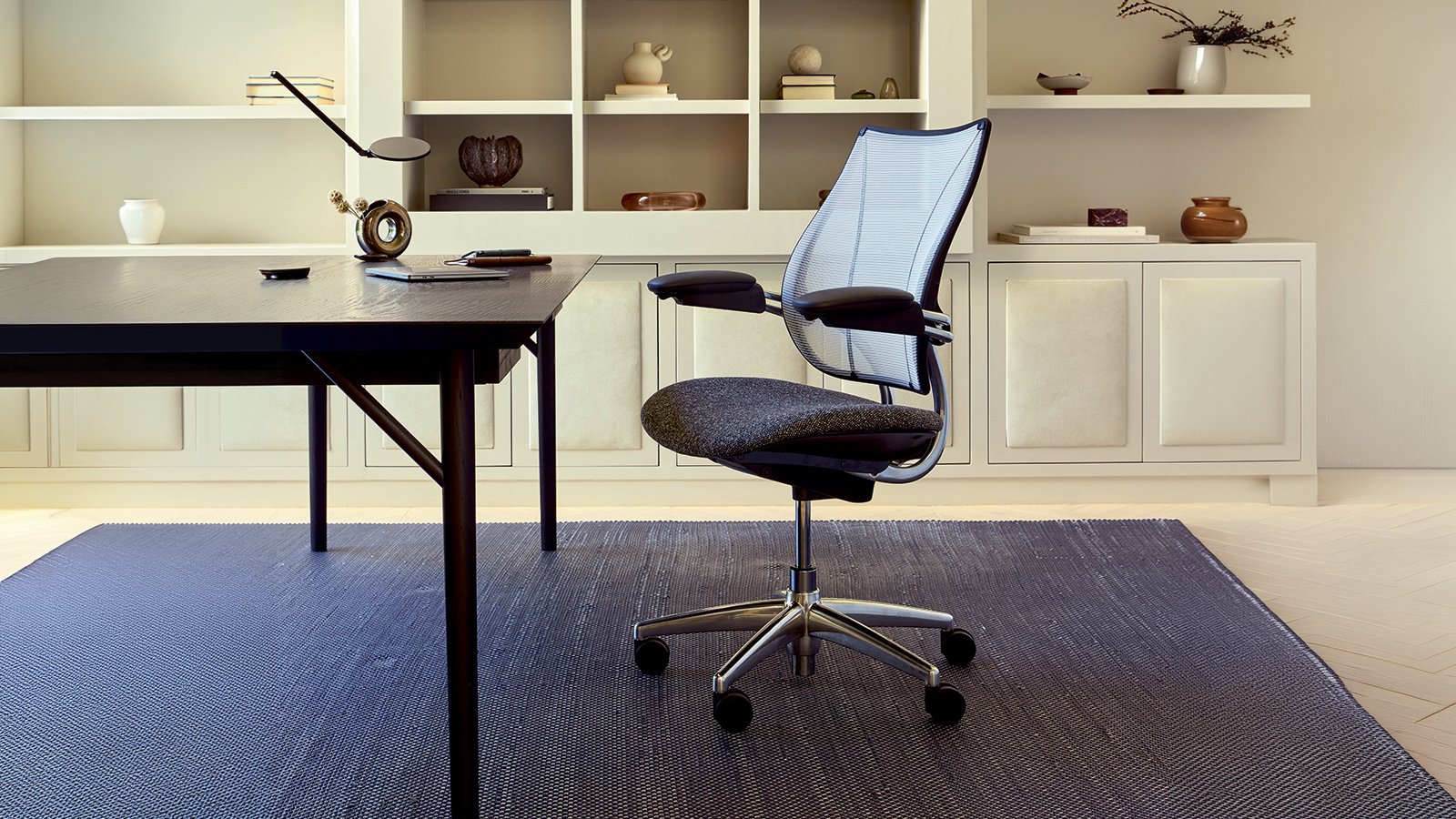
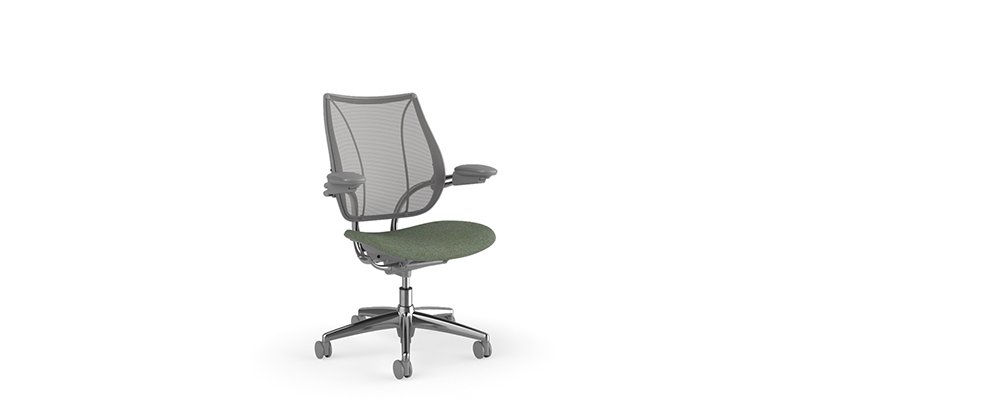
That back is three panels, joined as a tailor joins pieces of cloth for a shirt, so it follows the contours of the body and supports the lower back without a single device to adjust. Niels Diffrient designed the chair to do without knobs, locks and springs: the recline takes its cue from the sitter's weight. On open-plan workstation zones, that leaves nothing to explain to a new colleague. Below it sits an upholstered seat in fabric or leather.
Work height picks the version. A standard desk takes the Task Chair, a conference table the Meeting Chair, and a high counter the Task Stool, which adds a ring for the feet. Visitors get the Side Chair, laboratories a Lab Chair upholstered in Lotus, while Liberty Ocean makes the first three with recovered fishing nets. La Mercanti lays the Catena card against the seat fabric in the room's own light before anyone settles on a shade.

Share the finishes you wish to evaluate
Because that is how Humanscale builds Duron: a multi-layer armpad that is softer to the touch and, by the company's account, five times more durable than a standard pad. The pads sit on fixed or height-adjustable arms, and both kinds are sold as spares. They can also be ordered covered in the same fabric as the seat, which suits a chair dressed in a single tone from armrest to cushion.
Mainly the height. The Task Stool rides on the tallest cylinder, 203 mm, with a 508 mm foot ring, and puts the seat between 535 and 725 mm from the floor. The ring has a polished finish and adjusts in height. Arms are fixed or left off, and the frame comes in four finishes. Back, seat and recline match the Task Chair, so a counter and the desks beside it can share one look.
Humanscale declares that Liberty is free of the substances on the Red List of the Living Future Institute and carries a Declare label, LBC Red List Approved. The company also states that the chair has been checked for more than 20 classes of chemicals. For a project with materials criteria in its brief, these are the references to quote, in Humanscale's own wording.
Five. Black with black trim, Silver with silver trim, Silver with black trim, and polished aluminium with either black or silver trim. The trim is the colour of the base and the plastic parts, so the base always matches. The Meeting Chair and the Task Stool take four of them, without Silver with silver trim. Settling on one finish for every room keeps desk chairs, stools and meeting chairs reading as one set.
Guest is a soft chenille in 100 % recycled polyester, with a palette of 13 colours drawn up by Sigvardt. Autumn is also 100 % recycled polyester, spun from used plastic bottles, in 14 colours, and it has a second role: it is the fabric Humanscale offers instead of mesh for the backrest. Guest brings the softness of chenille to the seat; Autumn can carry one colour across seat and back.
Liberty has no tension knob and no lock to find. What remains to set takes a few minutes: seat height, seat depth and the armrests, with the recline left to body weight.
On Liberty, start with the cylinder. The standard one puts the seat 420 to 530 mm off the floor, which Humanscale says covers 95 % of people; a low and a tall cylinder exist for those outside it. A practical test: feet flat on the floor, thighs roughly level with it.
The seat depth runs from 420 to 475 mm. Use that span so the front edge leaves a little space behind the knees while the lower back still meets the backrest. The cushion is sculpted to the body, so once the depth is right there is more contact surface and fewer pressure points.
Now lean back. A counterweight gives the right support through the whole recline, whatever the sitter's size and weight: 17° of recline plus 7° of back tilt, with the seat-to-back angle opening from 100° to 124°. Humanscale notes that your eye level barely shifts on the way back.
If the chair has adjustable arms, set them last. They travel 125 mm, from 165 to 290 mm above the seat; the fixed version sits at 255 mm. Bring them up until the forearms rest without lifting the shoulders, and check again after leaning back, since the arms move with the backrest.
There is no lumbar pad to raise or lower. Humanscale gives that job to Form Sensing Mesh, which supports the lower back of any sitter, and to the pivoting backrest, which adds support during recline when it is needed. The setting-up is over: the rest of the day belongs to the work.