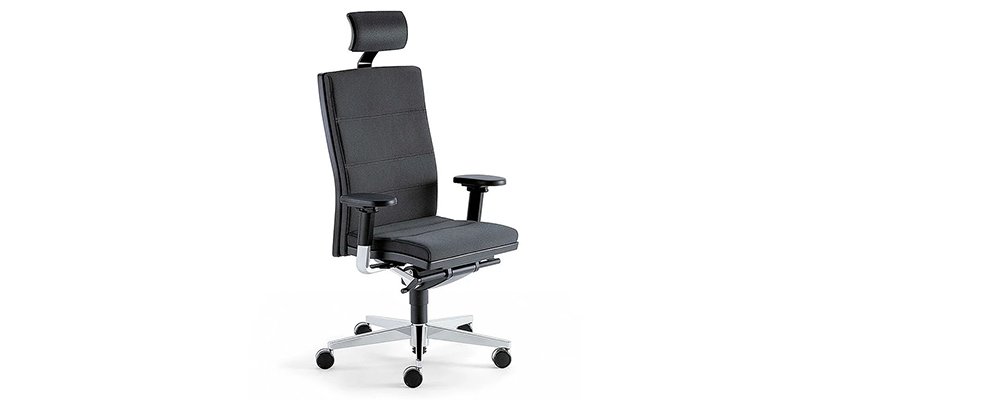
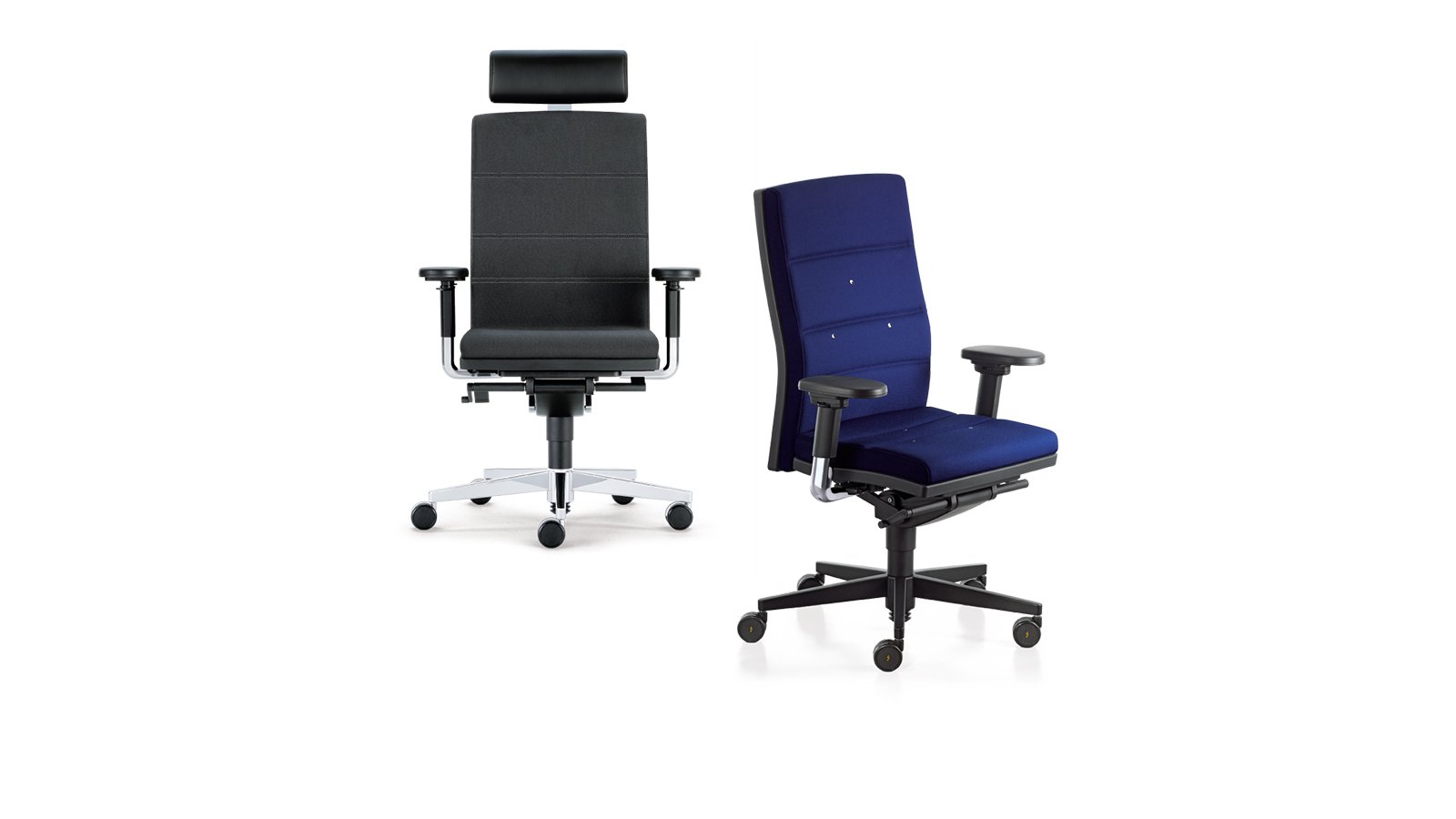
mr.24 ergonomic chair by Sedus in blue fabric with high back and 3D armrests

One chair, three owners a day: mr.24 by Sedus and what gets re-set at every shift change

Sedus
Task chair
mr.24 Most Requested Task chair
₹ 4,02,000

From our design team in Italy — within 24 hours

Trade terms for professionals and design studios

A chair in a control room belongs to nobody. It is used by the morning operator, the afternoon operator and the night operator, and each of them has a different build. Sedus designed mr.24 around that handover: the seat slides between 425 and 495 mm, the Schukra lumbar support moves 70 mm in height and 40 mm in depth on two knobs, the neck support rises 50 mm, and every one of these moves is meant to be repeated three times a day for years.

That is what separates mr.24 from other ergonomic office chairs with the same list of adjustments. Sedus rates it for users up to 200 kg and for three shifts of continuous use, the GS certificate names control-room duty and safety tests run with more load cycles than a desk chair sees, the Similar mechanism opens to about 32°, and the Sedo-Lift column has a thirty-year guarantee of its own.

The order line builds in four steps. First the version: plain, functional neck support in vinyl, comfort neck support in leather, or neck support without armrests. Second the height column, Sedo-Lift or gas. Third the base and the castors, black or polished, hard or soft. Fourth the cover, Phoenix, Pure, Umber or Scala leather, with the larger seat added where an operator needs it. Indian clients who file it under high back office chair get the same chair the German certificate calls a control room chair. La Mercanti writes the three operators on the shift sheet before it writes the chair on the order.

Technical information based on data declared by the manufacturer.
  • Collection: mr. 24, swivel chair for 24-hour use
  • Manufacturer: Sedus Stoll AG, Dogern, Germany
  • Design: Michael Kläsener, Sedus Design Team
  • Declared use: control rooms, continuous use over three shifts, shift work
  • Versions: without neck support · with functional neck support · with comfort neck support · with neck support, without armrests
  • User weight: recommended up to 200 kg, stated on the product label
  • Standard: DIN EN 1335-1:2023 Type A in the configuration with gas cartridge and standard sliding seat
  • Mechanism: Similar with synchronised springs; seat-to-back ratio 1:2.7; backrest tension adjustable from 550 to 1500 N; tilt to about 32°, lockable in 11 positions
  • Height adjustment: Sedo-Lift hydraulic rack system, 420-520 mm; alternatively gas cartridge DIN EN 16955 class 4, 390-520 mm
  • Seat: anatomical, slightly concave with pelvis support and rounded front edge; 50 mm quilted padding, polyurethane edge profile, replaceable pad; sliding 425-495 mm, width 480 mm; larger seat 460-530 mm on request
  • Backrest: high, fully fabric-covered; 40 mm foam plus 10 mm non-woven; replaceable pad; Schukra lumbar support adjustable in height (70 mm) and depth (40 mm)
  • Neck supports: functional in black vinyl, 50 mm height and 22.5° tilt, black powder-coated stem; comfort in black leather (cushion colour on leather versions), chrome stem, 50 mm height
  • Armrests: 3D with soft-touch or Gel-Pad tops, leather on request; height 110 mm (190-310 mm), depth 80 mm, width 2 × 50 mm tool-free plus 2 × 15 mm with a TX40 key; lockable in any position
  • Base and castors: die-cast aluminium, black or polished; twin castors Ø 65 mm with load-dependent braking, hard for soft floors or soft for hard floors
  • Covers: Scala leather in 14 colours; Phoenix fabric (3 colours listed, 21 in the wider range), Pure (4), Umber; backrest available in a different cover
  • Dimensions: overall height 740-940 mm, 740-1000 mm with neck support; width across armrests 650-780 mm; backrest 650 mm
  • Materials (EPI): 28.22 kg without packaging; aluminium 27.1 %, solid wood 17.9 %, steel 15.2 %, plastics 28.4 %; recycled content 23.1 %, recyclability 99 %; covers not glued, CFC-free foams, chrome III
  • Certificates: GS TÜV Rheinland LGA (DIN EN 1335-1/-2, DIN 4573, up to 200 kg, valid to 27.09.2028); TÜV Rheinland Ergonomics approved; TÜV tested for harmful substances (valid to 15.10.2030); AGR seal; ANSI/BIFMA X5.1; BS 5459-2:2000; OEKO-TEX Standard 100 fabrics
  • Warranty: 5 years; 30 years on the Sedo-Lift, declared by Sedus
  • Planning files: CAD dxf/dwg, Revit, SketchUp, EPI, user instructions
La Mercanti Srl — trusted supplier for design and contract projects since 1997.
San Benedetto del Tronto (AP), Italy · +39 0735 753833 · info@lamercanti.com
Supply, quotations, specifications and project support across India and worldwide.

Share the finishes you wish to evaluate

₹ 30,000

Amount adjusted against your first order

FAQ

What is a Sedo-Lift on mr.24 and why is it guaranteed for thirty years?

It is the height adjustment: a hydraulic rack-and-pinion system with a 420-520 mm range that cushions the body weight even at the lowest position. Sedus describes it as almost immune to wear and with no gas cartridge to fail or replace, which is why it carries a 30-year guarantee against five years for the rest of the chair.

Which fabrics does Sedus offer on mr.24?

Three, plus leather. Phoenix in polyester with three colours on the list and twenty-one in the wider range, Pure in recycled polyamide with four colours and the toughest abrasion figure of the three, and Umber in New Zealand wool. Scala leather comes in fourteen colours, and the backrest can take a different cover from the seat.

How much can the backrest of mr.24 recline?

To about 32°, and the Similar mechanism can lock it in eleven positions along the way. Seat and back move together at a ratio of 1:2.7, and mechanical springs keep supporting the back even when it is far reclined, which is what the producer built the chair to do during long night hours.

Does mr.24 come with a polished or a black base?

Both are listed. The standard base is die-cast aluminium powder-coated black, matching the black mechanism and plastic parts; a polished aluminium base is the option. Castors are twin 65 mm with load-dependent braking, hard for soft floors as standard or soft for hard floors on request.

Is there a version of mr.24 for use without armrests?

Yes. Sedus lists mr.24 with neck support and without armrests as one of the four versions, alongside the plain chair, the functional neck support and the comfort neck support. On the other versions the 3D armrests adjust in height, depth and width and lock in any position.

How to order the options on mr.24 with the Sedus codes

The Sedus price list assigns a code to every option on mr.24. Five steps to build an order line that the factory reads without a phone call.

Choose the neck support first

mr.24 without neck support is the base model. Code 7006 adds the functional support in black vinyl with height and tilt; code 7012 adds the comfort support in leather on a chrome stem. Only one of the two goes on the line.

Decide between Sedo-Lift and gas

Code 1501 is the Sedo-Lift fitted as standard on mr.24. Code 1503 replaces it with a gas cartridge; the list ties the Type A marking to that cartridge together with the standard sliding seat.

Name the base and the castors

2203-103 is the black base, 2203-110 the polished one. Add 6001 for soft castors if the floor of the control room is hard; mr.24 leaves the factory with hard castors otherwise.

Pick the armrest tops and the seat size

3314 gives soft-touch tops, 3312 leather tops in black or in the cushion colour on leather versions. Code 6033 fits mr.24 with the larger sliding seat, 460-530 mm, for heavier operators.

Close with the cover and the back option

Write the fabric or leather colour, then add 7001 if the backrest of mr.24 is to be covered differently from the seat. La Mercanti checks the assembled string against the Sedus configurator before the order leaves.