Let's discuss your project
Trade terms for professionals and design studios
Let's discuss your project
Trade terms for professionals and design studios
The brochure says the se:air membrane has «changing degrees of hardness in the backrest and seat». The price list turns that sentence into two numbers: the seat knit weighs 480 g/m², the back knit 420. Same polyester, same 50,000 Martindale rating, same colour, but the surface that carries the body is knitted denser than the one that flexes behind it. That is how a chair without foam avoids the three things Sedus lists against it: heat building up at pressure points, sore spots, and the slow slide forward on a smooth seat.
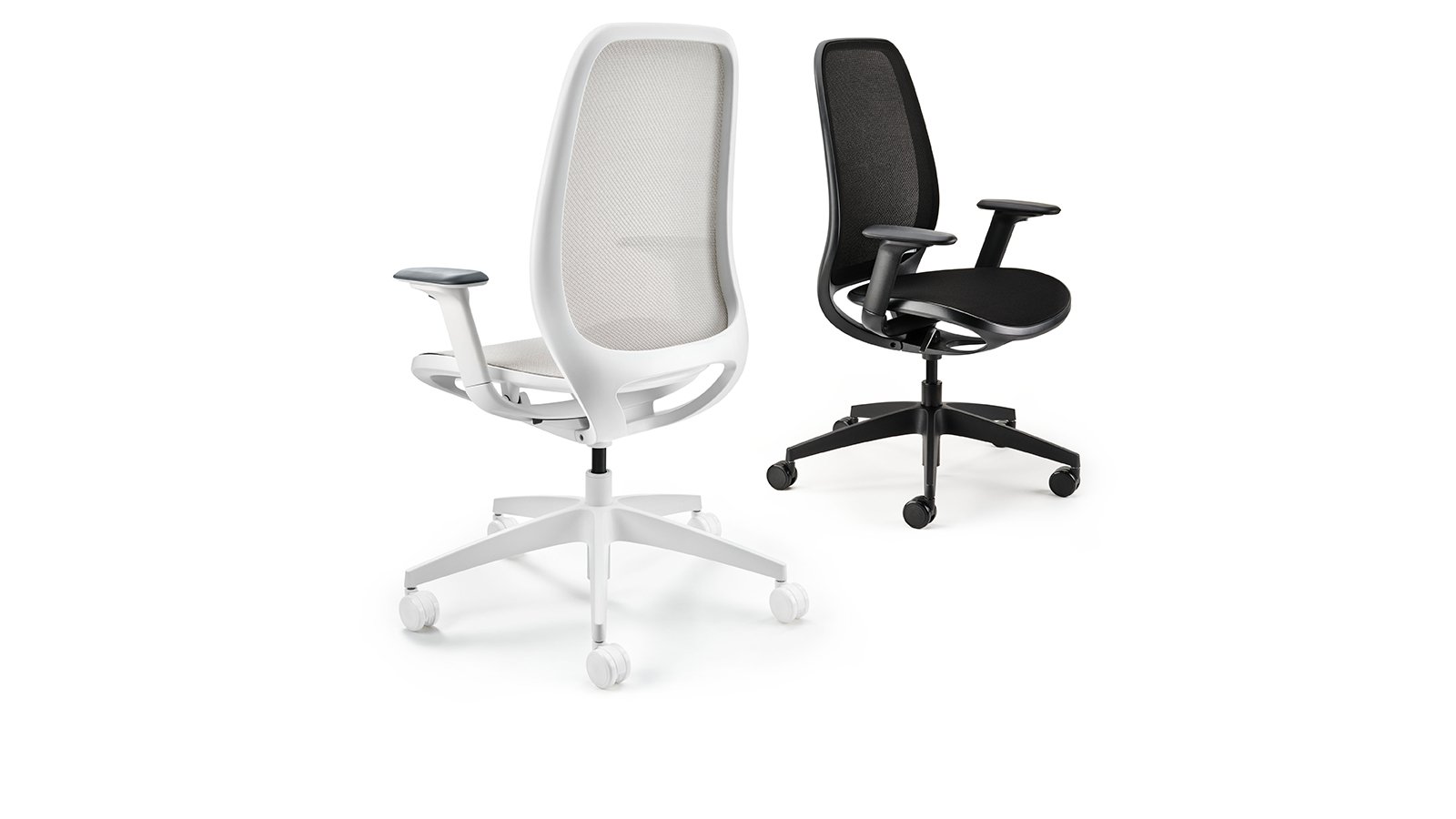
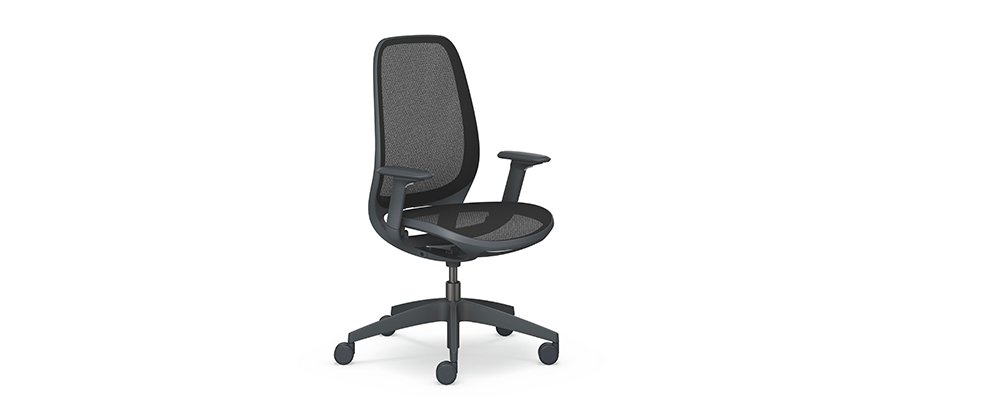
Konstantin Thomas, Sedus Design Team, built the rest of this ergonomic office chair around that knit. The membrane is stretched into a polyamide frame with no visible seam; the backrest is high and wide enough to suit, as Sedus puts it, any body size, which is what qualifies it as the high back office chair of the range. Because the patented Kinetic Swing senses body weight on its own and adjusts the back tension to it, the chair carries only two adjustments: a height lever and a lock slider. It weighs about 12 kg; the GS mark covers sitters up to 130 kg.
Three builds share the knit: the swivel chair in five monochrome colours; the counter chair, raised on an aluminium five-star base and fitted with a footring for standing-height tables; the fire-retardant chair, which comes with the black membrane and no other. Sedus names team workstations, project and seminar rooms, hot desking and co-working as its rooms, and on an open-plan floor in Bengaluru or Pune the breathable knit is the first thing people notice in May. La Mercanti writes both grammages on the sample tag so a client can feel the difference between the seat and the back before the order.

Share the finishes you wish to evaluate
A slider on the mechanism, the second of the chair's two controls, locks the backrest in its forward position when pushed inwards with the back unloaded; pulled outwards it releases it. Sedus calls the two states a rigid and a mobile sitting posture: locked for reading and writing, released so the back follows you through its full opening with the resistance the Kinetic Swing set from your weight.
No. The standard chair has no lumbar support (code 1800); the height-adjustable support is code 1801 and is ordered as an option. It sits behind the membrane, moves up and down with both hands while the back is unloaded, and comes in the colour of the model. The GS certificate lists the chair as tested with the height-adjustable lordosis, so the option is part of the certified build.
Four things: the gas lift becomes code 1513 with a footring, the base becomes die-cast aluminium in black or clear white, the seat height rises to 675-915 mm, and the castors are permanently braked and always soft, with the guard. The footring is 500 mm across with a 19 mm brushed-aluminium tread and adjusts over 300-500 mm. The rated user weight is 110 kg instead of 130.
Yes, by TÜV Rheinland LGA under certificate 60184405, issued on 23 December 2025 and valid until 22 December 2030, to the 2 PfG S 0121 criteria for seating. The appendix names model ai-121 in its five colours, with the knitted membrane, the Kinetic Swing, the multifunction armrests and the polyamide base, and covers it together with five other Sedus chairs on the same document.
The instructions for use include an assembly sheet for the se:air Box, a version delivered in a carton and put together in six illustrated steps. Sedus adds one instruction that surprises people: after assembly, sit down on the chair heavily so that a load of about 80 kg seats the parts into each other. Whether a given order ships assembled or in the box is confirmed at order stage.
The se:air ships with hard castors unless told otherwise, and Indian offices mix carpet tiles with vitrified stone. Five steps from the Sedus instructions, from the coloured transport guard to a change of floor.