Let's discuss your project
Trade terms for professionals and design studios
Let's discuss your project
Trade terms for professionals and design studios
In Indian offices the meeting room is rarely one thing for long: a client review at ten, a training batch at two, the whole team for a town hall at five. The visitor version of se:flex is built for that turnover. The four-leg ef-220, in Ø 22 mm round steel tube, stacks five high and travels on the ap-001 trolley, so a room of twenty chairs is cleared by one person in the time it takes to wipe the whiteboard. Order it on Ø 37 mm castors and it still stacks five on a flat floor.
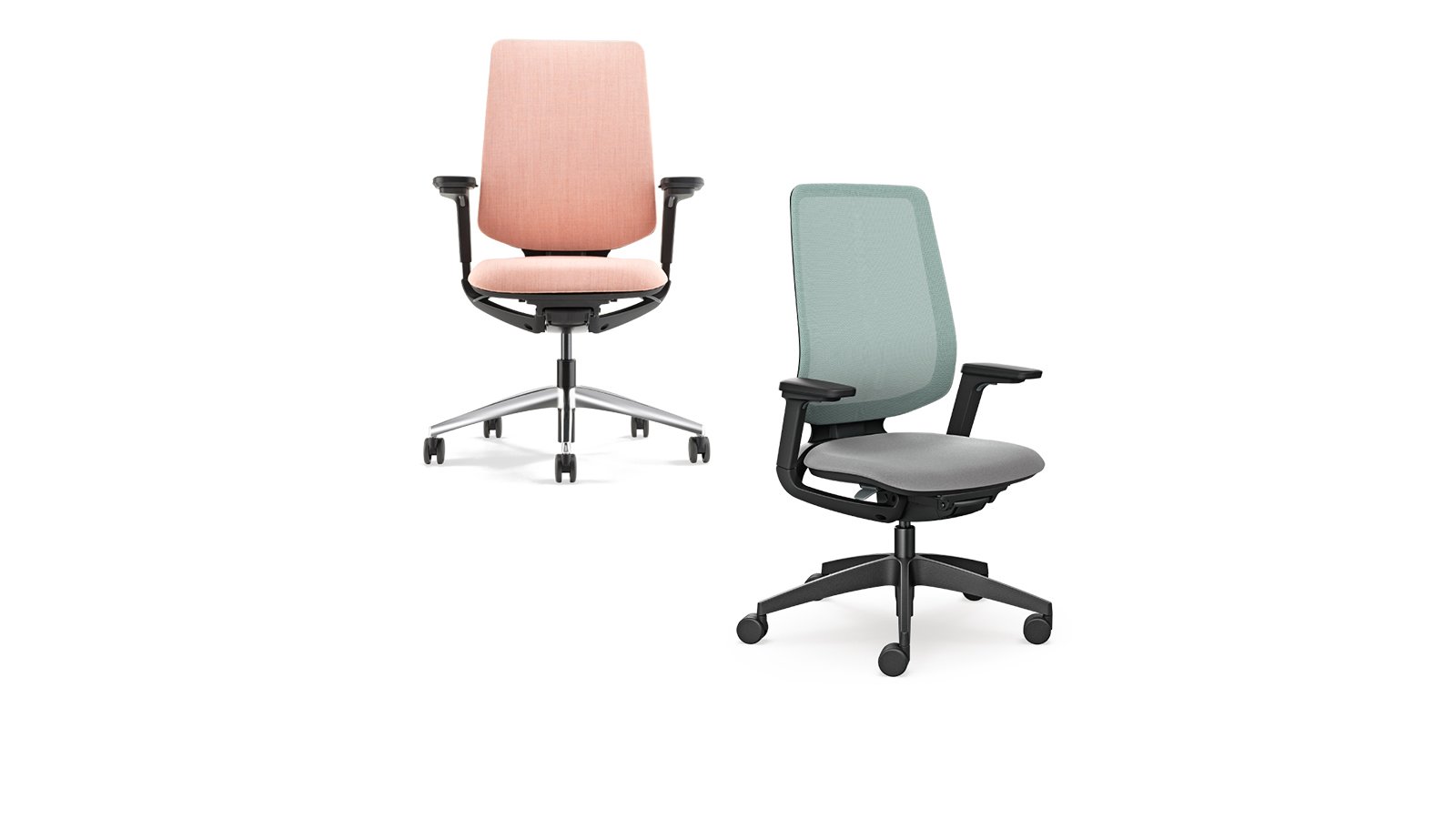
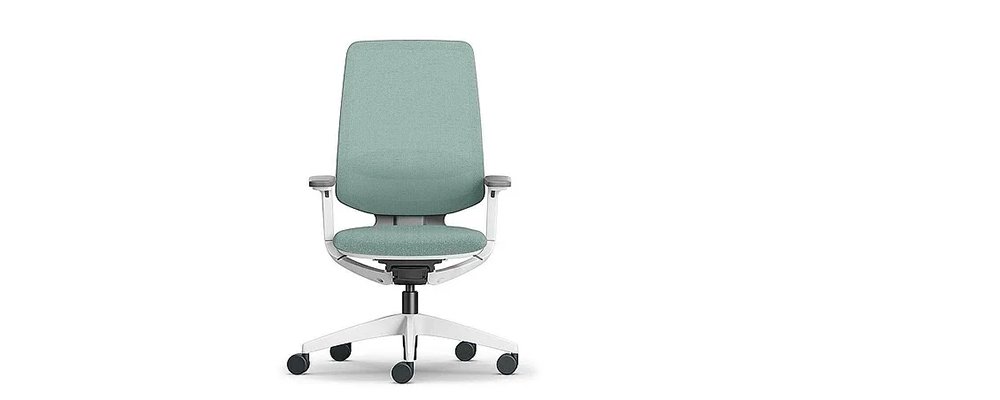
The swivel chair is where the family starts. Judith Daur of the Sedus Design Team drew an ergonomic office chair whose Similar mechanism reads the load of whoever sits down, from 500 up to 1,500 N, and tunes the backrest resistance without a lever; the membrane back comes in five colours, while the slim upholstered version takes every fabric in the Sedus range over an anthracite rear. A counter version with a Ø 500 mm footring serves the high tables in the pantry or the lab.
What ties the room together is that the visitor chair carries the same two backs as the task chair, in black, light grey, white aluminium or chrome frames, with a cantilever ef-230 for the conference table where nothing gets stacked. On a workstation floor with open-plan seating and shared meeting rooms, La Mercanti puts the trolley on the list next to the chairs. A stackable chair without one stays where it was.

Share the finishes you wish to evaluate
The standard support moves up and down over 70 mm, with both hands and without leaning on the back. The comfort lumbar keeps that travel and adds an adaptive depth adjustment of up to 20 mm with a flexible filling, so it follows the curve of the spine without a manual setting. Sedus places it at the third and fourth lumbar vertebrae, where the forward curve is greatest; a version with no lumbar support at all is also available.
Fixed polyamide armrests, as an option: the chair is sold without arms as standard. The pads measure 170 × 35 mm and leave an inside width of 510 mm, wider than the swivel chair’s 480 mm. Without armrests the visitor chair is rated for users up to 130 kg, with them up to 110 kg.
By hand, without a lever: the support is pushed to the desired height over a travel of 90 mm and tilted through 25°. It comes in black imitation leather on fabric models and in the chosen leather on leather models, always on a black plastic support, and is ordered as option 7007, on its own or together with the coat hanger.
Yes, with option 6044: One or Step fabric combined with the black membrane, which Sedus lists as meeting UNI class 1.IM. For an Indian project that quotes a different standard, La Mercanti obtains the fabric test reports from Sedus before ordering, since the flame behaviour depends on the whole upholstery build-up, not the fabric alone.
Both halves of the family at once: office chairs, and visitor, meeting and conference chairs. Certificate 9.121 was issued in Wiesbaden on 9 August 2024 and runs to 31 January 2027. It is a German quality seal for office furniture, separate from the TÜV GS mark, which deals with safety.
A se:flex arrives ready to sit on, but a few things happen only once. Five steps from the Sedus instructions for use for the person who unpacks it.
Each castor of the se:flex ships with a coloured transport protection. It comes off before the chair touches the floor, or the first move leaves marks.
The anatomically shaped seat works only when fully occupied: sitting on the front edge keeps the back away from the backrest, and the automatic tension has nothing to read.
Pull the lever, sit down, and stop where the forearms rest flat on the desk with the elbow at about 90°. The knee should sit at the same angle with the feet flat.
Without leaning on the back, move the se:flex lumbar support so it presses at the third and fourth lumbar vertebrae, where the spine curves forward most.
The opening angle can be limited at 0°, 8°, 16° or 26°, but Sedus recommends sitting dynamically and changing posture often. On a shared desk the free setting is the one the next person will thank you for.