Bright open-plan workspace with four Team Strike chairs in blue mesh around island desks

Drawn by Sergio Bellin in 2008 and in Sitland's 2026 range: Team Strike, eighteen years on one ergonomic office chair

Sitland
Task chair
Team Strike Available now Task chair
₹ 95,040

Already have something in mind?

Trade terms for professionals and design studios

Sergio Bellin drew Team Strike in 2008. Sitland's 2026 range still lists it, which puts eighteen years between drawing and order. Read it as continuity: for whoever furnishes ergonomic chairs for Indian offices in stages, the chair ordered later can match the one ordered first.

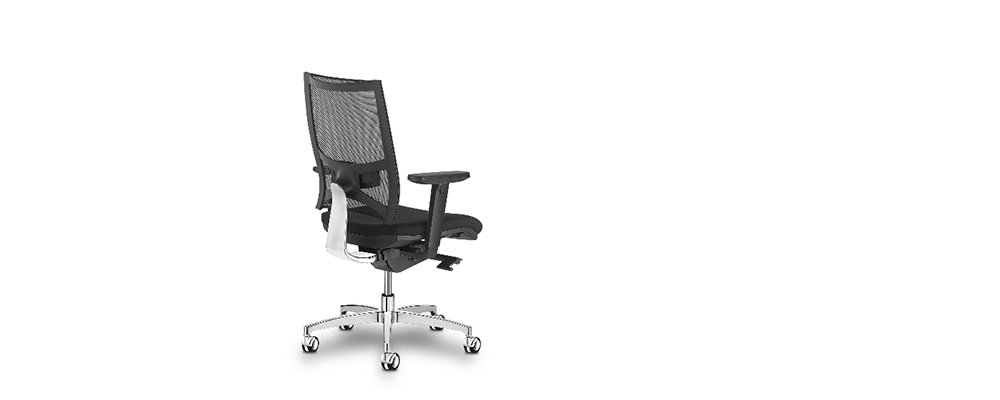
The mechanics Sitland declares today: a synchronised movement with five lock positions and antishock, a backrest tension matched to the sitter's weight, a Comfort Air seat in cold-foamed polyurethane, a lumbar support that rises and lowers. In mesh the backrest is a polyamide frame on a die-cast aluminium support; upholstered, it takes the seat's foam. Sitland calls it a complicity between seat and back.

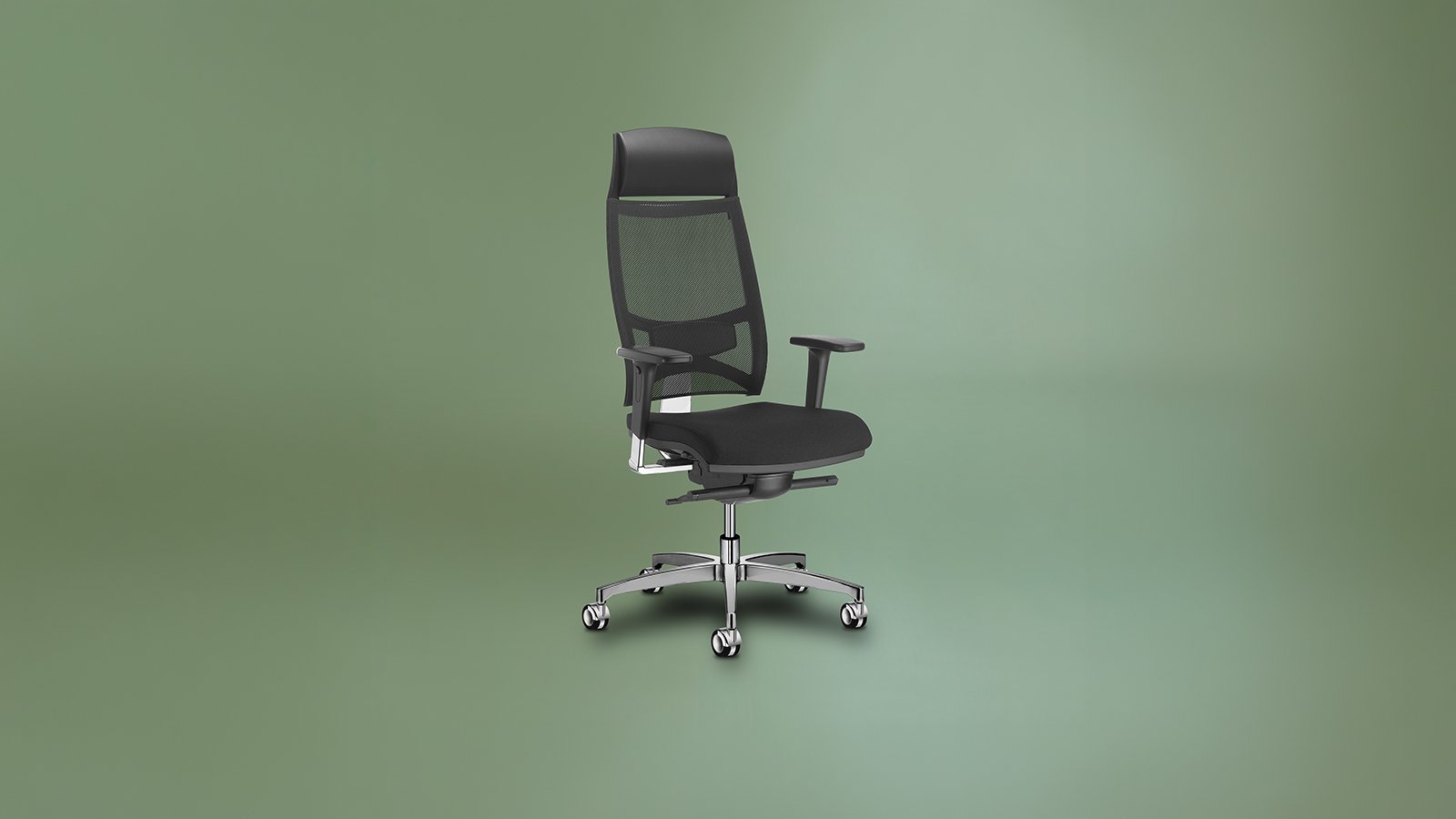
Four versions, read by overall height. Lowest is the upholstered Operative, lumbar as standard, no headrest. A step taller is the mesh-backed Manager, which ships without headrest and takes lumbar and sliding seat as extras. Tallest are the two Executives, mesh or upholstered: the headrest adds the height, the backrest is the same on every version; the mesh Executive is the one with the UNI EN 1335:2020 type B declaration. Sitland photographs them at island desks, within open-plan workstation layouts. La Mercanti puts the year on the table before the finish: for a facility team replacing chairs floor by floor, a design that has stayed in the maker's range this long is the first thing to know.
Technical information based on data declared by the manufacturer.
  • Collection: Team Strike
  • Manufacturer: Sitland, Nanto (Vicenza), Italy · We Do Spaces group
  • Design: Sergio Bellin, 2008
  • Type: revolving office chair, operative and executive
  • Versions: Executive with mesh back · Executive with upholstered back · Manager · Operative with upholstered back
  • Mechanism: synchronised, lockable in 5 positions with antishock, tilt tension adjustable to the sitter's body weight
  • Seat: cold-foamed flexible polyurethane, shape-retaining, Comfort Air System; inner shell in high-strength, high-elasticity polypropylene; depth adjustable 420-492 mm, standard on the Executives, optional on Manager and Operative
  • Backrest: 570 mm high; polyamide frame with RF, RP, RR or RY mesh, or upholstered in the same foam as the seat; die-cast aluminium support, painted black, polished as an option; carrying handle
  • Lumbar support: height-adjustable; standard on the Executives and the Operative, optional on the Manager
  • Headrest: standard on the Executives, soft black polyurethane cushion that rises and lowers; option for Manager and Operative, upholstered, pivoting and set in height, black or white structure
  • Armrests: option shipped separately: 1D in height · 2D in height and width, fixed soft-touch top · 4D with depth-adjustable, pivoting top · 4D with polished aluminium support; families for fixed or sliding seat
  • Base: 5-star in black nylon with steel cone, ø 700 mm; polished die-cast aluminium as an option
  • Castors: self-braking ø 50 mm as standard; options: free-running ø 50 for carpet, rubber-tread self-braking ø 50 or ø 65 and hollow rubber free-running ø 65, black or chrome, for hard floors
  • Coverings: Sitland categories 1-5, 9 and A: NX, Alba, Bondai · Xtreme Plus, Medley, customer's own fabric · Chili · Main Line Flax, Secret, Step, customer's own leather · Synergy · Remix 3 · SX leather with NX
  • Dimensions: Executive, mesh: seat 520 mm wide, 485-550 with armrests, seat height 420-520, overall height 1190-1290, base ø 700 · Executive, upholstered: as above, seat depth 420-480 · Manager: overall height 1030-1130 (1015-1115 with sliding seat), seat height 410-510 (415-515), 485 with armrests · Operative, upholstered: overall height 990-1090, 450-540 with armrests
  • Weight and volume: Executives and Operative 16.30 kg net, 0.287 m³ · Manager 14.80 kg, 0.232 m³
  • Customer's own fabric: 0.50 linear metres per mesh-back chair, 1.40 m for the upholstered Operative, 1.66 m for the upholstered Executive, on a 1.40 m roll width
  • Declared certifications: GREENGUARD and GREENGUARD Gold · UNI EN 1335:2020 type B on the mesh-back Executive · 1 IM on request with Xtreme Plus or Secret and RY mesh
  • Warranty: 5 years from delivery, Sitland/We Do Spaces conditions
  • Origin: Made in Italy
La Mercanti Srl — trusted supplier for design and contract projects since 1997.
San Benedetto del Tronto (AP), Italy · +39 0735 753833 · info@lamercanti.com
Supply, quotations, specifications and project support across India and worldwide.

Share the finishes you wish to evaluate

₹ 30,000

Amount adjusted against your first order

FAQ

What is the Team Strike backrest built from, under the mesh or the padding?

A frame in polyamide, the engineering plastic Sitland uses for the back of all four versions, carried on a die-cast aluminium support painted black, or polished as an option. On the mesh versions the polyamide frame keeps the mesh under tension; on the upholstered Executive and Operative the same frame is padded with the seat's own foam. For a buyer the pairing is the one to remember: frame and support are the same on every version, so mesh or padding is the only choice that changes the backrest line of the order, floor by floor.

How high does the Team Strike seat rise and fall from the floor?

Between 420 and 520 mm on the two Executives and on the upholstered Operative, by gas lift. The Manager runs between 410 and 510 mm, and between 415 and 515 mm once the optional sliding seat is fitted. The comparison that matters is the desk: the four versions run over the same band give or take ten millimetres, so a floor that mixes versions does not mix seat heights. Where desks of different heights share a floor, the seat height is one figure to record per desk, and the same band applies whichever version stands at it.

Why does Sitland put air inside the Team Strike seat?

Because trapped air works as a spring. Sitland's Comfort Air System casts the seat in cold-foamed, shape-retaining polyurethane and leaves air chambers inside it; the air held there gives under weight and pushes back, so the seat supports without packing down. The second effect is the one Sitland books as environmental: with the chambers doing part of the work, less foam is needed for the same seat, so less material goes into each chair. The same system is used on two other Sitland models, Uni and Passe-partout.

Where do Sitland's own pictures place Team Strike?

At work desks in an open-plan office. The largest picture shows four Team Strike with blue mesh backs at white island desks arranged around a tree in a wooden planter, with two cylindrical poufs and a pale armchair at the edge of the frame; a second one puts two chairs in anthracite mesh at a desk in front of a monitor, under pendant lamps. Those are the rooms Sitland chooses to show it in: shared desks in daylight, with the mesh version in front. A buyer planning a floor can read the pictures as the maker's own setting for the chair, and nothing beyond what they show.

What happens when the Team Strike backrest is unlocked while someone is leaning on it?

It does not kick back. Sitland pairs the five lock positions of the synchronised mechanism with antishock: when the lock is released, the backrest returns to the free position under control instead of snapping forward against the spine. The behaviour is declared with the mechanism, so it is the same on all four versions, whichever one a buyer puts at a desk. The tension of the movement is tuned to the body weight of the sitter, so once released the back follows the body rather than pushing it.

Composing the order line for a Team Strike: one chair, six choices

Version, backrest, covering, armrests, base and castors, headrest: the choices that make up a Team Strike on the order sheet, with the options Sitland lists for each, so nothing is left to be guessed later.

Pick one of the four versions

Team Strike comes in four versions, and the first word on the line is one of them: Executive with mesh back, Executive with upholstered back, Manager, or Operative with upholstered back. The two Executives bring sliding seat, lumbar support and headrest; the Operative brings the lumbar support; the Manager brings the bare mechanism and takes everything else as options.

Name the back: mesh code or padding

On the two mesh versions the backrest needs a mesh code, RF, RP, RR or RY; RY is the one Sitland pairs with the two fabrics that give the chair its Italian fire class on request. On the two upholstered versions the back is padded with the same foam as the seat and takes the covering chosen for the seat, so no mesh code is written on the line.

Choose the covering category

The seat, and the back where upholstered, is covered from Sitland's categories, numbered 1 to 5 plus 9 and A: each number groups a set of Sitland collections, and category A puts real hide on the surfaces the body touches with a coated fabric on the rest. A customer's own fabric or hide is written as COM or COL in place of a category.

Add armrests from the right family

Armrests are an option shipped separately, in four types: 1D adjustable in height; 2D in height and width with a fixed soft-touch top; 4D adding a top that also slides in depth and pivots; 4D with a polished aluminium support and a soft polyurethane top. They come in two families, one for the fixed seat and one for the sliding seat, so the family must match the seat chosen first.

Base, castors, then the headrest

The base is five-star black nylon as standard, or a flat polished die-cast aluminium base as an option. Castors are self-braking as standard, with free-running ones for carpet and rubber-tread or hollow rubber ones for hard floors. Last, the headrest: already on the Executives, added as a separate upholstered, pivoting item on the Manager and the Operative.