Void Chair by ICF, burgundy upholstered back, five-star castor base in polished aluminium

Breathability without padding: the Void Chair by ICF, for offices where the air stays warm all year

ICF Office
Executive chair
Void An icon of Italian design Executive chair
₹ 2,76,000

Already have something in mind?

Trade terms for professionals and design studios

Breathability is one of three things ICF claims for the Void Chair, with ergonomic support and comfort, and it comes from what is missing. Seat and back are one tensioned fabric membrane that holds its own shape inside a minimal aluminium frame, nothing stacked beneath: ICF lists breathability among the results of that choice. In an Indian office that runs warm most of the year, that is the first thing to ask of ergonomic chairs for the office.

ICF describes a perimeter frame that carries the load and a double textile membrane suspended in it, forming the three-dimensional seat and back, supporting the body through tension and elasticity, with frame, membrane and connections left visible. ICF files it under task seating first, and on a workstation and open-plan floor the back of the chair is what most of the room sees.

Khodi Feiz designed it; ICF showed it at Orgatec 2026 as one of four new pieces. The covering decides how much open surface you keep: the bare membrane for the airiest version, a slim Soft Pad where more softness is wanted, a fully upholstered interpretation for a closed surface; the same choice runs through the meeting, executive, home-office and multipurpose versions ICF declares, and ICF decides in its final programme which of them can be ordered. La Mercanti asks first whether the room is air-conditioned or ventilated, and then proposes the bare membrane or the Soft Pad.

Technical information based on data declared by the manufacturer.
  • Collection: Void Chair
  • Manufacturer: ICF S.p.A., Vignate (Milan), Italy
  • Design: Khodi Feiz, Feiz Design Studio (Amsterdam), 2026
  • Presentation: Orgatec 2026, Cologne, 27-30 October: one of four new ICF pieces
  • Structure: load-bearing perimeter frame in aluminium, left visible with the membrane and the connections
  • Seat and backrest: suspended, self-supporting double textile membrane that supports the body through tension and elasticity and distributes the load
  • Coverings: bare structural membrane · slim Soft Pad · fully upholstered interpretation
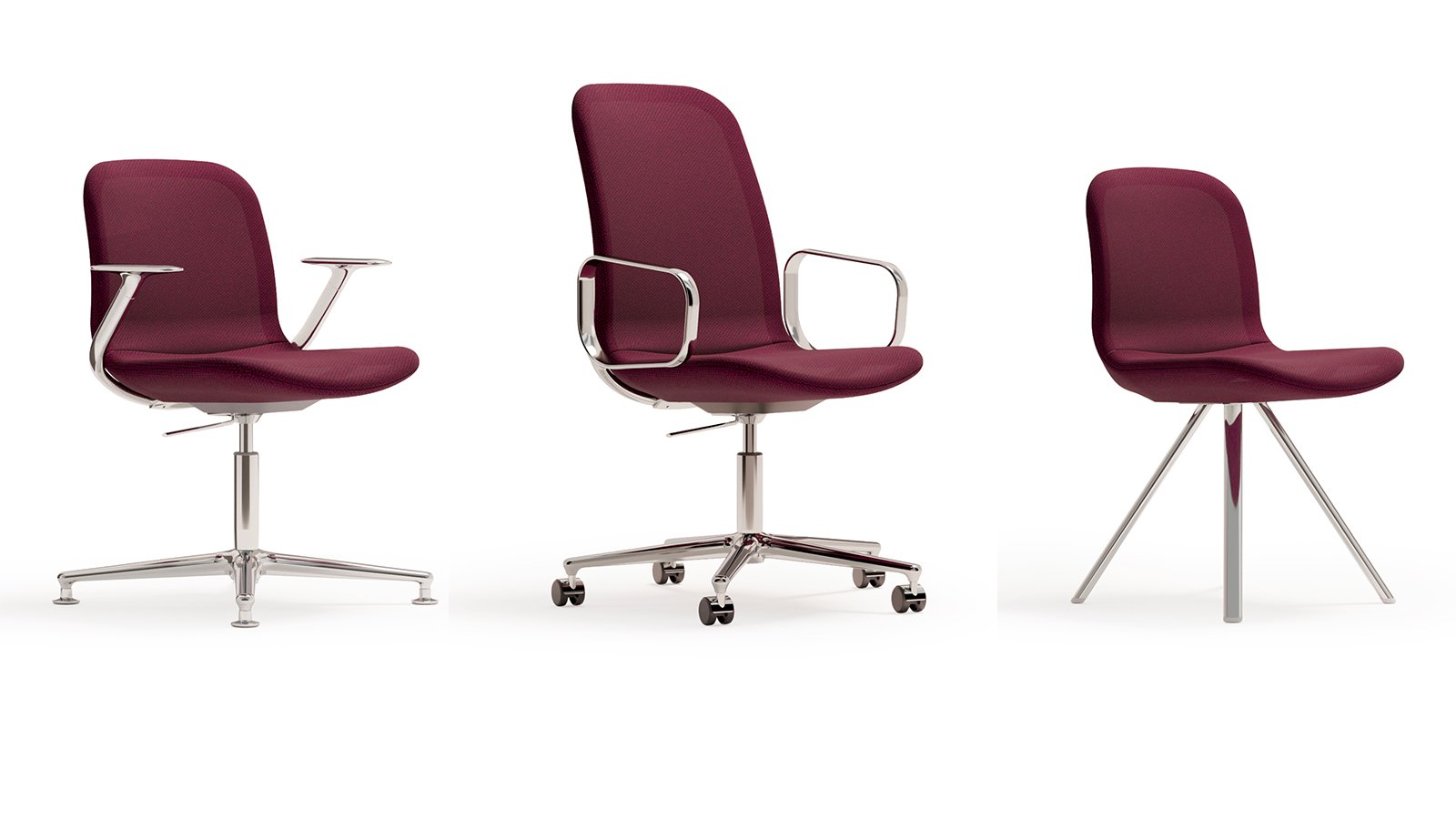
  • Family: several backrest heights, different armrest types, fixed or swivel bases, work-oriented configurations; orderable versions follow the final ICF product programme
  • Declared settings: task, executive, meeting and multipurpose seating in the ICF catalogue; meeting, home office and executive use; professional, residential and hospitality environments
  • Materials: aluminium and fabric, both declared recyclable by ICF
  • Care: membrane, fabric, aluminium and plastic parts as per the ICF materials guide
  • Origin: Made in Italy
La Mercanti Srl — trusted supplier for design and contract projects since 1997.
San Benedetto del Tronto (AP), Italy · +39 0735 753833 · info@lamercanti.com
Supply, quotations, specifications and project support across India and worldwide.

Share the finishes you wish to evaluate

₹ 30,000

Amount adjusted against your first order

FAQ

Why does Khodi Feiz say the simpler project is the harder one?

Because, in his words, you do not have the guise of complication to hide behind. Feiz Design Studio works by three words, clarity, concept and context, and defines the first as stripping an object down to its bare essence, not to make it boring but to bring out its main expressive quality. The studio adds that quality is the obligation and design the inspiration, and that it is the idea that gives an object meaning, the thing that makes you look twice. Read against the Void, where a frame and a membrane are all there is, the principle stops being a motto and becomes a description.

Does it suit a collaborative zone as well as a fixed workstation?

ICF's own panel at Orgatec 2026 lists the settings the family was developed for: workspaces, meeting, collaborative and hospitality environments. The link between them is that one structural principle, a perimeter frame with a suspended membrane, carries fixed or swivel bases and more than one back height, so the chair at the fixed desk and the chair at the shared table can be the same object with a different base under it. For an Indian office that redraws its floor plan often, one family across desk, huddle space and meeting room is one specification to maintain instead of three.

What is ICF promising with Less structure, more possibilities?

Two things, one on each side of the full stop. Less structure is the construction: a minimal aluminium frame and a self-supporting fabric surface, with material cut back to what ergonomic support and comfort need, which gives the chair what ICF calls an almost weightless presence. More possibilities is the family that grows from it: different back heights, arm options, fixed or swivel bases and work-oriented configurations sharing one principle and one visual identity. The line is the whole product brief in six words.

Where does the slim Soft Pad sit between the bare weave and full upholstery?

In the middle, and ICF names it exactly so: the structural membrane in its most essential form on one side, a fully upholstered interpretation on the other, and between them a slim Soft Pad. What changes across the three, in ICF's words, is tactile and visual quality; what stays is the frame and the suspended membrane doing the supporting. The Soft Pad is the version to look at when the bare membrane feels too spare for the room and the full upholstery too enclosed. The three are design options ICF names side by side, so the covering is a choice to make, not a default.

How should the plastic parts be cleaned, according to ICF?

With a soft cloth, soap and water, and nothing else. ICF's materials guide treats plastic components the way it treats the aluminium frame: no abrasive pastes or powders, no alcohol, no aggressive detergents, because the guide excludes them without exception. The same guide asks that any product be tried first on a hidden spot and that the chair be kept away from knocks. The useful thing is to write those three lines on the maintenance sheet, so that alcohol never reaches the chair by habit.

Reading the Void Chair in person: five things to look at before you sit down

A chair built from a frame and a tensioned membrane is understood faster with the eyes than from a spec sheet. Five things to look for when the Void is in front of you, in the order a trained eye takes them in.

Follow the frame all the way round

Start at the front edge of the seat of the Void Chair and follow the aluminium frame with your eyes: it runs around the seat, up one side of the back, over the top and down again, a single perimeter that ICF describes as the load-bearing element. Nothing interrupts it. Where other chairs hide the structure under a cover, here the outline you trace is the structure.

Find the two layers of textile

Inside that frame hang two textile membranes, one for the seat and one for the back, which ICF calls a suspended double membrane. Look at how each one is held along its edge: it is fixed to the frame and tensioned, not laid over a cushion. On the versions with the bare membrane the back is slightly see-through, and you can watch the surface take its shape from the frame alone.

Look at the connections

ICF says frame, membrane and connections remain visually legible, so look for them: the points where the arms meet the frame behind the seat, the junction between the seat and the column or the legs. None of them is covered. Being able to see how a chair is held together is the quickest check on how it is made, and this one invites it.

Notice the space inside the outline

Step back and look at the empty area between the frame and where your back will be. ICF describes the chair as defining a generous volume without filling it, with empty space as an active part of the design. The visual lightness that strikes people when they walk up to the Void comes from here: an outline with air inside, not a block of material.

Sit, and feel the tension

Then sit. What holds you is the tensioned textile adapting to your shape and spreading your weight across the surface, through what ICF calls tension and elasticity; there is no cushion between you and the frame. Shift your position and the surface follows. ICF describes the result as a responsive surface and freedom of movement: judge it by moving, not by sitting still.