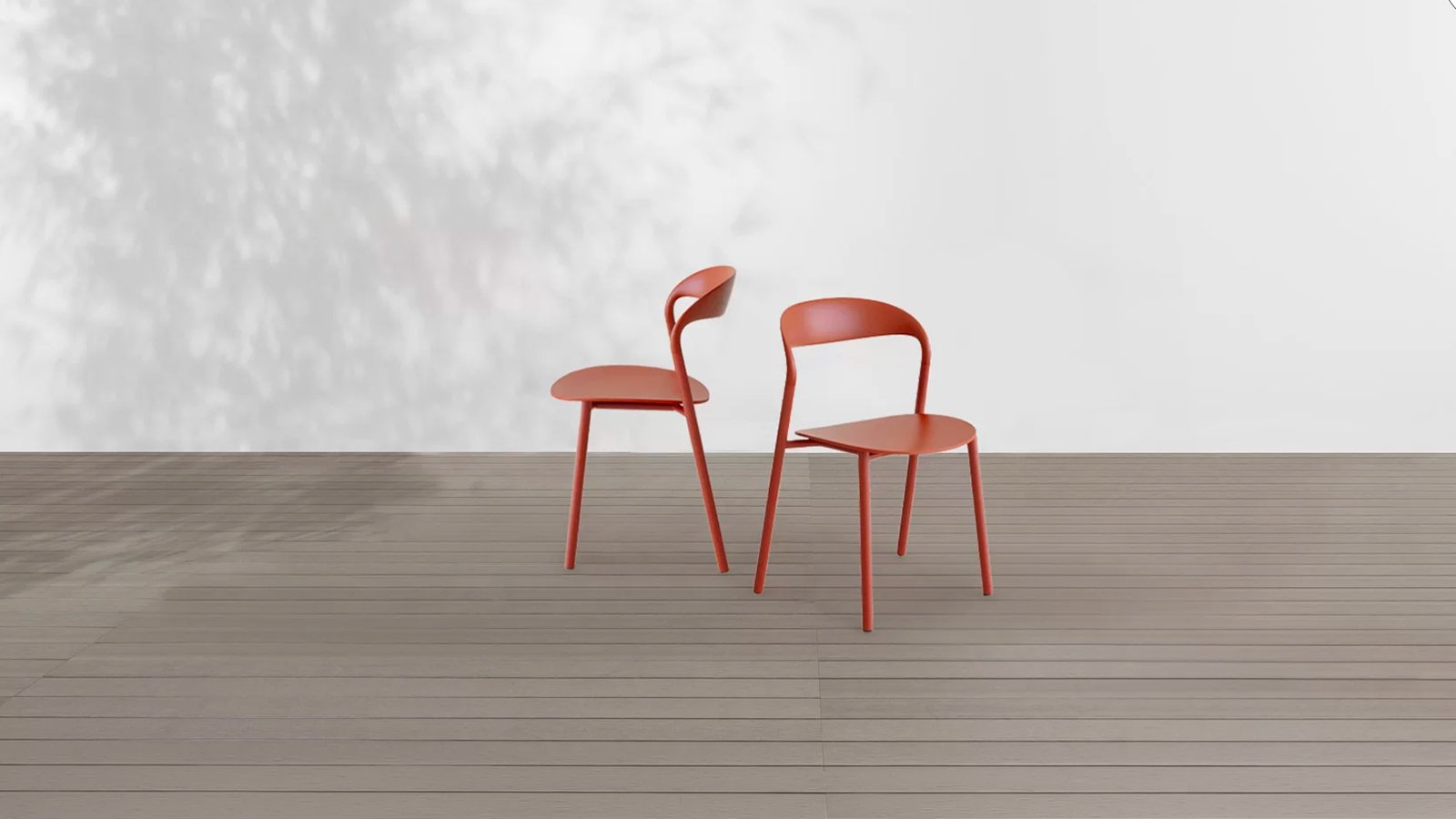
Two Lapalma HAWI chairs in brick red on grey decking, one in profile, one turned

Level 2, “Extreme”: the stacking chair in the HAWI range by Lapalma, tested to EN 16139

Lapalma
Chair
Hawi Available now Chair
₹ 67,200

Let's discuss your project

Trade terms for professionals and design studios

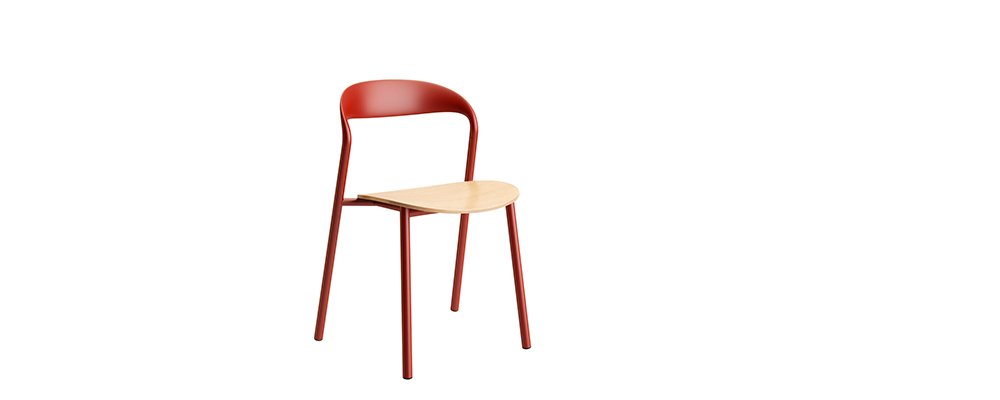
The chair at the centre of HAWI carries two test references, and Lapalma lists both for it: EN 1728:2012, then EN 16139:2013 level 2, marked “Extreme”. For a buyer equipping a cafeteria or a training floor reset every evening, that is the line worth copying into the tender: the S420, the stacking version, has been through those tests. It sits with the luxury chairs by named designers as a design that comes with its paperwork.

Mario Ferrarini drew HAWI for Lapalma, and its first showing was the 2024 edition of the Salone del Mobile. On the chair and the four-leg stools one notices the rear leg first: it climbs above the seat and carries on as the backrest, growing lighter towards the top while the structure below stays solid. Steel with a powder-coated finish makes the structure; the shell is polypropylene, and the seat alone can switch to plywood, a fabric cover or faux leather.

Five versions share that line: the stacking chair, a chair turning on a four-arm base, and three Italian bar and counter stools, a pair on four legs at different heights and one that swivels and adjusts. Chair and four-leg stools are also made in a stainless steel outdoor range. We see it in office pantries, where table chairs and counter stools should look like one purchase. La Mercanti goes through the room list with the facility team and agrees with them which rooms get the tested chair.

Technical information based on data declared by the manufacturer.
  • Name: HAWI
  • Brand: Lapalma
  • Design: Mario Ferrarini, 2024
  • Typology: family of chairs and stools
  • S420: chair on four legs, stackable; 54 × 51 cm; seat height 46 cm; height 76 cm
  • S424: chair on a swivel base with four arms
  • S425: stool on four legs; 55 × 49 cm; seat height 65 cm; height 92 cm
  • S426: stool on four legs; 56 × 51 cm; seat height 75 cm; height 102 cm
  • S427: swivel stool, adjustable in height; 50 × 48 cm; seat height 53-78 cm; height 79-104 cm
  • Structure: powder-coated steel; nylon feet with felt built in
  • Seat and backrest: polypropylene recycled from post-industrial waste, 75-90% by colour; seat also in plywood (blanched oak, open-pore black), fabric or faux leather
  • Outdoor range: S420, S425, S426 with frame in AISI 304 stainless steel and polyethylene feet; waterproof cover for the two stools
  • Certifications: EPD on S420, S424, S425, S426; S420 chair: tested EN 1728:2012; tested EN 16139:2013, level 2 “Extreme”
La Mercanti Srl — trusted supplier for design and contract projects since 1997.
San Benedetto del Tronto (AP), Italy · +39 0735 753833 · info@lamercanti.com
Supply, quotations, specifications and project support across India and worldwide.

Share the finishes you wish to evaluate

₹ 30,000

Amount adjusted against your first order

FAQ

How much recycled plastic goes into the polypropylene?

Lapalma states that HAWI uses post-industrial recycled polypropylene, in a share that varies with the colour: between 75% and 90%. For a company that reports on materials, it is worth fixing the colour first and quoting the percentage afterwards, because Lapalma ties the figure to the shade: the report then carries the number that goes with the colour actually ordered.

Which colours can the frame and the seat shell be ordered in?

The powder-coated frame comes in black, white, pearl, sky blue, brick, olive, dove grey and pistachio; the polypropylene adds grey to the same names. Because the names overlap, a chair can be ordered tone on tone or with a contrast, for instance a black frame under a pistachio shell. We usually decide that pairing once for a whole floor, so that chairs and stools read together.

Is there a wooden seat option, and in which finishes?

Yes, the seat can be made in multilayer wood, in blanched oak or in open-pore black, while the back stays in polypropylene. In our experience a wooden seat suits rooms where people sit longer, such as a meeting room or a director's dining area, while polypropylene works best at the busiest cafeteria tables. Oak lightens a dark frame; black gives a quieter, more formal look.

What upholstery can be specified on the seat?

The seat can be upholstered in fabric from several collections, which Lapalma groups in categories A to D, or in Valencia faux leather. The categories make comparison easier across a large order: once a category is chosen for the meeting rooms, the same choice can be repeated on the stools at the pantry counter so that both spaces stay coherent.

Can we have the seats covered in our own fabric?

Yes. Lapalma lists customer's own material as an option for the seat of the chair and of the stools. It is the route for a reception café or a brand space where the interior designer has already chosen the textile, and it lets HAWI pick up a fabric that appears elsewhere in the building, from the lounge sofas to the curtains.

Keeping HAWI clean in a busy office pantry: a five-step routine

In a pantry, chairs and stools are wiped every day, often by different people. Five habits drawn from the Lapalma care instructions that keep HAWI looking right through a long working week.

A damp cloth first

For everyday cleaning HAWI needs only a damp cloth, with a mild neutral detergent in water when needed, on the seat shell and on the frame alike. That routine can be handed to the housekeeping team on the first day, and it is the same for the chair, the stools and the swivel versions.

Keep harsh products away

Lapalma rules out alcohol and bleach, as well as solvents and anything abrasive. In a pantry where strong cleaners are kept for the kitchen, we suggest storing them apart from the cloths used on the furniture, so that nobody picks up the wrong bottle when the shift ends.

Dry spills at once

Tea, coffee or water left on the seat should be dried straight away, as the care sheet asks. We keep polypropylene seats at the busiest tables, where a cup is always being set down, and the wooden or upholstered seats in rooms where meals are not served.

Lift, never drag

The indoor chair and the four-leg stools stand on nylon feet with felt built in. When a piece has to be moved, the care sheet asks to lift it by the frame, not from under the seat; we pass that on to the team as one simple rule, lift rather than drag, so the felt does its job.

Feet on the rest, not on top

The stools have a footrest for the person sitting, and Lapalma asks that nobody climbs on the product or on the footrest. In a pantry, where someone may reach for a high shelf, it is worth saying aloud once, because a stool is usually the nearest thing to hand.