What did you have in mind?
Trade terms for professionals and design studios
What did you have in mind?
Trade terms for professionals and design studios
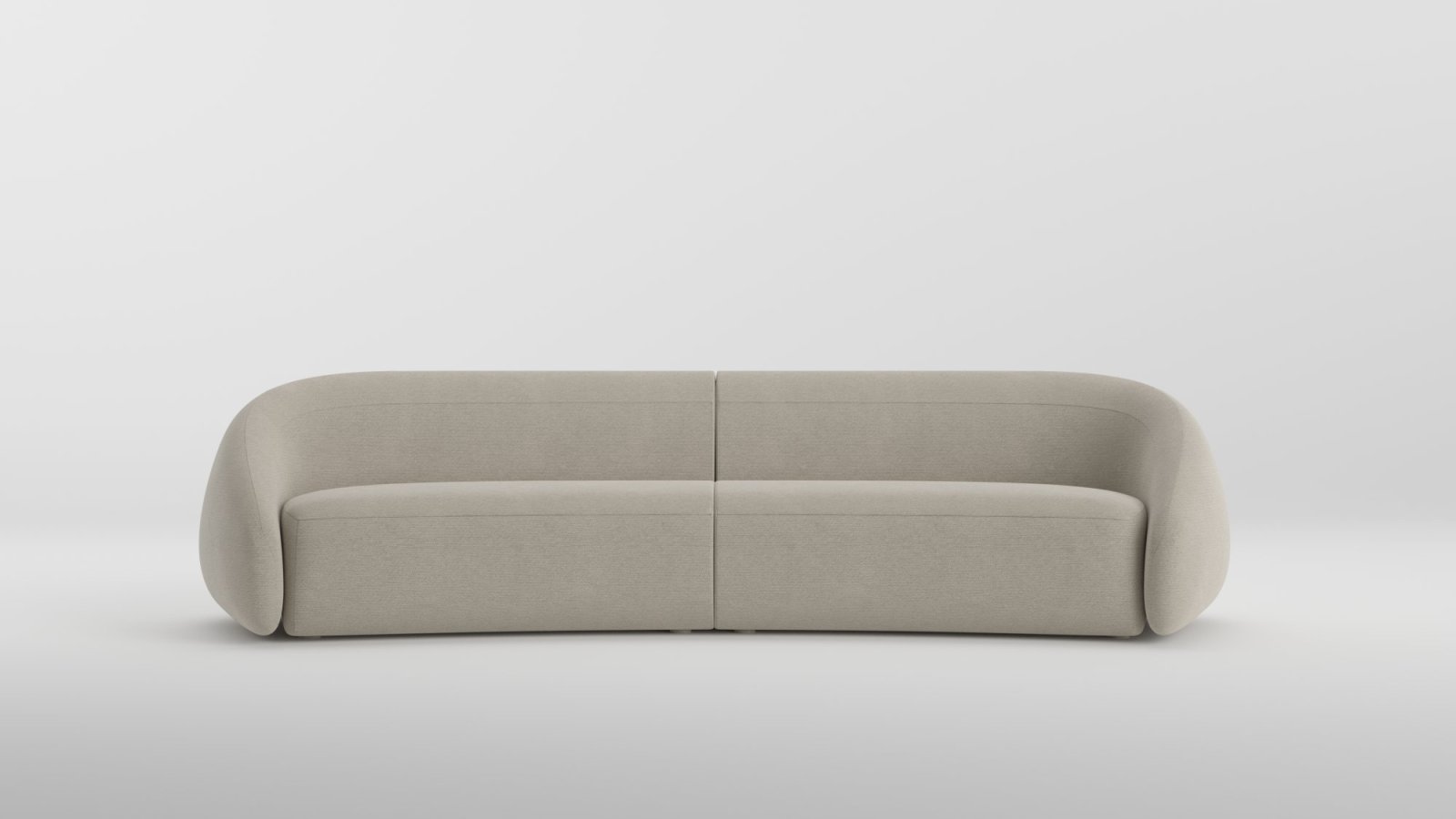
Furniture is usually sold on one side of a line, residential here and contract there. LaCividina describes Apper without drawing that line: in the home as in collective spaces, says the presentation, and the technical sheet supports both halves of the sentence. For the public half there is a reinforced frame and flame-retardant foam. For the private half there is what you notice on a Sunday afternoon: full, rounded volumes, a seat 120 cm deep, a low back bending round until it is the arm. Antonio Rodriguez drew it in 2024 and left the last word to the cover. In a soft bouclé the sofa belongs to a family; in leather, that very sofa receives clients.
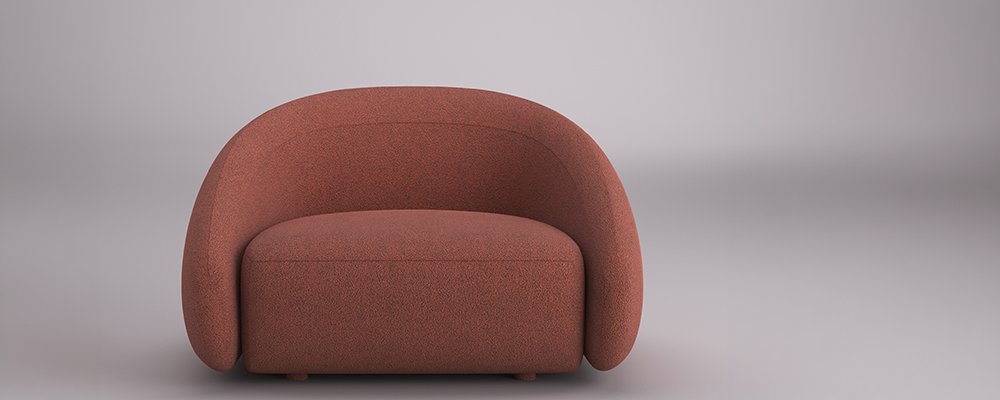
In an office the need is plainer: a proper place for guests to sit. Used as visitor chairs outside a cabin or beside the reception counter, the Apper armchair and the three-seater sofa ask for nothing more, since each is complete in itself, arms included. The ash base sits well back under the upholstery, so a visitor sees the volume before the legs. Solid fir and beech form the structure, and the cover is picked from eleven categories, two of them leather. Anyone shortlisting sofas and lounge seating for a director’s floor will meet the three-seater on that list too.
What changes between one life and the other is the size, and the range follows the room. A flat may stop at the sofa, or add a dormeuse, left-hand or right-hand. A waiting area moves to the modular system: end elements with one arm, straight elements without arms in three lengths, curved elements that bend a row into an arc. A large lobby goes further still, to islands assembled from many elements. La Mercanti asks first whether the piece is going into a home or a reception.

Share the finishes you wish to evaluate
The armchair, code 1460, is 130 cm wide and 120 cm deep. That is a generous plan for one person, so on a layout it needs to be drawn at its true size and never as a standard chair block.
Allow 120 cm. LaCividina gives this as the depth shared by the armchair, the three-seater and the straight and curved elements, which is why pieces set in a row keep one continuous front and one continuous back.
The two end elements. Each is 150 cm long and has a single arm: code 1462 puts the arm on the left, code 1463 on the right. A straight composition begins with one of them and closes with the other.
Yes. LaCividina makes curved end elements, listed as 150 r450, with the arm on the left (1464) or on the right (1465). They follow the wider of the two curvatures in the range and close a composition with a turn.
APP01 is the first of the sample compositions in the technical sheet: one left end element and one right end element, codes 1462 and 1463, placed together. The result measures 300 × 120 cm and has an arm at each end.
The dormeuse comes left or right and is deeper than the other elements. Five steps to settle which side the daybed goes and what stands next to it.
Begin with which side the daybed goes. Mark on the drawing the end of the composition that will take the dormeuse, then check against the drawings in the technical sheet whether that end is the left or the right.
The left dormeuse is code 1471 and the right one is 1472. They are separate items in the price list, so the side fixed in the first step decides the code that goes on the order.
A dormeuse is 130 cm wide and 180 cm deep, while the elements beside it are 120 cm deep. On the drawing the daybed end extends beyond the others, and the passage planned by the designer has to clear that point.
Two of the maker’s examples, APP12 and APP13, put a 150 cm straight element next to the dormeuse and an end element with an arm at the far side. One has the daybed on the right, the other on the left.
Built that way, the composition measures 430 × 180 cm. Two dormeuses used together, as in APP11, give 260 × 180 cm. Compare the figure with the room before the order is confirmed.