Trade terms for professionals and design studios
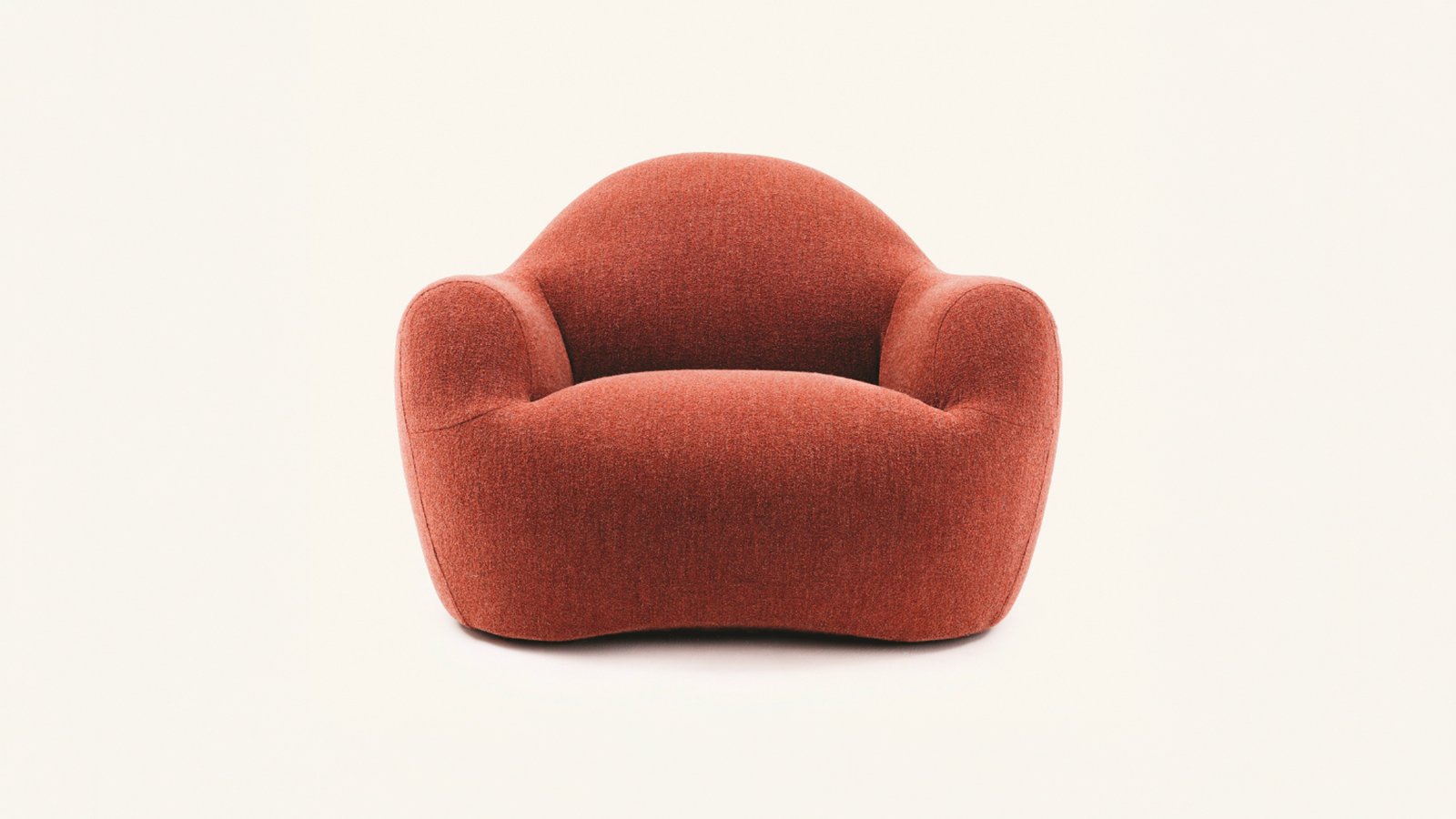
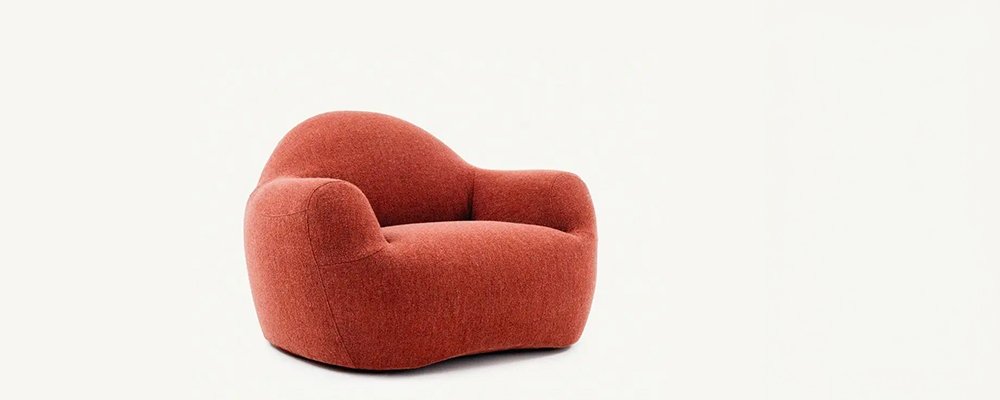
Verzelloni has hidden the base of Venus inside the armchair itself. The documentation calls it integrated and not visible, a choice that, in the maker's words, contributes to “the purity of the volume”. From the door of a cabin, what you see is one upholstered mass resting on the floor, with no legs, no plinth and no metal to read. In our view that single decision does more for the look of a room than any fabric, and it is what earns Venus a place on a shortlist of design armchairs and lounge sofas for formal spaces.
Above the floor line the same logic carries on. Arms, seat and back run into one another without a single edge, and the covering goes over every curve, rear as well as front. The design is by CRD Verzelloni, the research and design studio inside the company, for 2026. We would place a pair in the MD's cabin, across from the desk, where the person behind it receives visitors.
The order itself is short, because Venus comes in one size. Choose a fabric cover, which can be removed entirely, or leather, which is fixed; a client who already owns a suitable fabric can have that used instead. La Mercanti asks what the floor is and who cleans it, before a fabric is named.

Share the finishes you wish to evaluate
A square of 106 × 106 cm, as deep as it is wide. In a cabin the depth is often the figure that surprises: set against a wall, the chair still reaches more than a metre into the room. Mark the square with tape where it will go and keep a clear path beside it, so that visitors are not squeezing past it on their way to the desk.
None. Verzelloni speaks of “fluid lines” and the absence of edges: every part of the outline is rounded, including where arm meets back. In a busy office, where people pass close to the furniture with files and bags, that matters more than it sounds; there is nothing to knock a knee on or catch a sleeve. It also means the chair has no front corner to align with the desk, so it can be angled freely.
It is: Verzelloni provides for a replacement cover in fabric. Because the fabric cover comes off completely, the second can be fitted while the first is being cleaned, and an armchair in daily use keeps its look throughout. Order both at the same time, since on later orders the maker does not assure the same dye lot as pieces already delivered.
Just the one. Verzelloni lists a single article, the “Poltrona 106”, named after its width. There is no compact or oversized version to fall back on, so the room is planned around the chair rather than the other way round. In practice that makes the decision quicker: the drawing you approve is the armchair that arrives, with only the covering left to choose.
The catalogue says the armchair is constructed as one body: its parts “are not separate” but integrated into a fluid system, “where every curve is necessary” and contributes to the overall balance. For a buyer, that rules out mixing and matching: arms, seat and back are not options, and what the photographs show is what is ordered, in the cover of your choice.
A Venus order has only a few lines, and each one shapes what arrives in the room. Five checks, from the covering material to the quantities, to go through before the order is confirmed.
The first line of a Venus order names the covering. Fabric gives a cover that comes off completely; leather is fixed to the armchair and is looked after where it stands. Everything below depends on this line, so confirm it with whoever will look after the room, not only with whoever picked the colour.
For fabric, the line should carry the fabric's name from Verzelloni's collection of 45, and its colour, spelt exactly as on the sample card. A name without a colour, or a colour copied from a photograph on a phone, is where mistakes in an order usually begin.
Some fabrics in the sample book carry a pre-wash option, which Verzelloni applies on request so that a cover washed in water later keeps its size. It has a visible cost, which the maker declares: a softer, less glossy cloth, and a shift in strong or deep shades. Mark the line yes or no; a client's own fabric is outside this option.
If the client supplies the fabric, the order must say so: 5.1 m of cloth 140 cm wide with no repeat, the right side marked and, for patterns, top and bottom shown. Narrower cloth or large repeats need more, and Verzelloni works out that quantity itself.
Last, the quantities. Two armchairs for the same room belong on the same order, with any replacement cover written in beside them. Pieces added afterwards to complete a delivery carry no promise from Verzelloni of an identical dye bath, so the moment to count every chair is now, not next year.