
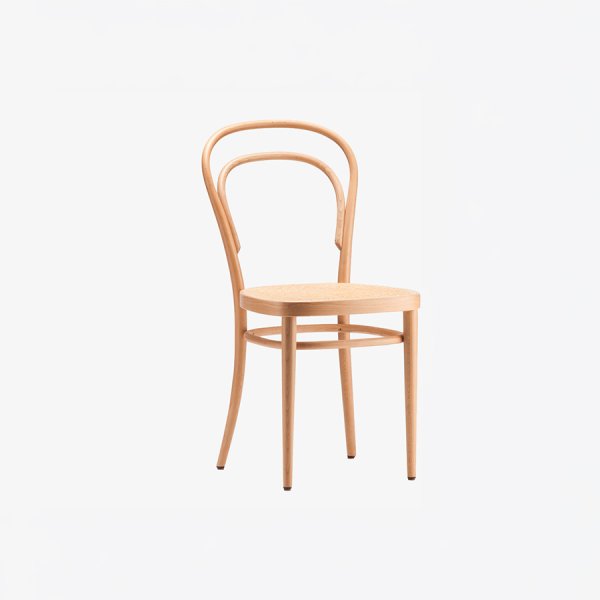
Bentwood chair
₹ 1,17,600
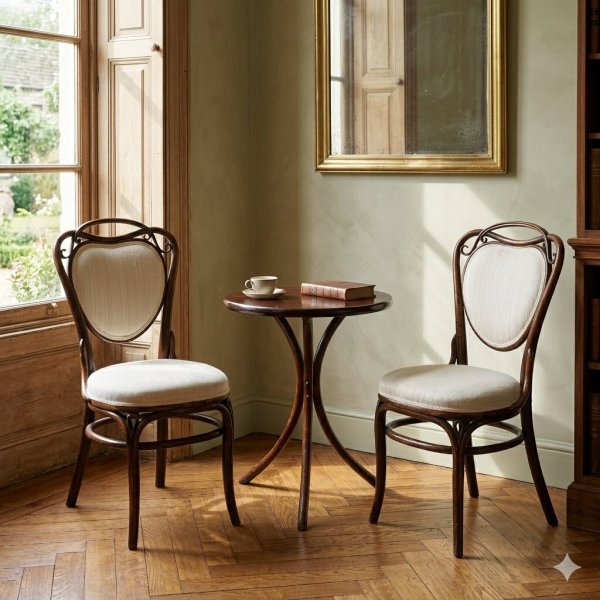

Two German awards in four years have gone to a chair that dates back to 1859. The 214, born as the No. 14 coffee house chair, received the German Sustainability Award Design in 2021 in the “Icons” category, and in 2024 the German Ecodesign Award gave it the special prize “Timeless Design” in the Product category. Thonet explains the recognition through the chair's own logic: a few components bent from solid beech, shipped flat in pieces, easy to repair and made from renewable timber. Sustainability, in other words, was part of the design long before it became a category of its own.
The same thinking runs through the factory at Frankenberg, where Thonet's bentwood has been in continuous production and where furniture is repaired when needed, so that many pieces stay in use for generations. The company is certified to ISO 9001 and ISO 14001, holds certificates for recycled transport packaging and for electricity from renewable sources, and remains a family business, with the fifth and sixth generations of the Thonet family among its shareholders. For Indian architects and corporate clients, La Mercanti's advice is to read these credentials as part of the brief: a chair that can be repaired is a chair that stays in the project.
Over recent decades Thonet has worked with Stefan Diez, Norman Foster, Alfredo Häberli, James Irvine, Naoto Fukasawa, Piero Lissoni, Glen Oliver Löw, Christophe Marchand and Hadi Teherani. Sebastian Herkner's 118 has a frame bent from one piece and a cane seat that quotes the 214, Studio Besau Marguerre reworks the classics, and JS . THONET is Jil Sander's personal interpretation. A single project can therefore mix eras within one catalogue.
Thonet organises its range around four settings: work (coworking, reception and lounges, meeting rooms, cafeterias, training), home (dining, living, home office, entrance, garden), events (arenas, churches, multifunctional halls) and hospitality (hotels, restaurants, cafés). La Mercanti suggests using the same map when planning a project, starting from how a room is used rather than from a single model.
Thonet builds its furniture to be handed down and, when needed, repaired at its Frankenberg factory. Five practical steps for owners and facility teams who want their chairs to last.
Thonet publishes separate care instructions for wood and wood surfaces, leather, canework, outdoor pieces and the JS . THONET collection. Start by identifying the materials on each chair, since a lacquered beech frame and a leather seat call for different cleaning routines.
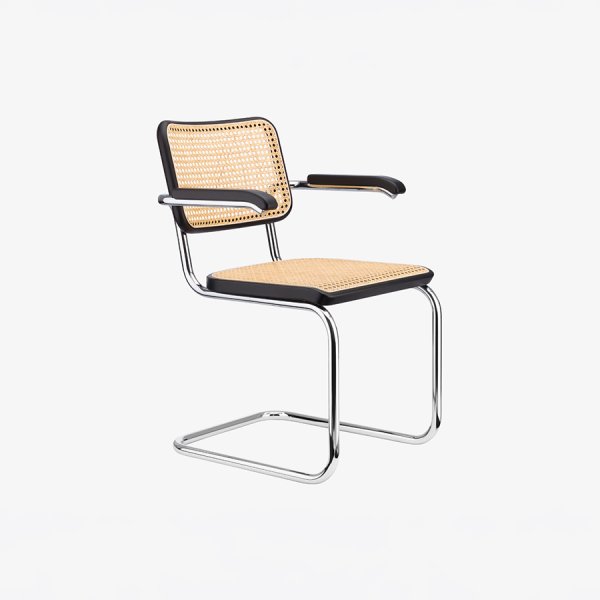
Vienna cane, the woven seat and back of chairs like the S 32 and S 64, should be cleaned only as the canework care instructions describe. Our advice to anyone running a café or an office: make it a house rule that nobody stands on a cane seat to reach a shelf.
The repair tutorials cover tasks such as replacing the cane seat and backrest of the S 32 and S 64, fitting gliders on a cantilever chair, changing the castors of the S 64 VDR and swapping the top of the B 9 table. Most of them suit an in-house maintenance team.
When renewal or repair goes beyond a small job, the repair service, reached through the sales team by email, takes it on; pieces can be repaired in Frankenberg, where they were made. Natural signs of use, the company says, ennoble a favourite piece over time.
For new pieces, we suggest filing the order references together with the model and materials chosen. Because everything is made to order, those details should make it simpler to request a matching replacement part, such as a cane seat or a set of gliders, years later.