Synua
₹ 178.800
/unit
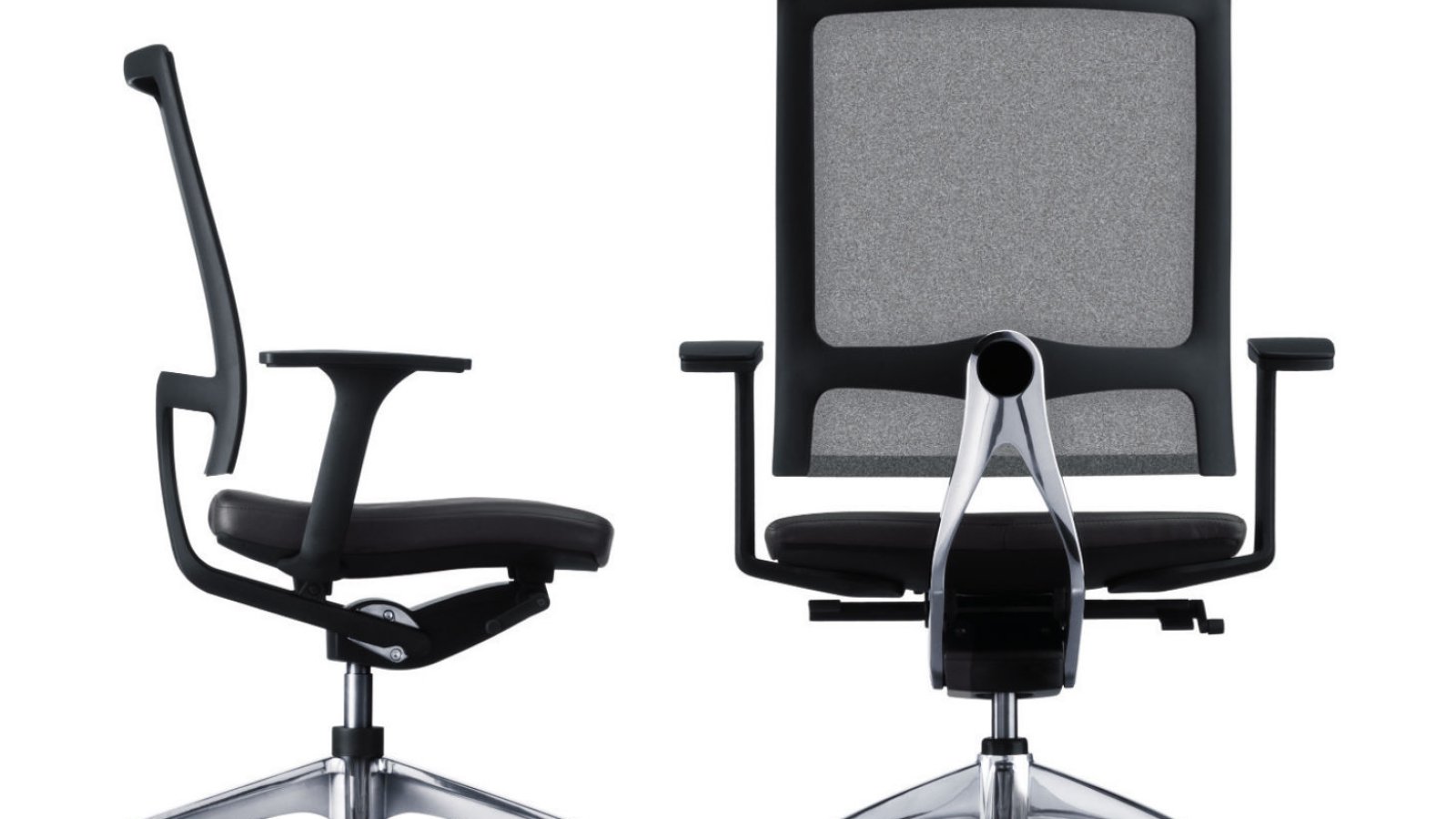
Most executive chairs allow a lean. Open Up allows a stop. The suspended dorsokinetic backrest and the Similar mechanism together open to a recline of up to 45 degrees, far enough that the chair supports the body when you are not working at all — reading a contract, taking a call with your eyes closed, letting a difficult decision settle for ten minutes.
In an Indian corporate day, which routinely runs long and spans time zones, that matters more than another adjustment knob. The high-backed up-103 adds a headrest that adjusts for height and angle, so the neck is supported in the reclined position and not just in the upright one. The tilt is controlled: the mechanism can be locked in five positions, and the resistance is set to body weight, so the chair holds where it is put.
Behind the comfort sits German manufacturing at Dogern, a load rating of 120 kg and ten years of guaranteed repairability. La Mercanti specifies and supplies Open Up for corporate offices and design practices across India.
Model: Open Up, Sedus Stoll AG — design Mathias Seiler, 2000
Versions: up-100 low backrest · up-103 high backrest with headrest · open up modern classic · conference chair · cantilever chair, stackable up to 5 · counter version
Mechanism: Similar mechanism with tension control, lockable in 5 positions; optional 4° forward seat tilt; dorsokinetic backrest; backrest inclination approx. 35°, recline up to 45°
Adjustment: height-adjustable lumbar support · headrest adjustable for height and angle · sliding seat with 60 mm travel · seat with 30 mm extra depth · armrests omitted, standard polyamide, or 3D adjustable with soft-touch, gel or leather pads
Upholstery: membrane or padded backrest, slim padding or quilted leather; modern classic in aniline-tanned, grained and unembossed leather; fabrics certified to OEKO-TEX Standard 100
Structure: five-star die-cast aluminium base, powder-coated black or light aluminium, or polished; steel frames powder-coated or chromed; twin castors Ø 65 mm with load-dependent braking, type H or type W; gas lift with mechanical depth-springing, EN 16955 class 4
Load and weight: up to 120 kg · 21.06 kg for up-103 excluding packaging
Materials: metals 59.3% (aluminium 33.25%, steel 25.90%), plastics 28.1%, wood 6.9%, fibreglass 4.0% · recycled content 46.39% · recyclability 99%
Durability: 10-year guaranteed repairability · 5-year guarantee under Sedus warranty terms · covers not glued into place
Production: Sedus Stoll AG, Dogern, Germany, using 100% green electricity; ISO 9001, ISO 14001, ISO 50001, ISO 45001
Certification: TÜV Rheinland GS to DIN EN 1335-1 and 1335-2 · TÜV Rheinland Ergonomics Approved · Quality Office · GREENGUARD (UL 2818) · life cycle assessment to DIN EN 15804 · REACH compliant
The recline is available, not imposed. The Similar mechanism locks in five positions, so the chair can be kept upright for meetings and released when the room empties. Visually it reads as a formal executive chair: the geometry does not change when the mechanism is unlocked, unlike a lounge recliner that always looks like one.
Body proportions differ more than heights do. The sliding seat moves through 60 mm, which changes how much of the thigh is supported: too much and the knee is pressed, too little and the lower back loses contact with the lumbar support. A version with 30 mm extra depth exists for taller users. It is a two-second adjustment that decides how the chair feels after four hours.
The backrest can be a tensioned membrane or padded, including a slim padding and a quilted leather version, while the modern classic uses aniline-tanned leather that is grained and not embossed. Fabrics carry OEKO-TEX Standard 100 certification. In warm climates the membrane is often the more comfortable choice, since it does not trap heat against the back.
It arrives largely assembled, with a transport lock on the mechanism that is removed before first use, and the castors or glides supplied to suit the floor. At 21.06 kg per chair the practical constraints are the lift and the corridor, not the weight. La Mercanti coordinates delivery to the floor rather than to the building entrance.
Yes, at Dogern in Germany, using electricity from entirely renewable sources. Two thirds of the steel, aluminium and wood the company uses are bought in Germany and nearly all the rest in Europe, with less than 3% coming from outside Europe. That short chain is what makes ten years of guaranteed repairability a credible promise rather than a slogan.
A chair that is never adjusted is a chair bought at half its value. Five minutes, once, in this order.
Sit with feet flat and forearms parallel to the floor at the desk. Raise or lower the seat until the elbow sits at the height of the worksurface: everything else is calibrated from this.
Move the seat until roughly two fingers fit between its front edge and the back of the knee. Do this before adjusting the backrest, otherwise the lumbar support ends up in the wrong place.
Raise it until the curve of the backrest meets the inward curve of the lower spine. It should feel like contact, not pressure.
Adjust the resistance until the backrest follows you without either pushing you forward or falling away. Then decide whether to lock a position or leave it free.
Bring them up until the shoulders drop and the forearms rest without lifting them. If the chair must slide under the desk, check the clearance at this point rather than after installation.