Celosia openwork terracotta screen by Mutina

Celosia by Mutina: the jali tradition, retold in terracotta

Mutina

Patricia Urquiola

Celosia
Celosia Available now
₹ 129.984

What did you have in mind?

Trade terms for professionals and design studios

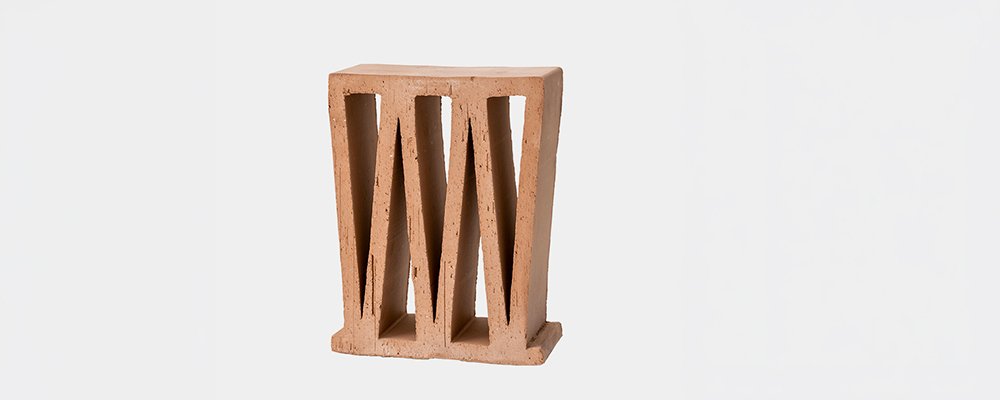
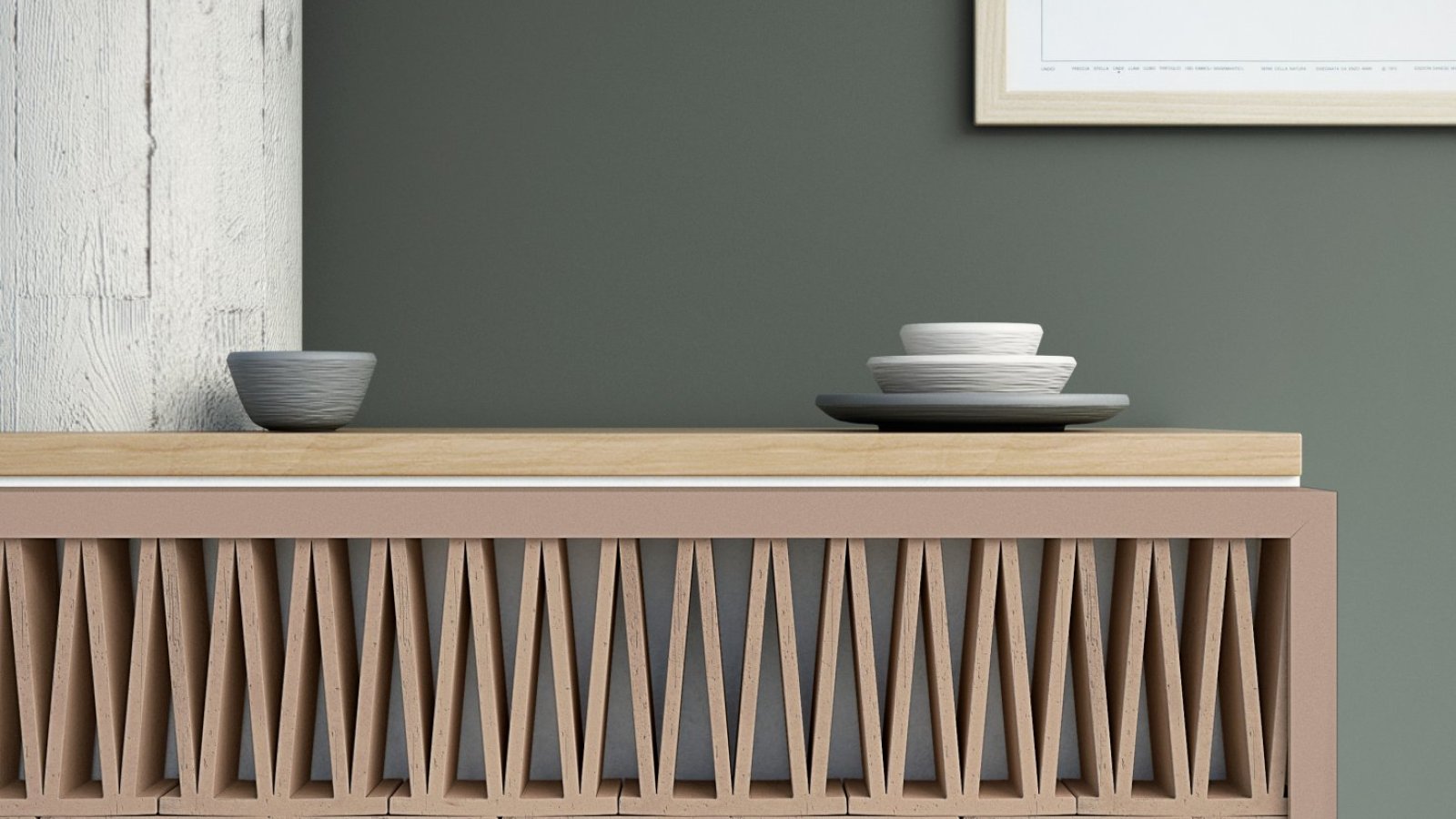
India never needed convincing that a wall can breathe: the jali has been filtering sun, air and gazes for centuries, from Fatehpur Sikri to modern Chandigarh. Celosia speaks that language with an Italian accent — Patricia Urquiola (2018) deconstructed the terracotta tradition of bricks, roof tiles and lattice screens into a single sculptural block whose triangular voids echo Roman numerals, laid always staggered so the pattern never repeats.

Each element is hand-extruded terracotta, 20.5×26.5×10 cm, with a declared ±3 mm artisanal tolerance. Screens rise to 4 metres on anchoring schemes tested and certified by Istituto Giordano; assembly is a complete kit — painted willow profiles plus the dedicated silane sealant developed by Kerakoll exclusively for Mutina, EC 1 plus rated. The VOC declaration records zero volatile organic compounds and recycled content is 10% under LEED 4.1.

Between reception and open office, lounge and verandah, the screen gives hierarchy without darkness — and since 2025 Celosia Outdoor, in the Argilla shade with an F2 severe-exposure frost rating, takes the drawing to courtyards and terraces. Technical sheet and certificates can be downloaded from this page.

Technical information based on data declared by the manufacturer.

Collection: Celosia · Celosia Outdoor
Producer: Mutina
Design: Patricia Urquiola, 2018 — Outdoor version 2025 — awards: Interior Design's Best of Year 2018, German Design Awards 2020
Material: extruded terracotta, artisanal production (UNI 11128/2004 category)
Size: 20.5×26.5×10 cm (8″×10″×4″) — ±3 mm tolerance
Colours: natural terracotta (Celosia) · Argilla (Celosia Outdoor)
Use: partition screens and cladding — indoor (Celosia) · outdoor rated F2 severe exposure (Celosia Outdoor, UNI EN 772-22)
Structure: screens up to 4 m — anchoring on 2 sides (max h400) or 3 sides (max 400×300 cm), Fisher SXR 8×80 fixings — staggered installation only, certified by Istituto Giordano
Declared values: water absorption 12.5% (UNI EN 772-21) — dimensions T2-R2 — soluble salts S2 — frost F1 (indoor) / F2 (Outdoor) — horizontal loads C2
Assembly: Mutina sealant (by Kerakoll exclusively: silane, primer-free, solvent-free, EC 1 plus) — painted willow profiles, top profile with removable side
Sustainability: 10% recycled content (LEED 4.1) — VOC declaration: zero volatile organic compounds — SDS, BPD3, HPD on request
Packing: 18.41 pcs/sqm — 5.5 kg per piece

La Mercanti Srl — trusted supplier for design and contract projects since 1997.
San Benedetto del Tronto (AP), Italy · +39 0735 753833 · info@lamercanti.com
Supply, quotations, specifications and project support across India and worldwide.

Share the finishes you wish to evaluate

₹ 30.000

Amount adjusted against your first order

FAQ

How is this different from a traditional jali?
It is a cousin, not a copy: where the jali is carved or cast as panels, Celosia is a stackable extruded block — one module, laid staggered, composing screens of any width up to 4 metres high, with tested anchoring schemes and a dedicated mounting system behind the poetry.
Will it withstand heat, monsoon and coastal air?
The declared data covers the essentials: fired extruded terracotta, water absorption 12.5%, soluble salts class S2, and — for the 2025 Outdoor version in Argilla — an F2 severe-exposure frost rating under UNI EN 772-22. Local verification follows the codes of the country of use.
What does the mounting system include?
Everything the screen needs: painted willow profiles — linear and top, the top one with a removable side for ceiling closure — plus the silane sealant made by Kerakoll exclusively for Mutina, EC 1 plus rated. Staggered laying is the only permitted pattern, for safety.
Where does it work best in an office or hotel?
Where hierarchy needs air: between reception and workspace, around a breakout corner, at the edge of a verandah or courtyard café. It filters the frontal gaze while daylight and breeze continue through the triangles.
What documentation supports green building submissions?
10% recycled content certified under LEED 4.1, a VOC declaration recording zero volatile organic compounds, and SDS, BPD3, HPD papers on request. Samples can be ordered; their cost is fully credited at order confirmation.

From verandah to reception: planning a breathing screen

Five steps to bring the jali idea into a contemporary fit-out with Celosia blocks.

Let climate lead the plan
Place the screen where air should keep moving — verandah edges, courtyard thresholds, lobby transitions — and let the triangles do the shading.
Check spans against the certified schemes
Two-sided anchoring reaches 4 metres of height, three-sided spans 400×300 cm. Confirm fixings — Fisher SXR 8×80 — with the structural consultant early.
Specify blocks, profiles and sealant together
The kit is designed as one: willow profiles frame the field and the Kerakoll-made Mutina sealant bonds it, without tile adhesives.
Keep every course staggered
Mandatory for safety, essential for the drawing: offset courses make the numeral-like pattern run continuously across the screen.
Judge the terracotta in your own light
Order a sample block and see the material at noon and at dusk; sample costs are fully credited when the order is confirmed.

You May Also Like