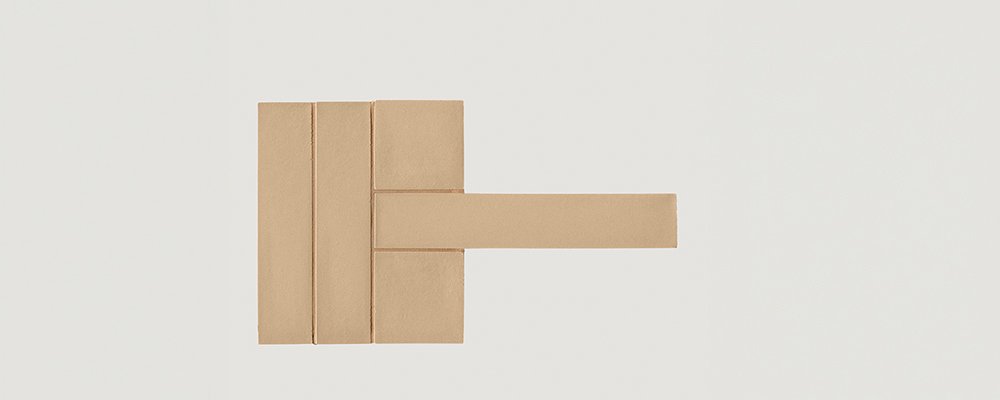
Weaving mosaic by Mutina in the interlocking Ba Leng pattern in white

Weaving by Mutina — the jaali's geometry, laid as a floor

Mutina

Neri & Hu

Weaving Cream
Weaving Cream Available now
₹ 99.180
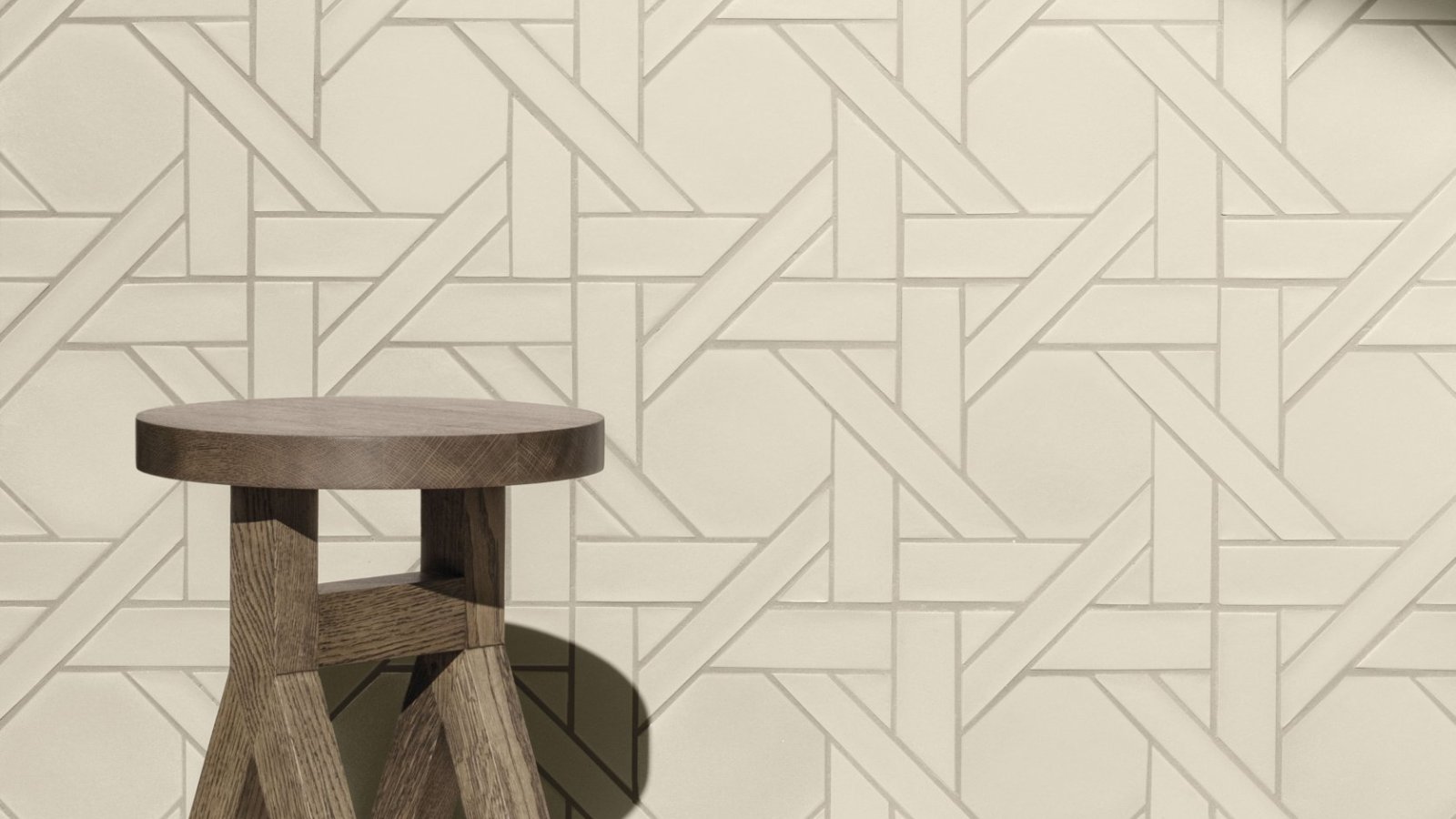
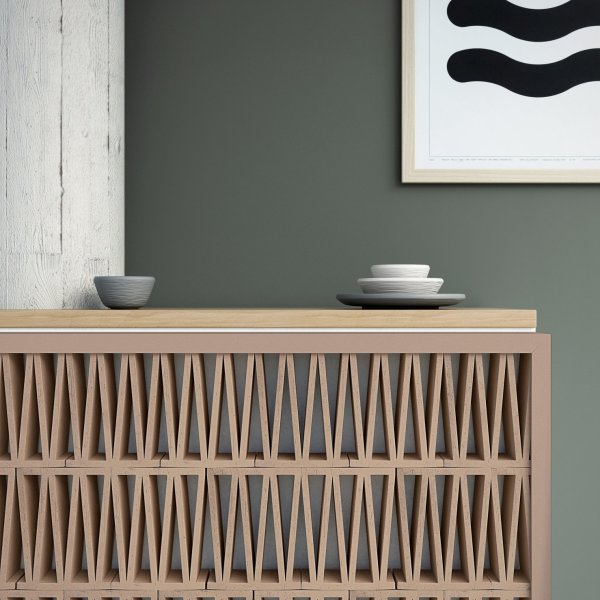
India reads openwork geometry fluently: the jaali has filtered light and air through carved lattices for centuries, from Fatehpur Sikri to contemporary facades. Weaving speaks that language at floor level — an interlocking geometry of solids and voids, drawn by Neri&Hu of Shanghai from the Chinese art of bamboo weaving, where the pattern emerges from what is left open as much as from what is filled. The strategic use of colour, Mutina notes, gives the voids a second level of perception.

Materially it is built for hard service: tesserae of unglazed full-body porcelain, individually pressed and mounted on mesh, 9 mm thick — stain class 5, chemicals A-B/A, deep abrasion 123 mm³, Mohs 7 and a Robinson rating for heavy-duty, high-impact use, with frost resistance covering hill-station winters and DCOF 0.64 covering busy circulation. Three patterns — San Jiao, Si Fang, Ba Leng — in five natural tones plus a mix each; floor and wall, indoor and outdoor. The design is a Registered Community Design of Mutina.

Technical information based on data declared by the manufacturer.

Collection: Weaving
Manufacturer: Mutina
Design: Neri & Hu, 2026
Material: unglazed homogeneous full-body porcelain tesserae, individually pressed and mesh-mounted (UNI EN 14411, BIa UGL); 9 mm thick
Patterns and sizes: San Jiao (triangle) 42.9×30.3 cm — Si Fang (square) 35.7×20.3 cm — Ba Leng (octagon) 34.3×34.3 cm
Colours: White, Grey, Cream, Green, Black + one mix per pattern (Bi-Grey & Black, Bi-White & Black, Trio G); V3 variation
Performance: absorption 0.1% (ISO 10545/3); frost and thermal-shock resistant; stain class 5; chemicals A-B/A; deep abrasion 123 mm³; Mohs 7 (EN 101)
Slip data: R10 (DIN EN 16165 B); barefoot class B; DCOF 0.64 (ANSI A.326.3); pendulum 50 dry / 40 wet (BS EN 16165 C); Robinson: heavy-duty and high-impact use
Use: floor and wall, indoor and outdoor
Installation: mesh-mounted sheets laid with the sheet's own 4 mm joint; porcelain adhesive; cement-based or epoxy grout; starting piece for San Jiao and Ba Leng on request
Design protection: Registered Community Design, Ceramiche Mutina
Documents: VOC, Declaration of Contents, SDS, BPD3 and HPD on request — certificates downloadable directly from the product page

La Mercanti Srl — trusted supplier for design and contract projects since 1997.
San Benedetto del Tronto (AP), Italy · +39 0735 753833 · info@lamercanti.com
Supply, quotations, specifications and project support across India and worldwide.

Share the finishes you wish to evaluate
₹ 30.000

Amount adjusted against your first order

FAQ

How does Weaving relate to the jaali tradition Indian architects know?
As a kinship of intelligence: like the jaali, Weaving is a geometry of solids and voids where the openings are as designed as the filled parts — Mutina describes a rhythmic interaction in which colour gives the voids a second level of perception. The difference is the plane: this openwork logic lies underfoot or on a wall, in full-body porcelain rather than carved stone.
Will Weaving stand up to heavy footfall in Indian commercial spaces?
The data says yes: stain resistance class 5, chemical resistance A-B/A, deep abrasion of 123 mm³ against a 175 limit, Mohs 7 surface hardness and a Robinson rating for heavy-duty, high-impact use. DCOF is 0.64 with R10. For a specific project's code requirements, confirm on the manufacturer's documentation.
Can the same Weaving pattern run indoors and out on a campus?
Yes — declared use covers floor and wall, indoor and outdoor, with 0.1% absorption and frost resistance. Courtyards, colonnade floors and interior corridors can share one material and one geometry, which is precisely how large Indian campuses keep coherence across phases.
What do the three pattern names of Weaving mean?
They are Chinese, honouring the craft the collection abstracts: San Jiao means triangle, Si Fang square, Ba Leng octagon. Each pattern comes from a different weaving technique and sets its own density — from the fine grain of San Jiao to the open octagons of Ba Leng — in five solid tones plus a mix each.
Is a mesh-mounted mosaic practical for Indian site conditions?
That is its advantage: precision is factory-made — tesserae arrive pre-spaced on mesh — and the site simply lays sheets with the same 4 mm joint, on porcelain adhesive, grouted in cement or epoxy. A starting piece for San Jiao and Ba Leng, on request, sets the first row true even with rotating crews.

An openwork floor that survives the site: five steps

How to plan, order and lay Weaving by Neri&Hu on an Indian project — density, tones, sheets and grout discipline.
Choose density like a jaali maker
Decide how much visual air each space needs: San Jiao reads fine and dense, Si Fang orderly, Ba Leng open. The three share one porcelain body and one data sheet, so the choice is compositional, not technical.
Work the palette by light
Five natural tones follow bamboo through maturation — from White and Cream to Green and Black. In strong Indian daylight the matt surface stays glare-free; darker tones ground shaded interiors, lighter ones lift courtyards.
Order by sheet with margin
Each box covers about half a square metre — Si Fang 0.502, San Jiao 0.517, Ba Leng 0.498 — 42 boxes to a pallet. Add cutting margin at edges and around drains, and put the starting piece on the same order.
Hold the 4 mm line
Sheets are laid continuing the 4 mm joint inside the mesh — brief the crew that this spacing is the design, not a tolerance. Porcelain adhesive below; cement or epoxy grout above, each with its declared end-of-site cleaner.
Keep maintenance ordinary
Neutral detergent diluted in water, a common limescale remover when needed — nothing exotic. The surface's resistance numbers do the hard work; the cleaning regime stays simple for any facilities team.

You May Also Like