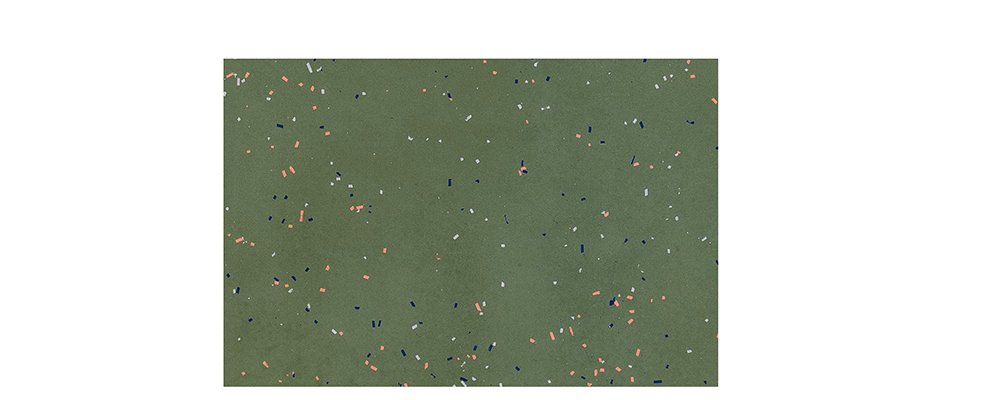
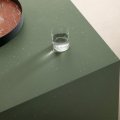
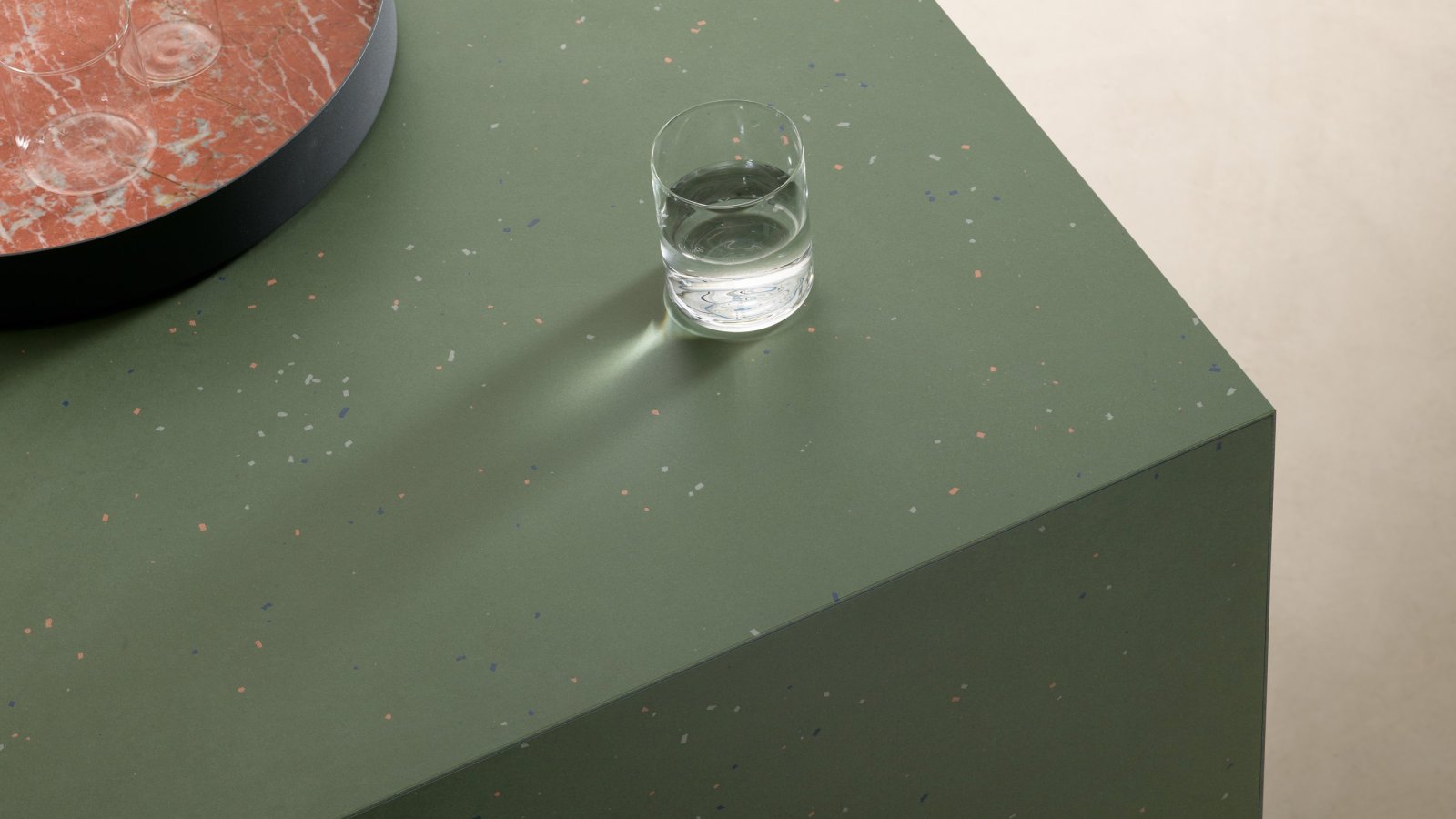
Primavera porcelain stoneware by Mutina with real ceramic chips

Primavera by Mutina: Italian stoneware that travels light

Mutina

Barber Osgerby

Green
Green Available now
₹ 254.016

What did you have in mind?

Trade terms for professionals and design studios

Importing Italian stone a continent away is usually a conversation about weight. Primavera changes the arithmetic: at 6 mm, a pallet carries 57.6 square metres at 790 kilos — about 13.7 kilos per square metre of finished, declared-for-heavy-use porcelain stoneware. The surface itself is a modern terrazzo by Barber and Osgerby: real ceramic chips scattered at random and pressed into the slab, no digital printing, so no two tiles in the shipment are alike.

For Indian projects that means a genuinely Italian floor for corporate lobbies, meeting suites and washrooms — stain class 5, acids class A, frost-proof for terraces and rated for ventilated facades — without paying stone-slab freight. Five colours, from the mineral calm of Bianco and Grigio to Verde and Blu, in 120×120 and 60×60 formats. La Mercanti coordinates the supply from Italy, technical files included, so the specification lands as light as the material.

Technical information based on data declared by the manufacturer.

Collection: Primavera
Producer: Mutina
Design: Edward Barber & Jay Osgerby, 2018 — German Design Award 2020, Archiproducts Design Award 2019 (Primavera Grigio); registered design, 2019
Material: unglazed porcelain stoneware (UNI EN 14411 App G, BIa UGL group), 6 mm thick
Sizes: 120×120 cm (work size 1190×1190 mm) — 60×60 cm (594×594 mm)
Colours: Bianco, Grigio, Nero, Verde, Blu — real ceramic chips pressed into the surface (Continua Plus technology, no digital printing), soluble-salt shaded grounds, V3 variation
Use: floors and walls, indoor and outdoor, ventilated facades (with safety fibre), high-traffic areas (Robinson test: heavy use)
Declared values: water absorption <0.5% — deep abrasion compliant — frost and thermal shock resistant — acids and bases class A, pools included — stain class 5 — slip R9 (DIN 51130), DIN 51097 class B, DCOF 0.51
Logistics: 120×120: 2 pcs per box, 39.5 kg — 57.6 m² per pallet at 790 kg; 60×60: 4 pcs per box, 20 kg
Sustainability: 14% recycled content (LEED 4.1); ISO 14000 and ISO 9001; VOC, HPD, EPD, SDS on request
Installation: 2 mm joint; C2S2 adhesives for the large format and over existing floors quick-setting adhesives; neutral detergent only

La Mercanti Srl — trusted supplier for design and contract projects since 1997.
San Benedetto del Tronto (AP), Italy · +39 0735 753833 · info@lamercanti.com
Supply, quotations, specifications and project support across India and worldwide.

Share the finishes you wish to evaluate

₹ 30.000

Amount adjusted against your first order

FAQ

Why does the 6 mm thickness matter for an Indian project?
Because freight from Italy is priced by weight and volume: a Primavera pallet carries 57.6 square metres at 790 kilos — roughly 13.7 kilos per square metre, declared packing data. Lighter pallets mean more coverage per container and easier handling on site, with no compromise on the heavy-use rating.
Is such a thin tile suitable for high-footfall areas?
Yes: Mutina declares Primavera for high-traffic areas, backed by a heavy-use Robinson rating, compliant deep abrasion and stain class 5. The chips are ceramic within ceramic, so the pattern cannot wear away the way a printed layer eventually does.
Can one collection cover lobby, washrooms and terrace?
That is its natural habitat: floors and walls, indoors and out, with frost resistance for open terraces and class A resistance to acids and pool chemicals. The 120×120 suits representative halls, the 60×60 follows washrooms and service areas in the same visual language.
How does the terrazzo effect work without printing?
Real coloured ceramic fragments are thrown onto the slab at random and dry-pressed into the surface, while the shaded background comes from soluble salts. Every tile is genuinely unique — a claim the data sheet makes precise by stating twice that no digital printing is involved.
What documentation supports a green-building submission?
The collection declares 14 percent recycled content under LEED 4.1 and is produced under ISO 14000 and ISO 9001 systems; VOC emission, HPD, EPD and SDS files are available on request through La Mercanti with the technical submittal.

How to bring an Italian terrazzo floor to a project in India

A sequence for architects and procurement teams: from sample to container to installed floor, using Primavera's light 6 mm format to advantage.

Start with the freight maths
Work out coverage per pallet early — 57.6 square metres at 790 kilos — so the import budget reflects the 6 mm advantage from the first estimate.
Sample all five colours
Chips read differently under Indian light: review Bianco, Grigio, Nero, Verde and Blu on site before locking the palette for lobby and floors.
Zone by format
Assign the 120×120 to representative halls and the 60×60 to washrooms and corridors; one collection, one supplier, one visual language across the building.
Plan the substrate, not demolition
On refurbishments, use the thin profile to lay over sound existing floors with quick-setting adhesives and keep levels almost unchanged.
File the certificates with the order
Ask for the LEED recycled-content line, VOC, HPD and EPD documents together with the shipment so the compliance folder is complete at handover.

You May Also Like