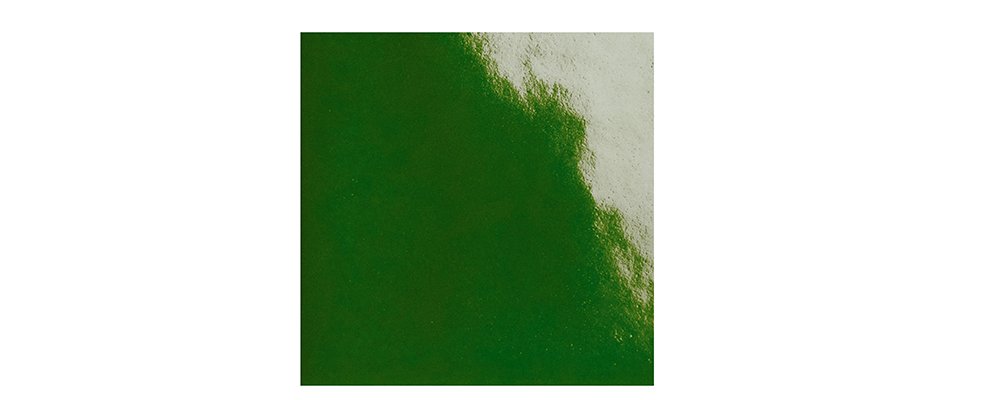
Wall and floor in modular Din ceramic by Mutina

Din by Mutina — eight colours that organise a building

Mutina

Konstantin Grcic

Dark Green Glossy
Dark Green Glossy Available now
₹ 69.638

Let's discuss your project

Trade terms for professionals and design studios

Large Indian campuses, hospitals and hotels share a problem paint never solves for long: orientation. Din answers it in fired ceramic: eight colours — two blues, two greens, rose, red, black, white — across four interlocking sizes and two finishes, 64 standardised elements that can code a wing, mark a corridor or band an atrium, and never fade, peel or need repainting. Colour as infrastructure, with stain class 5 and chemical class A doing the housekeeping.

The system is Konstantin Grcic's (2021, EDIDA 2022; two Compasso d'Oro, MoMA collection): a 15×15 halved into ever-smaller modules locking on one 2 mm joint — «from very basic to highly sophisticated». The material is glazed pressed ceramic, 9 mm, with a declared hand-mottled glaze (sixteen formulas, bell-applied); matt declares DCOF 0.77, R10-R11 and barefoot class C on mesh — traction for ramps, wet rooms and pool surrounds — and frost resistance takes it outdoors. Six 3D pieces wrap desks, counters, tubs and shelves in the same colours.

Where the coding works

Floor and wall, indoor and outdoor: lobbies, corridors, washrooms, cafeterias, terraces — matt underfoot, glossy on walls. Datasheet and certificates on this page.

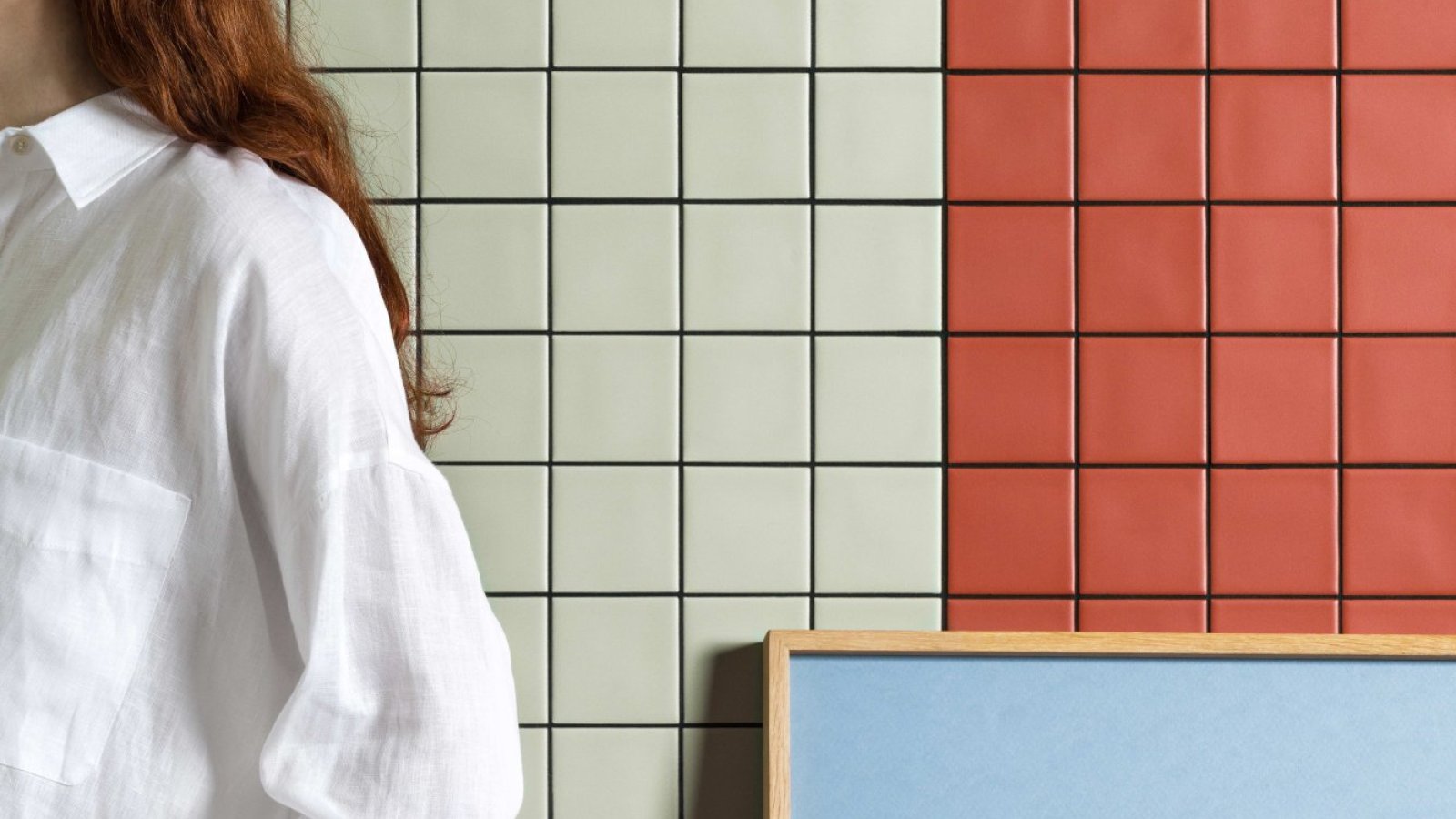
Technical information based on data declared by the manufacturer.

Collection: Din
Manufacturer: Mutina
Design: Konstantin Grcic, 2021 — EDIDA award 2022
Material: glazed pressed non-rectified body, 9 mm, UNI EN 14411 BIb GL (special pieces artisanal)
Modular sizes: 15×15 — 7.4×15 — 7.4×7.4 and 3.6×7.4 on 30.2×30.2 mesh — 2 mm joint
Range: 8 colours × 2 finishes = 64 elements — mottled artisanal glaze
3D special pieces: 6 models (cubes, corners, bars) in all colours and finishes
Use: floor and wall — indoor and outdoor
Declared values: absorption 2.5% — frost-proof — acids/alkalis class A — stain class 5 — slip (Matt): DCOF 0.77, R10/R11, DIN 51097 B/C (mesh), Pendulum 53 dry/38 wet
Sustainability: body free of VOC and SVHC; EPD, HPD, Red List on request
Installation: flat dry walls, dry-run recommended, slow-set adhesive, 2 mm joint; fine-grain grout on glossy — Packing: 0.72 sqm/box

La Mercanti Srl — trusted supplier for design and contract projects since 1997.
San Benedetto del Tronto (AP), Italy · +39 0735 753833 · info@lamercanti.com
Supply, quotations, specifications and project support across India and worldwide.

Share the finishes you wish to evaluate

₹ 30.000

Amount adjusted against your first order

FAQ

Why is fired colour better than paint for wayfinding?
Because it is permanent infrastructure, not maintenance: a painted colour code fades, chips and repaints every few years - a fired glaze with stain class 5 and chemical class A outlives the building's signage budget. Din gives the palette structure: eight colours across four interlocking sizes let a hospital code its wings, a campus its blocks, a hotel its floors - in bands, fields or accents that survive trolleys, luggage and daily scrubbing. Colour decisions become one-time capital, not recurring opex.
Does the small format slow down large projects?
Less than expected: the two smallest sizes arrive pre-mounted on 30.2×30.2 cm mesh - eleven pieces per sheet, joints pre-set - so crews lay mosaic-grade texture at sheet speed; 15×15 and 7.4×15 cover fields quickly at 0.72 sqm per box across all formats, which keeps procurement and attic stock simple. The datasheet asks for a dry-run and a slow-setting adhesive - two lines in the BOQ that protect the finish on big floors.
Is the matt surface genuinely fit for ramps and wet zones?
The declared numbers say yes with margin: DCOF 0.77 against the 0.42 benchmark, R10 in the larger formats, R11 on mesh, DIN 51097 up to class C barefoot on mesh, Pendulum 53 dry/38 wet - covering wet rooms, pool surrounds and, with frost resistance, outdoor walkways. The boundary is honest: values are declared for matt only, so glossy stays on walls and dry zones. Slip by finish, zone by zone - the spec writes itself.
What do the 3D pieces add in hospitality and healthcare?
Continuity where buildings usually break: reception counters, vanity units, tub surrounds and shelving wrapped in the same fired colours as the walls - six artisanal pieces (cubes, corners, 15 cm bars) in all 16 colour-finish combinations. In healthcare that means cleanable ceramic volumes instead of laminate edges; in hospitality, casework that matches the finish schedule exactly. Verify real calibres before fabricating substrates - the product is non-rectified - and dry-lay first.
What documentation supports green submissions - honestly?
What exists: a body declared free of VOC and SVHC, with EPD, HPD and Red List Building Materials available on request through La Mercanti - useful for IGBC and LEED credit paperwork - plus stain, chemical, frost and slip values printed in the datasheet, and the EDIDA 2022 award for the design file. What does not exist: a declared recycled-content percentage, so we claim none. Care is neutral detergent; fine-grain grout is mandatory on glossy finishes. Sample costs are fully credited at order confirmation.

Colour as infrastructure: Din in five steps

Five steps for Indian architects and project heads: Grcic's 64-element system for campuses, hotels and hospitals - orientation built into the finish.

Write the colour code first
Assign the eight colours to wings, floors or functions before tile layout: the palette is the signage. Fired glaze never repaints.
Band, field or accent
Full colour fields for identity zones, bands for circulation, small-format accents for thresholds - four sizes, one 2 mm grid.
Put matt where feet decide
DCOF 0.77, R11/class C on mesh: ramps, wet rooms, pool edges and outdoor walkways take matt; glossy dresses the walls.
Extend colour to the casework
Counters, vanities and tubs wrapped with the 3D pieces keep the code continuous: check calibres before fabrication.
Procure by uniform boxes
0.72 sqm per box across every format simplifies BOQ, phasing and spares: La Mercanti computes boxes, wastage and delivery.