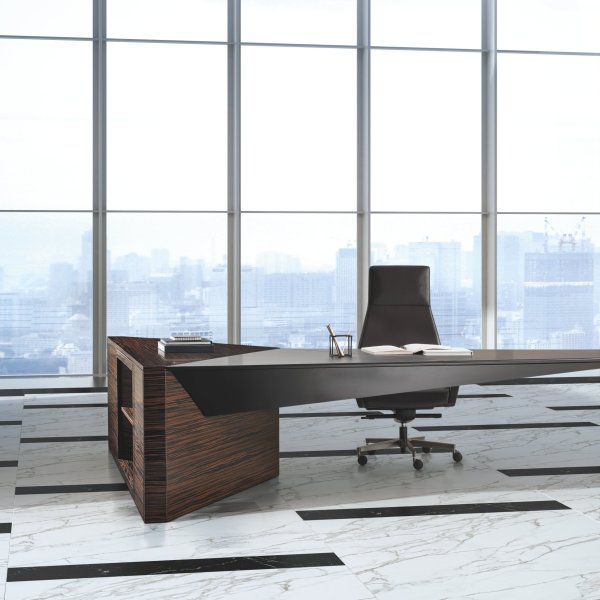
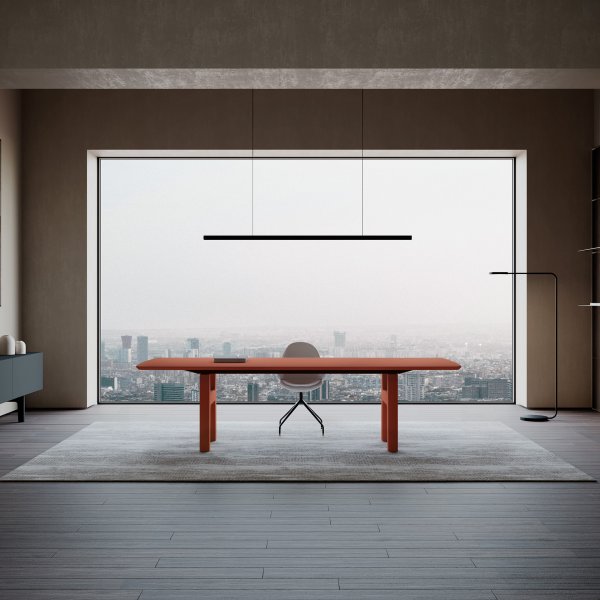
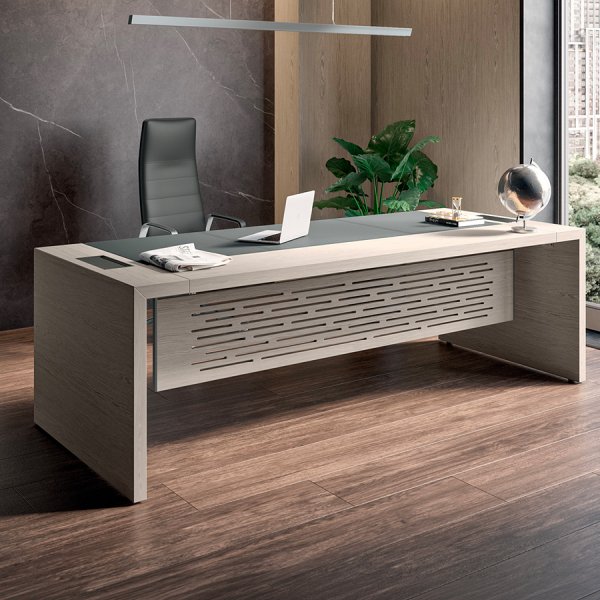
Énosi designer table by Nikolas Chachamis in a design-forward Indian office

Énosi designer office table — the signed piece for design-forward Indian offices

Las Mobili

Nikolas Chachamis

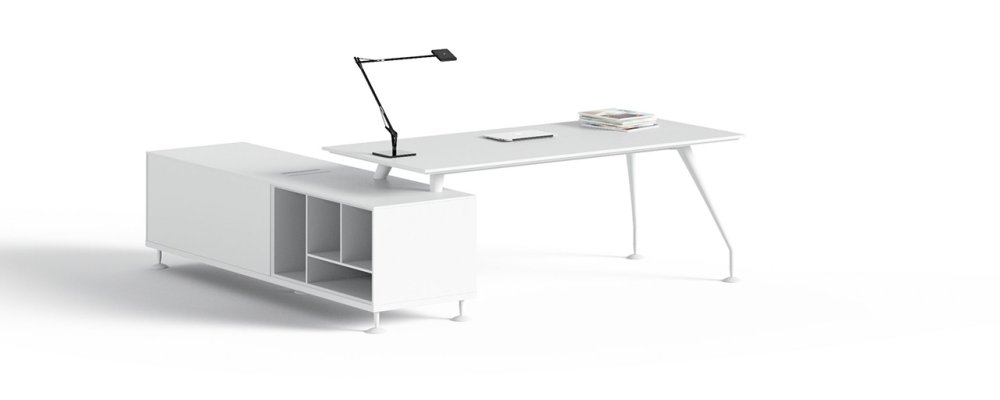
Desk with integrated pedestal
Enosi An icon of Italian design Desk with integrated pedestal
₹ 4,24,320

Let's discuss your project

Bespoke: size, colour, finish

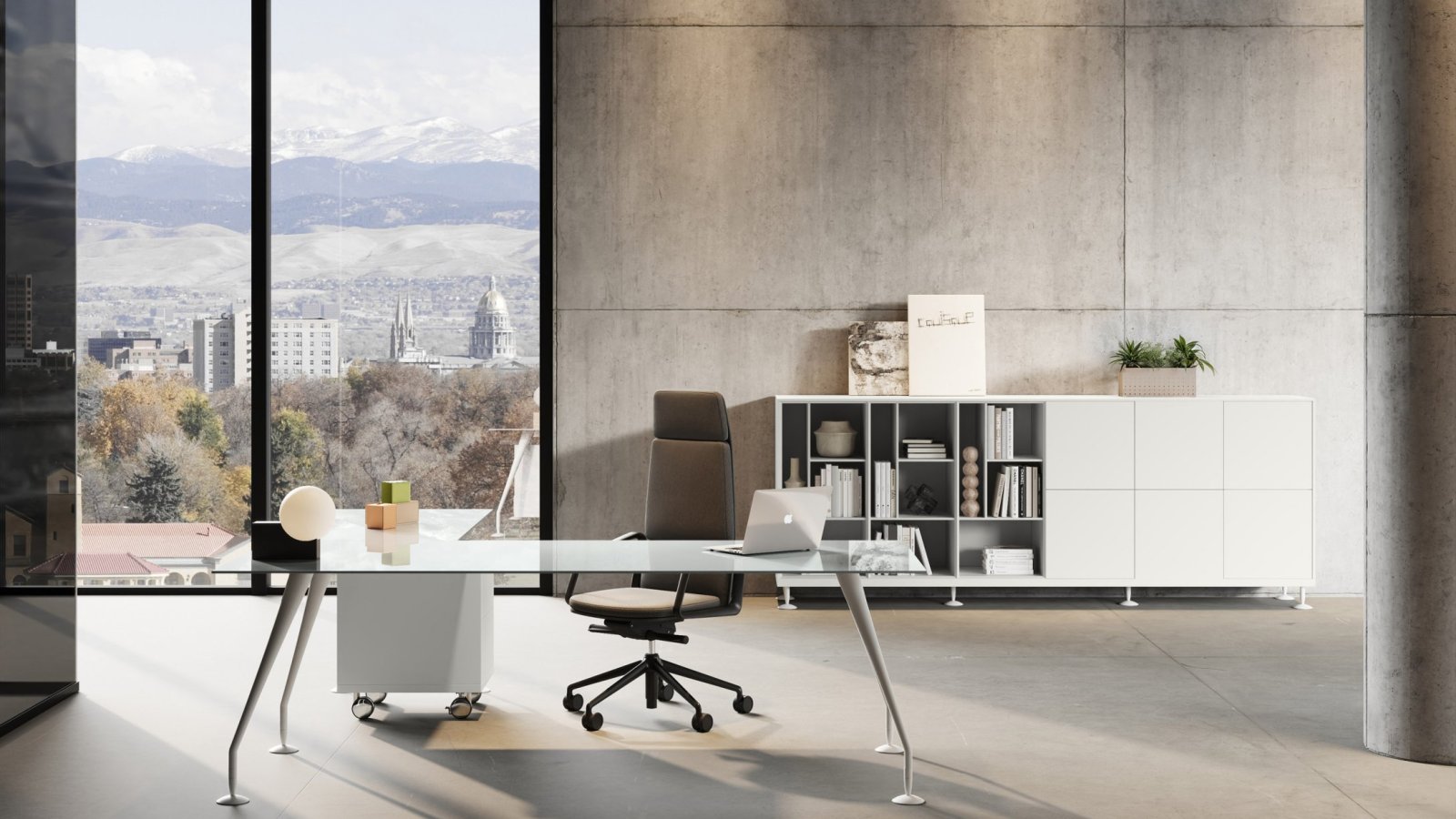
Design-forward Indian offices — studios, agencies, founder floors — have learned what their clients already know: an anonymous table furnishes a room, a signed designer table positions it. Énosi by Las Mobili carries the signature of Nikolas Chachamis and a name that is Greek for union: the clean meeting of a thin top and tapered conical steel legs, read as one gesture.

The top sets the temperament. Rear-lacquered 12 mm tempered glass — Extra White or Black, flat polished edges, turned stainless-steel supports — brings luminous depth to rooms that live on light. The 30 mm 3d-foil top in Pacific Walnut, Black or White is the harder-working, lower-maintenance twin for the Indian workday. Legs come painted white or black, or in polished chrome, each on die-cast levelling feet finished to match — with 20 mm of adjustment for floors that are not quite done arguing.

Details that survive the walkthrough

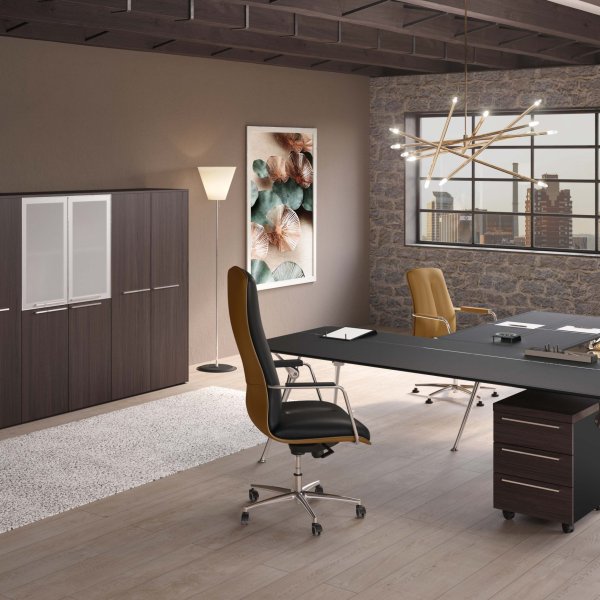
Mobile pedestals on twin rubber castors with chromed covers and front brakes open by push and hide a pull-out stationery tray with tablet and phone compartments. Stackable modular units and an open lacquered bookcase element build light storage walls; cabinets take rear-lacquered glass doors with concealed frames and locks. Certificates are available among the downloadable documents on this page; project-specific requirements are confirmed before order.

Share the finishes you wish to evaluate

₹ 30,000

Amount adjusted against your first order

FAQ

Does a glass table survive the Indian office day — tea, dust, twelve hours?

With one honest habit: a daily wipe. The 12 mm tempered glass is rear-lacquered — colour on the underside, so it cannot scratch off — and the polished flat edge takes contact without chipping theatrics. Tea rings and dust sit on top and leave with a cloth. Where the table will be buried in paper and hardware, the 30 mm Pacific Walnut or Black foil top is the lower-maintenance twin. Samples of both are dispatched on request; the cost is credited in full against a confirmed order.

Why pay for a designer's signature on an office table?

Because in a design-literate market the interior is checked like a portfolio. A signed piece gives the architect an author to cite — Énosi is by Nikolas Chachamis — and the client a story that holds when a visitor asks. Even the name works for you: Greek for union, for the way the top and the tapered leg resolve into one gesture. That is a conversation an anonymous table cannot start.

Chrome or painted legs for an Indian corporate interior?

Chrome with the Extra White glass is the luminous statement — right for studios, agencies and reception-facing cabins. Painted black or white legs recede and let strong architecture or art speak. Every version stands on die-cast levelling feet finished to match the leg, with 20 mm of adjustment — a practical mercy on site floors that settle after handover.

How does storage stay as light as the table?

By rolling or stacking. The mobile pedestal — twin castors, chromed covers, front brakes — follows the work and hides a pull-out tray with tablet and phone compartments. Stackable 45/90 cm modular units with the open lacquered bookcase element compose storage that reads like gallery shelving; glass-door cabinets in Black or Extra White close the palette, with locks where confidentiality matters.

What documentation supports specification and procurement?

Dimensioned drawings, 3D models and a component-level bill of materials with product codes come from the manufacturer, and the product certificates are available among the downloadable documents on this page. Project-specific requirements — emissions, fire ratings, client audit formats — are confirmed project by project before the order is placed.

Specifying Énosi for a design-forward Indian project

Five steps for Indian A&D teams: the case for a signed piece, top by light, metal by room, mobile storage and samples under site lighting.

Reserve the signed piece for the rooms that are read

Founder cabins, studio directions, client-facing suites: rooms visitors judge. There, the Chachamis signature and the glass-and-chrome composition pay for themselves in positioning. For hard-working back offices, the foil-top version with painted legs keeps the language at lower maintenance.

Choose the top by the room's light

Extra White glass multiplies daylight — right for rooms with generous glazing. Black glass adds depth to dense, dark-panelled interiors. Pacific Walnut foil warms minimalist shells. Judge at standing height, under the site's actual lighting, not in a showroom.

Let one metal decision carry the room

Polished chrome makes the table the object; painted white or black makes it the architecture. The decision echoes through the collection — chromed castor covers, chrome cabinet handles — so the room reads as one hand.

Plan storage that moves with the office

Rolling pedestals with the pull-out tablet tray at every workstation that needs one; a service unit as structural base where presence is welcome; stackable modular walls that recompose when the team changes. Push-open fronts everywhere — no handle noise on the design side of the room.

Approve samples on site, order in one written configuration

Glass, foil and chrome shift under Indian office lighting; approve physical samples on site — the cost is credited in full against a confirmed order. Then freeze top type, leg finish, storage and the meeting-table top-access in a single written configuration before production.

You May Also Like