Let's discuss your project
Trade terms for professionals and design studios
Let's discuss your project
Trade terms for professionals and design studios
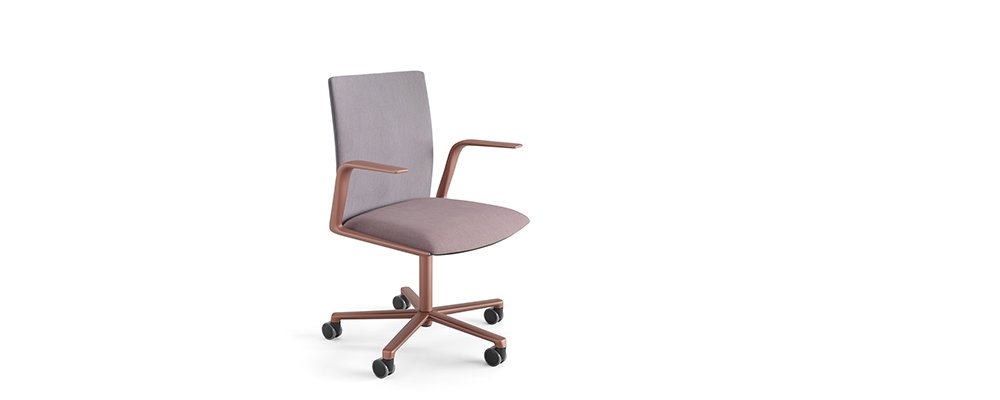
Specifying Kinesit across a floor comes down to one question asked three times: which backrest. The low back keeps sight lines open across an open plan and suits desks used in short bursts. The medium back is the working default, and together with the low one it is where the built-in lumbar support belongs. The high back — Kinesit Executive — is a different build: fully upholstered on an internal steel frame, with cold-foamed polyurethane padding.
The rest of the choice goes quickly. Stretch mesh or full upholstery in fabric or leather; armrests fixed, 2D adjustable or absent; a base on a trestle, four ways, or five with a gas lift. Controls stay under the seat, the recline runs 18 degrees and locks every 3, and the seat lifts 15 mm as the back opens. Designed by Lievore Altherr Molina in 2014, supplied in India by La Mercanti with drawings and samples at planning stage.
Collection: Kinesit
Manufacturer: Arper
Design: Lievore Altherr Molina, 2014
Backrest heights: low, medium, high (Kinesit Executive)
Lumbar support: height adjustable, built inside the backrest — low and medium versions
Executive high backrest: powder-coated die-cast aluminium seat base, internal PP seat film, cold-foamed polyurethane padding, back fully upholstered on an internal steel frame, PA6 armrests optional
Coverings: stretch mesh, fabric, leather, faux leather; front face or entirely upholstered
Controls: synchronised mechanism and height command under the seat
Recline: 18° lockable every 3°; the seat rises 15 mm
Armrests: fixed, 2D adjustable, or none
Bases: trestle, four-way, five-way with gas lift
Castors: type H for carpet, type W for hard floors
Certification: ErgoCert, referencing UNI EN 1335 for office furniture

Share the finishes you wish to evaluate
Five steps before ordering fifty chairs in one height.