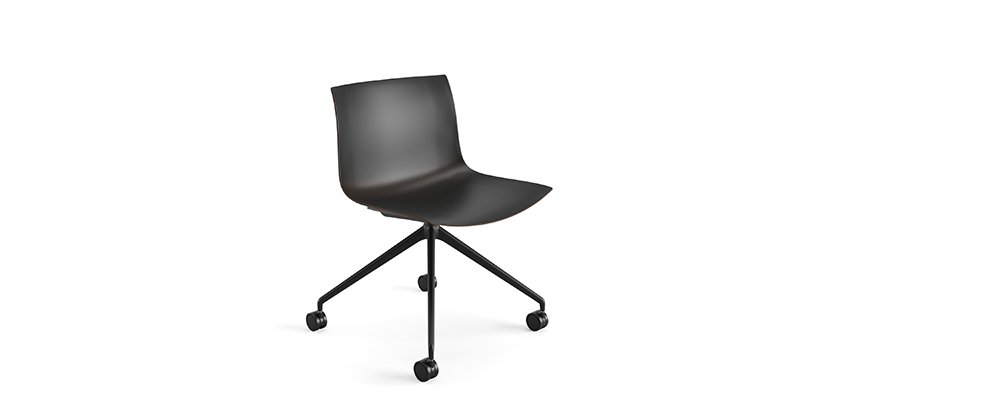
Catifa Carta design chair by Arper with a PaperShell shell and wooden legs

Sawdust, chips and branches: where the paper comes from

Arper

Lievore Altherr Molina

Meeting room chair
Catifa Carta 3137 Meeting room chair
₹ 110.400

What did you have in mind?

Trade terms for professionals and design studios

The word paper raises an obvious question, and Arper answers it directly. The paper used to produce PaperShell comes from responsible sources and from the exclusive use of residues of Swedish wood production: sawdust, chips and branches.

That distinction deserves to be read carefully, because it changes the arithmetic. A material made from by-products does not add demand to forestry; it takes what the sawmill has already produced and would otherwise treat as waste. The binder follows the same logic: the manufacturer refers to hemicellulose that is 100% biogenic, from agricultural residues or from wood pulp and paper production. Design Lievore Altherr Molina, with the silhouette drawn in 2001 and the shell re-engineered in 2024. La Mercanti passes on the manufacturer's material documentation with the offer.

Technical information based on data declared by the manufacturer.

Collection: Catifa Carta, design chair; 2024 extension of the Catifa collection designed in 2001
Manufacturer: Arper (Monastier di Treviso, Italy)
Design: Lievore Altherr Molina
Paper source: responsible sources and exclusive use of residues from Swedish wood production, such as sawdust, chips and branches
Shell: PaperShell, 29 sheets of kraft paper bonded with a 100% natural resin; sheets laminated, pressed and cut to form the shell
Binder: the manufacturer refers to 100% biogenic hemicellulose from agricultural residues or from wood pulp and paper production
End of life: pyrolysis at low temperature, preventing the release of CO2, converting the material into biochar with a carbon content of up to 90%, used mainly as a soil improver
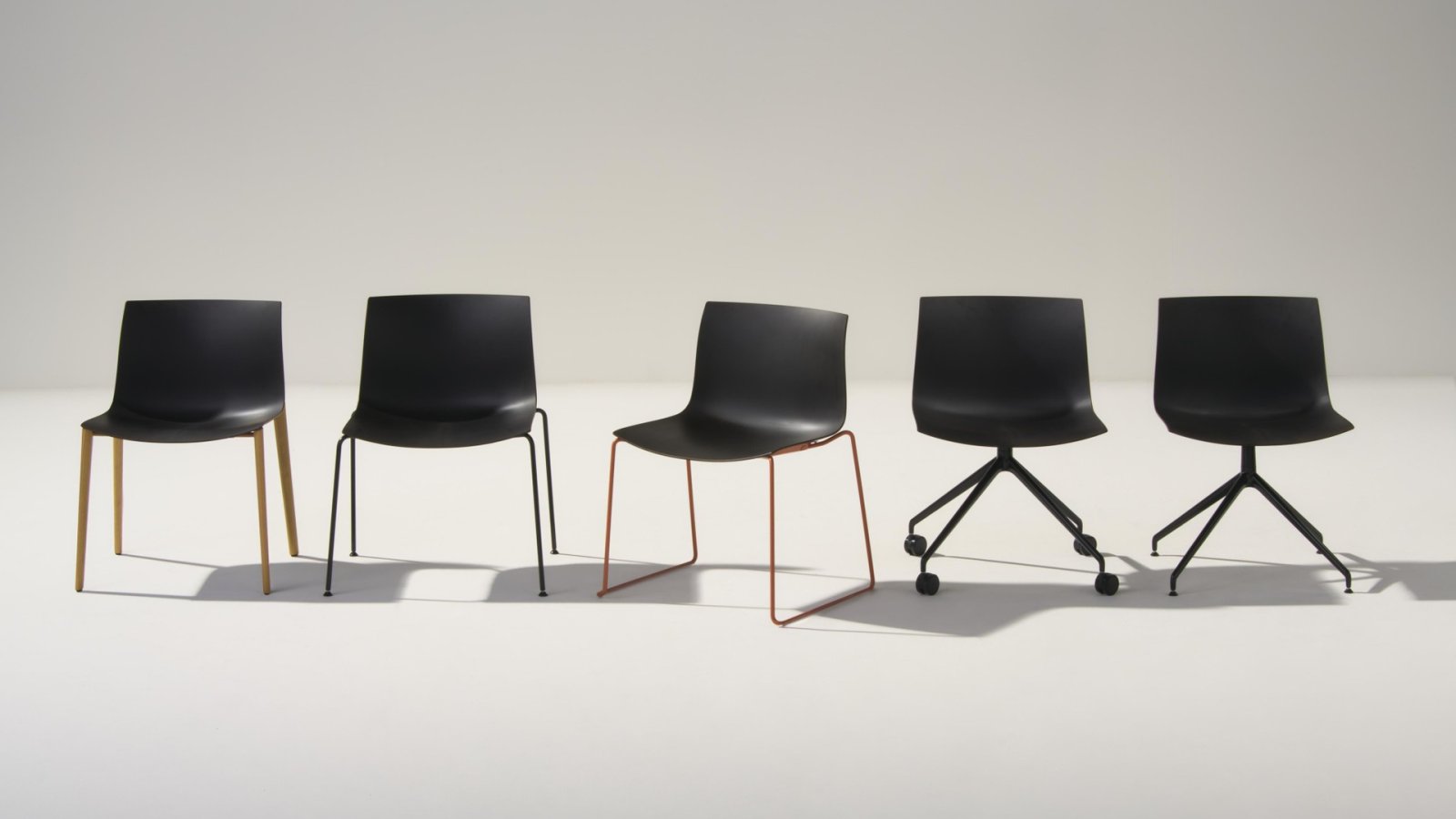
Bases: four legs in powdercoated steel · powdercoated steel sled · swivel trestle in powdercoated aluminium · fixed trestle on self-braking castors in the same colour
Declared figures: circularity score 43% (TECLA Tool) · 45.68% renewable materials · emission intensity ratio 4.31 kg CO2eq/kg · Synesgy ESG rating B · Open-ES 86/100
Environmental declaration: Catifa 53 is stated by Arper as the company's first product to obtain an environmental product declaration
Care: water and well-diluted neutral soap, soft cloth, gentle circular movements, always dry the surface
Declared characteristic: the material changes colour over time, especially when exposed to sunlight
Intended use: EN 16139 for non-domestic seating, general and extreme levels, as framed by Arper
Awards: Metropolis Likes 2024 · HiP Awards 2024 · Interiors Monthly Awards 2024 · Mix Awards North 2024 · Metropolis Planet Positive Awards 2024 · CDW Product Design Awards 2025 · Architizer A+ Awards 2025 · Award of Merit AZ Awards 2025 · Honourable Mention, Compasso d'Oro ADI 2026

La Mercanti Srl — trusted supplier for design and contract projects since 1997.
San Benedetto del Tronto (AP), Italy · +39 0735 753833 · info@lamercanti.com
Supply, quotations, specifications and project support across India and worldwide.

Share the finishes you wish to evaluate

₹ 30.000

Amount adjusted against your first order

FAQ

Will the colour of Catifa Carta change over time?
Yes, and the manufacturer declares it as a characteristic of the material rather than a defect. It is stated in advance precisely so it is not discovered later.
Can the change be slowed down?
Any guidance on this comes from the manufacturer and we pass it on as written. What we do recommend is telling the end user before delivery, not after.
Will all the chairs age at the same rate?
Chairs in different light will not look identical forever. In a large room this is worth planning for when deciding where they go.
Does the change affect strength?
It is described as a change of appearance. Anything concerning performance stays with the manufacturer's own documentation.
Should this be written into a specification?
It should. A declared characteristic that reaches the client in writing is information; the same fact discovered on site is a complaint.

How to assess a sample of an unfamiliar material

Five checks before the sample goes back in the box.

Look at the edge first
A layered shell shows its construction where it was cut.
Feel the surface with the back of the hand
It reads neither as wood nor as plastic, which is the point.
Check it in the light of the actual room
Matt surfaces behave differently under daylight and under spots.
Ask what will change and when
The colour shift is declared, so it belongs in the assessment.
Keep the sample until delivery
It is the only reference both sides can agree on later.